TheJakartaPost
Please Update your browser
Your browser is out of date, and may not be compatible with our website. A list of the most popular web browsers can be found below.
Just click on the icons to get to the download page.


Popular Reads
Top Results
No results found. Please check your search term and try again
Can't find what you're looking for?
View all search results
Popular Reads
Top Results
No results found. Please check your search term and try again
Can't find what you're looking for?
View all search resultsIndonesia’s critical role in reforming global health system
Building global system resilience is a priority that must be taken into account in our attempt to reform the global health architecture.
Change text size
Gift Premium Articles
to Anyone
Share the best of The Jakarta Post with friends, family, or colleagues. As a subscriber, you can gift 3 to 5 articles each month that anyone can read—no subscription needed!
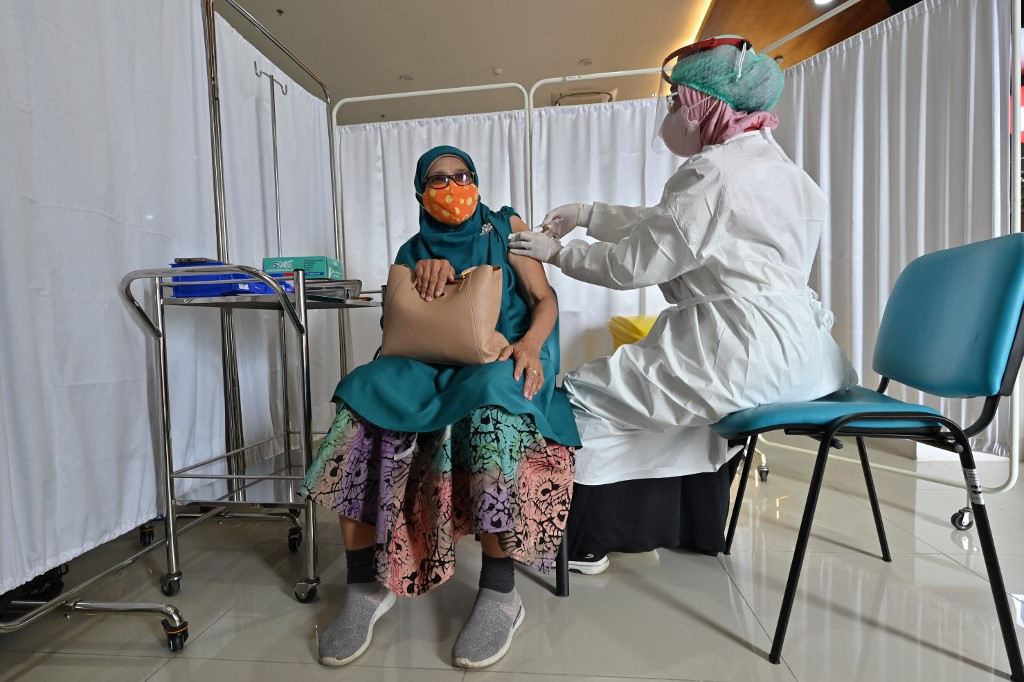
The COVID-19 pandemic has caught almost all countries off guard, leaving each and every single one to battle it out — or so go the common media headlines. Many have consciously likened this pandemic to a war, which is rather inaccurate.
Traditionally, when a war was perceived to be won, a celebration awaited and victors marched in a cheery parade. And they will live happily ever after. Battling a virus is a completely different game.
The thing with this pandemic is that it leaves behind so many "what ifs" and "should haves" in our minds. What if we had been better prepared? Would we have responded faster and would more help have been readily available?
Deaths could have been prevented and globally, economic wheels would have been bent just a little bit, instead of collapsed and stopped.
However, survivors — not victors — must move on. It is time to pick up the takeaways and pool forces and resources to build a stronger collaboration globally as apparently, not one single country was able to handle a pandemic of this scale alone.
Survivors like us must sensibly use the opportunity. It is well timed for Indonesia with its turn to assume the Group of 20 presidency to raise and bring an important and critical agenda onto the table to be discussed and resolved in the upcoming summit.
There are number of issues that need to be highlighted, addressed and resolved, particularly in the to-date global health architecture over which many critics have voiced their concerns, particularly about the belated response to act in the COVID-19 pre-pandemic days and ways to prevent outbreaks of this massive scale.
Building global system resilience is one priority that must be taken into account in our attempt to reform the global health architecture. COVID-19 has shown us the domino effect of a modern-day pandemic. When the virus hits one home, it is just a matter of time before it knocks on the door of the next home unless a resilient system is available – and built together.
The previous Italian G20 presidency established the Global Health Threat Fund mechanism through the Joint Finance and Health Ministers Meeting. What was started in the previous presidency must be continued and strengthened.
Within the system, there should be financial resource mobilization for pandemic prevention, preparedness and response. With this in mind, a pandemic should no longer be considered something distant and predictable. Having a pandemic prevention, preparedness and response system that is viable and well-funded is truly an investment in itself.
What the world needs to do is establish a global mechanism for raising, accessing and mobilizing essential health resources for prevention, preparedness and response to health crises.
At the global level, an open platform must be developed to share genomic data as a way to enhance surveillance. This will need mutual respect and the faith that this is done for humanity – without any hidden motive to earn financial gain for certain parties.
In the past, back in early 2000s, the world learned how distrust among scientists put the world at risk when outbreaks of avian influenza (H5N1) threatened to turn into a pandemic.
The second priority is to harmonize global health standards with programs such as global health guideline harmonization and health information systems connectivity from different countries for international travel.
The 1918 pandemic is considered the closest experience that the modern-day world can learn from. However, the fact that the early 20th century was not advanced in terms of global connectivity and human mobilization, it helps very little for modern-day communities to see that there are growing health risks from growing air travel, fast trains and other transportation modes.
Here we are, taking for granted advanced modern-day globalization and undermining the risks of a virus hitchhiking on our modern transportation system, world travelers and all other modes of convenience.
It is, therefore, imperative for the world to harmonize World Health Organization technical guidelines for a risk-based approach to international travel, the Digital European Union (EU) COVID Certificate and International Civil Aviation Organization (CAO) Guidance for Air Travel.
It is equally urgent to build interoperability between health information systems at points of entry. An archipelagic country with more than 250 million people, Indonesia has already set up an app, PeduliLindungi, that plays an important role in tracking and tracing the virus' and people's movements. Integrating this app with other countries’ health information systems would result in a more effective travel record and surveillance.
The next in line is to expand global manufacturing and knowledge hubs for pandemic prevention, preparedness and response as an attempt to harmonize global health standards.
Last but not least, the third priority issue is expanding the global manufacturing hubs for vaccines, therapeutics and diagnostics in developing countries. Complementing this expansion is to have a mechanism for knowledge-sharing for prevention, preparedness and response to health crises.
What needs to be done is expanding the global manufacturing hubs for the mRNA vaccine program by the WHO to developing countries and strengthening the global network of scientists in virology, immunology, epidemiology and other disciplines related to health crises.
Some initiatives from the top priority issues are already on their way and the world does not need to start from zero. Political and economic interests aside, contributions of thoughts from the world’s best minds in this field are required to make what is in place more effective and efficient, as well as viable.
We have seen the world stop for a moment. This is an opportunity to build a shield against future potential pandemics. With many viruses and other health risks that may cause future global plagues, Indonesia should shift the perspective that facing a pandemic should no longer be a declaration of war, but it should serve as a wakeup call for the world to make the necessary changes in order to be healthy and live safely in the future — and to ensure that we recover together and build a stronger global heath system for everyone.
***
The writer is Indonesia's health minister.