Can't find what you're looking for?
View all search resultsCan't find what you're looking for?

View all search resultsIndonesia has the perfect opportunity this year to revisit the issue of economic espionage at the premier international forum.

Many countries are banking on the rapid proliferation of digital technology as part of the solution to boost economic growth and overcome the challenges of social and economic disparities.
While there is no doubt that the universalization of digital technology has been fundamental in alleviating some of the world’s greatest social and economic ills (especially amid the COVID-19 pandemic), it is also intensifying existing problems. One particular challenge facing economies across the world is the threat of cyber-enabled intellectual property (IP) theft.
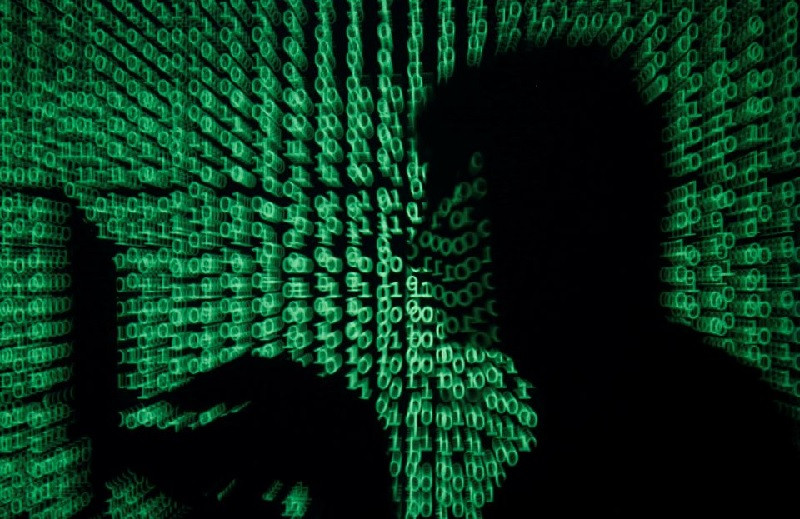
In early May, Cybereason reported that hackers stole trillions of IP from multinational corporations across North America, East Asia and Europe. The culprit was identified as Winnti, a hacking group with alleged ties to China.
While there are still many things we do not know about the attack, such as what was stolen and which companies were targeted, the incident is another stark reminder that economic espionage remains a serious threat to the global economy.
The practice of economic espionage, or state-sponsored industrial and commercial espionage sponsored, has a long history that can be traced back to antiquity. But the ever-growing universality of information and computer technology has made the practice more widespread as governments industrialize their economic espionage efforts through cyber means.
The financial costs of IP theft are tough to calculate. But based on some of the information we know, it can be estimated to reach hundreds of billions, if not trillions, of dollars. The Commission on the Theft of American Intellectual Property, for example, estimated in a 2017 special report that IP theft costs the United States US$600 billion annually. Meanwhile, the European Intellectual Property Office reported last April that up to 60 billion euros ($6.36 billion) worth of goods was stolen each year in the European Union.
While it is often treated as a “rich country problem”, many developing countries have also been victims of economic espionage. For example, in Southeast Asia alone, there have been several known cases of commercial and data theft associated with hackers allegedly sponsored by states.
Avertium issued a threat intelligence report in March 2022 that the Bronze Mohawk hacking group actively breached commercial entities and universities in Cambodia, Indonesia and Malaysia between 2011 and 2018 to steal specialty chemical formulas, sensitive technologies and trade secrets. Meanwhile, Mandiant’s threat report in March said that the Winnti group was known to carry out large data mining campaigns that affected commercial entities in Malaysia, the Philippines and Singapore.
IP protection is fundamental to fostering economic growth and stimulating healthy competition among businesses, especially in developing and emerging economies where the basic challenges of poverty alleviation banks on having a decent competitive economy. In many of these countries, the capacity for data security also remains constricted by resource constraints.
As one of the world’s most vibrant digital economies, Indonesia has a vested interest in ensuring that states, particularly great powers, do not use their advanced cyber toolkits to compete unfairly within the economic realm. While much can be done internally to prepare the nation against the threat of IP theft, Indonesia also has the perfect opportunity this year as the Group of 20 chair to raise the issue before the world’s most powerful countries.
As G20 chair, Indonesia should strongly reaffirm the global norm against state-sponsored IP theft for commercial gain. This means committing all states to pledge not to steal commercially valuable material from companies and research institutes in foreign lands.
To push for a global consensus, or at least a consensus of the most powerful states, that cyber-enabled IP theft is wrong may seem like an impossible task. Indeed, it has been tried before.
Economic espionage was raised at the 2015 G20 Antalya summit in Turkey, where leaders released a communiqué calling on states to refrain from cyber-enabled IP theft for commercial gain. Fundamentally, the agreement among G20 countries came not long after then-US president Barack Obama and Chinese President Xi Jinping declared in a joint press conference that neither state would support cyber-enabled theft of IP for commercial purposes.
It’s easy to be cynical about whether these kinds of pledges will have any effect. An idealist might argue that while an agreement won’t stop states from using hackers for commercial purposes, it is still a necessary step toward encouraging a culture of self-restraint. Indeed, it is not as if the Obama-Xi agreement was not substantial, as it was the first time that a Chinese president openly recognized the US distinction between state hacking for commercial purposes (economic espionage) and for national security (political espionage).
But the cynics can simply point to the failure of the Obama-Xi agreement in preventing states from continuing to sponsor hackers to steal commercial data. Indeed, there are things we can learn from the failings of the Obama-Xi meeting and the 2015 G20 summit.
There should be conceptual clarity over what constitutes economic espionage, as IP theft targeting the defense industry can be seen as driven by purposes of national security, rather than commerce. This will be a difficult task, but from there, diplomats can draw the “red line” between what states agree is “right” and “wrong”.
Even if G20 member states come to a consensus this year that economic espionage is wrong, it is easy to be cynical about its effects. Indeed, it is naive to assume that the practice of economic espionage will end completely. States will continue to find unfair ways to outcompete others. At the very least, however, we need to reaffirm the consensus that economic espionage is wrong.
Indonesia should work together with other countries to hold state sponsors of economic espionage accountable. This starts with getting the world’s most powerful states to agree on the wrongness of this practice. While the laws of international relations are ultimately governed by those with the biggest swords, they can only do so only with the consent of smaller powers.
The G20, as the premier international forum involving all great and most middle powers, is the perfect platform to reaffirm the need for states to refrain from sponsoring cyber-enabled IP theft.
***
The writer is an analyst at the Australian Strategic Policy Institute. These views are personal.
Share your experiences, suggestions, and any issues you've encountered on The Jakarta Post. We're here to listen.
Thank you for sharing your thoughts. We appreciate your feedback.
Quickly share this news with your network—keep everyone informed with just a single click!
Share the best of The Jakarta Post with friends, family, or colleagues. As a subscriber, you can gift 3 to 5 articles each month that anyone can read—no subscription needed!
Get the best experience—faster access, exclusive features, and a seamless way to stay updated.