TheJakartaPost

Please Update your browser

Your browser is out of date, and may not be compatible with our website. A list of the most popular web browsers can be found below.
Just click on the icons to get to the download page.


Jakarta Post

Indonesian NFT artists stick with digital art form despite naysayers

Indonesian NFT artists defy the pessimism of skeptics and naysayers who predict the cryptocurrency phenomenon as a trend or bubble.

Tunggul Wirajuda (The Jakarta Post)
Jakarta
Tue, June 14, 2022 Published on Jun. 13, 2022 Published on 2022-06-13T14:50:28+07:00

Change text size

Gift Premium Articles
to Anyone

Share the best of The Jakarta Post with friends, family, or colleagues. As a subscriber, you can gift 3 to 5 articles each month that anyone can read—no subscription needed!

I

ndonesian NFT artists defy the pessimism of naysayers who believe the cryptocurrency phenomenon is just a trend or entering a bubble.

For Indonesian non-fungible token (NFT) artist and Tezos blockchain stalwart Arya Mularama, the future continues to look bright, despite the detractors of the cryptocurrency-driven phenomenon.

“More Indonesian artists are entering the [global] NFT art community, as the NFT art scene in Europe, the United States and Asia continue to grow. While Ghozali might be seen as the most famous NFT artist of all, he is but one of many Indonesian artists [using the medium],” said Arya, referring to local NFT artist Ghozali, whose creation Ghozali Everyday was sold for Rp. 3.1 trillion (US$216 million) in January. 

The sale of Gozhali’s self-portrait, which evoked Andy Warhol’s pop art works the Marilyn Diptych and Campbell’s Soup Cans, backed Arya’s assertion that high demand for NFTs kept the digital art form a viable commodity.
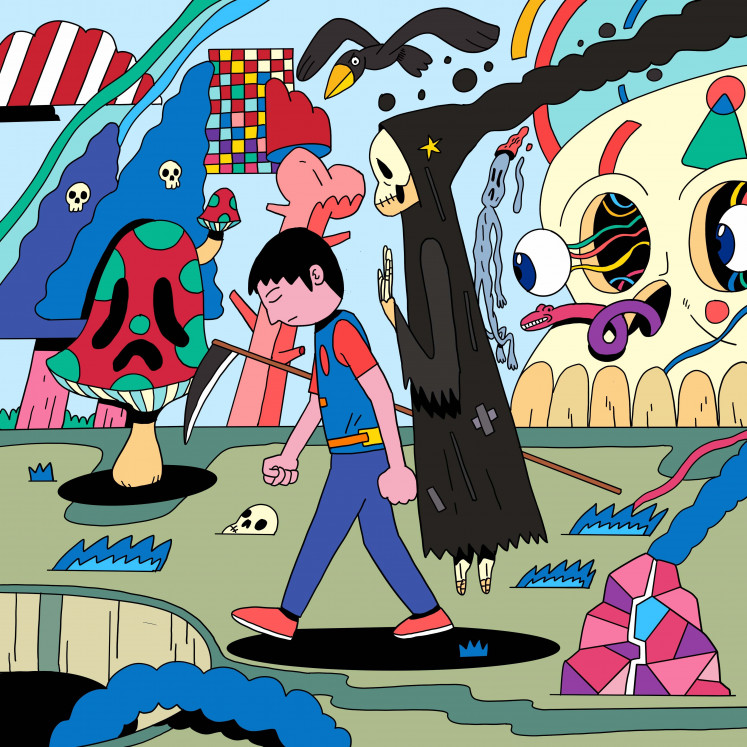
Vibrant colors: Arya Mularama's 'Time to Go Home' presents bright, cheerful and psychedelic hues of the work. (Courtesy of Arya Mularama) (Courtesy of Arya Mularama/Courtesy of Arya Mularama)

Heady days

Indonesia’s NFT boom is caused by strident crypto trading, which shows no signs of slowing down. Bloomberg, citing figures from Indonesian commodities futures trading agency Bappebti, noted that in 2021 “11 million [Indonesian] market participants [were] conducting US$60 billion worth of transactions.” 
The United States’ cryptocurrency exchange Gemini backed these figures. In a survey carried out on 30,000 people in 20 countries, the company found that 41 percent of respondents in Indonesia and Brazil owned cryptocurrency, compared with about 20 percent in the United States and the United Kingdom. This is bolstered by Indonesia’s young, digital-savvy population, high mobile internet penetration and strong social media usage, all of which have led to Indonesia becoming Southeast Asia’s crypto capital. 

Tezos named its upcoming network upgrade Jakarta to reflect Indonesia’s standing as Southeast Asia’s NFT and cryptocurrency center.

Unsurprisingly, artists like Arya have plenty of reasons to be optimistic about NFTs, as the arts are among the professions benefiting from this field.

“The public buys NFTs from cryptocurrency blockchains like Tezos for one to two Tezos [$4-8], then sell them again for five to six times their value, depending on the rarity of the NFT. Their purchases have stimulated the growth of NFTs in Indonesia,” noted the University of Indonesia communications alumnus. 

“Many artists in Indonesia see this as an opportunity, as they can mint NFTs and determine how much profit they can make through the number of NFTs they make. The more limited the edition of the work, the more they stand to profit.”

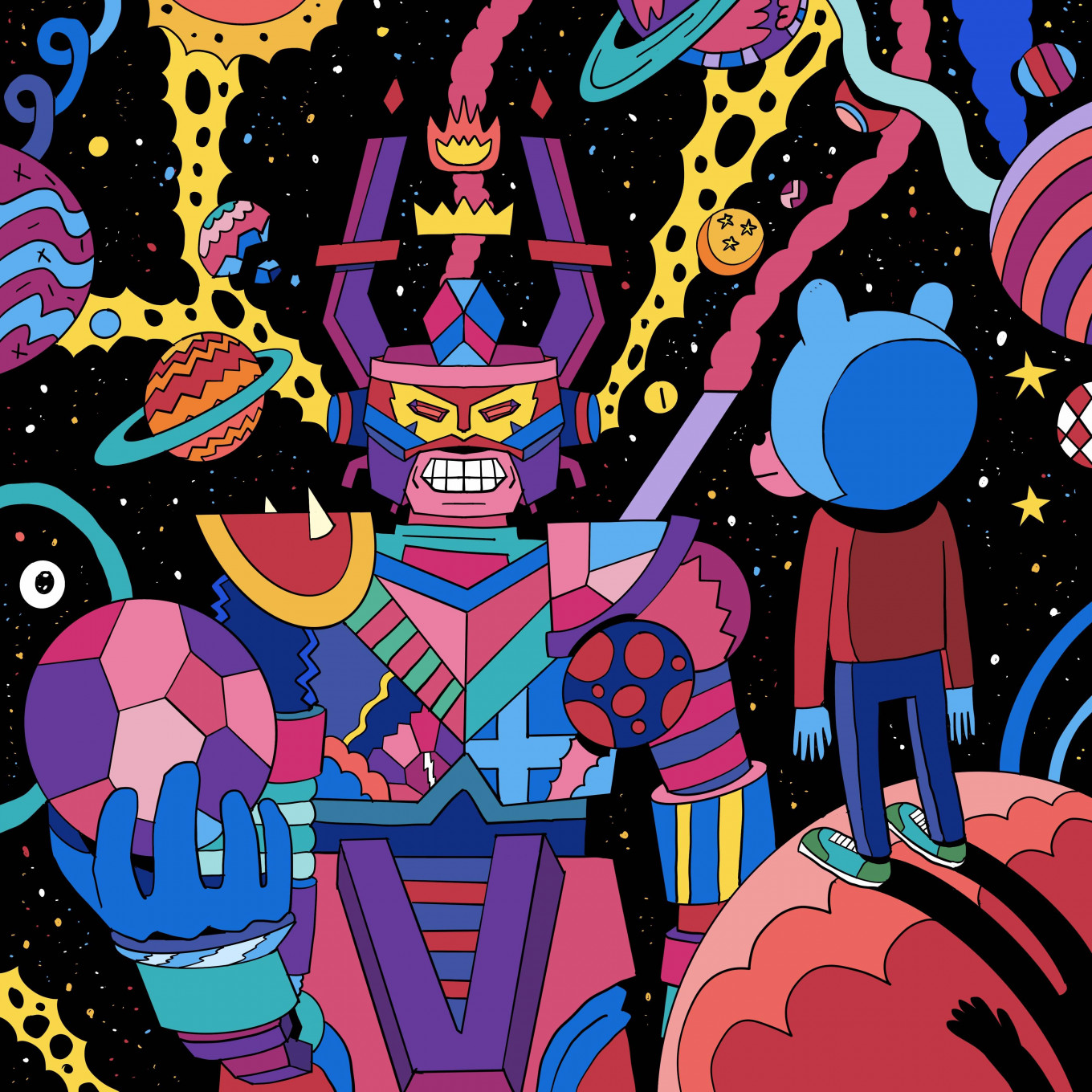
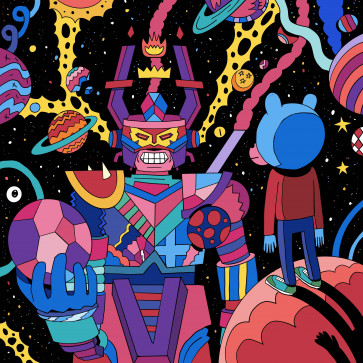
Arya’s NFT Galan’s Hunger, which was exhibited at Singapore Art Week from January to March, along with the works of other Asian NFT artists under the Tezos ecosystem, reflected his bullish outlook. The work, depicting a Marvel Comics supervillain known to swallow whole planets in his path, reflected the seemingly unstoppable surge of cryptocurrency in general, and NFTs in particular.

Fellow artist Tommy Chandra agreed. “NFTs are a great way to get your name out [to the broader art market] and directly connect with prospective customers, as it bypasses the traditional art models. 

“I used to sell my art in the traditional manner, but my royalties were hampered by the gatekeeping of galleries and other movers in traditional art,” recalled the architecture graduate.

“Artists get to keep more of their royalties with NFTs, as the tokens bypass the traditional art market. These NFTs are divided between primary and secondary markets, with the public buying the former and then selling them for four or five times the original price, while the latter would be for their private collection.”

A source of revenue

The potential of NFTs and other forms of cryptocurrency as revenue is not lost in Indonesia. Bloomberg reported that the government had started taxing crypto transactions and assets in May. The Finance Ministry has set a 0.1 percent value-added tax (VAT) on NFTs and other crypto asset purchases, while earnings and capital gains from such transactions will be subject to a 0.1 percent final income tax. 

Arya remains upbeat despite the government’s increased awareness of cryptocurrencies. 

“I am certain that the [recent government policies] will not hinder the [NFT] boom. They might even support Indonesian NFT artists,” he observed. “However, the use of the rupiah might in itself be a challenge, as it is not a recognized currency in NFTs like the US dollar or cryptocurrency.”

Tommy agreed, not least because of NFT’s ability to disrupt the art market. “Demand for NFTs will keep the market going and create more jobs and opportunities through Tezos and other marketplaces. Demand and opportunities will also increase with greater name recognition for artists,” he said of the art medium, which he sold on Instagram and other social media. 

“NFTs also provide more opportunities to sell our art to the wider public. While this can be challenging, the pros still outweigh the cons, because [sales are] not limited to art aficionados and galleries, unlike in conventional art markets.”

Tommy added that most of the clients for his art came from overseas, while many of his Indonesian customers were more drawn to purchase NFT skins for online games. This is reflected in the geometric lines of his NFT works Meteor EaterPlanet Invader and Star Collector. 

Featured alongside Arya’s work at Singapore Art Week, Tommy’s one-eyed three-dimensional paintings evoke the minions of the Despicable Me animated movie franchise as well as pop art. But Tommy insisted that his NFTs were not a homage to either genre, but a “combination of cutting-edge and traditional techniques that are inspired by pop culture, my architecture background as well as the sights of daily life.”

Go aborad: Tommy Chandra's NFT art titled 'Meteor Eater' was also showcased at Singapore Art Week. (Courtesy of Tommy Chandra) (Courtesy of Tommy Chandra/Courtesy of Tommy Chandra)

Risks and challenges

NFTs might be a promising innovation in art and the cryptocurrency-driven digital economy. But even movers like Arya and Tommy acknowledged that the field, along with other aspects of cryptocurrency, had its fair share of risks.

“[There are] scams abound in NFTs, so I would suggest prospective buyers do more research into the field. This includes doing a background check of the artists and their works,” Tommy admitted. 

“These sorts of schemes do more harm to buyers than the artists, as the latter will continue to get royalties. But the negative image has already stuck for many people, many of whom see NFTs as no different from a Ponzi scheme.”

Arya reiterated this to Tommy. 

“[The NFT] field might become a bubble from sustained hype and influencers, though I am certain that the art markets for NFTs will remain steady. But we are not entirely sure,” he said. 

“The NFT boom is set to continue as more people use the medium, however, NFTs are still in early stages, so the field needs more technology to help meet its potential.” 

Arya’s concerns are perhaps reflected in his NFT Time to Go Home. The bright, cheerful and psychedelic hues of the work, which combine with Salvador Dali’s iconic 1931 Surrealistic painting The Persistence of Memory, belied their dark overtones. The downcast hues of mushrooms in the artwork and recurring imagery of skeletons seem to warn the onlooker of its risks. This is further emphasized by the hovering figure of the Grim Reaper leading a downcast child into a bottomless pit.

While the future of NFTs remains to be seen, it is no stretch to say that these cryptocurrency tokens are here to stay, regardless of how they will turn out in the future.

Your Opinion Matters

Share your experiences, suggestions, and any issues you've encountered on The Jakarta Post. We're here to listen.

Enter at least 30 characters
0 / 30

Thank You

Thank you for sharing your thoughts. We appreciate your feedback.

Share options

Quickly share this news with your network—keep everyone informed with just a single click!

Change text size options

Customize your reading experience by adjusting the text size to small, medium, or large—find what’s most comfortable for you.

Gift Premium Articles
to Anyone

Share the best of The Jakarta Post with friends, family, or colleagues. As a subscriber, you can gift 3 to 5 articles each month that anyone can read—no subscription needed!

Continue in the app

Get the best experience—faster access, exclusive features, and a seamless way to stay updated.