TheJakartaPost
Please Update your browser
Your browser is out of date, and may not be compatible with our website. A list of the most popular web browsers can be found below.
Just click on the icons to get to the download page.


Popular Reads
Top Results
No results found. Please check your search term and try again
Can't find what you're looking for?
View all search results
Popular Reads
Top Results
No results found. Please check your search term and try again
Can't find what you're looking for?
View all search results“Citayam phenomena” marks public demand for inclusive spaces
Recent emergence of youths from Jakarta’s satellite cities idling in crowds to bask in the capital’s downtown glory is a phenomenon experts described as a sign of “public thirst” for more inclusive public spaces.
Change text size
Gift Premium Articles
to Anyone
Share the best of The Jakarta Post with friends, family, or colleagues. As a subscriber, you can gift 3 to 5 articles each month that anyone can read—no subscription needed!
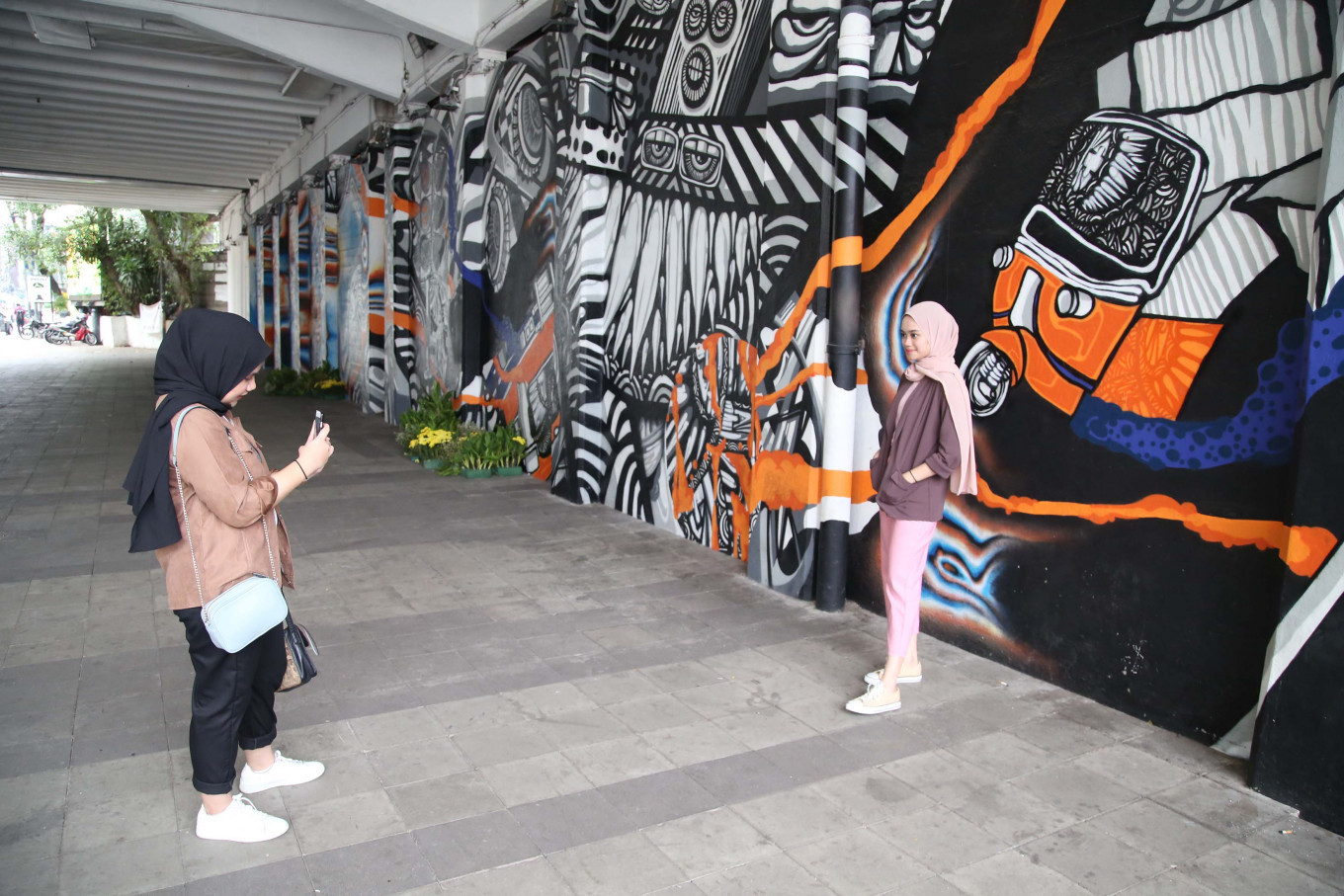
The recent emergence of youths from Jakarta’s satellite cities idling in crowds at some of the capital’s poshest areas is a sign of public thirst for more inclusive public spaces as well as Transit-Oriented Developments (TODs), experts suggest.
The youths in question are colloquially referred to as “ABG Citayam” by Indonesian netizens, and are widely reported to be residents of cities in the Greater Jakarta area.
Mostly congregating on weekends, the youngsters -- dressed in hip attire -- sit around with their friends, enjoying cheap snacks and beverages friendly to their student budget.
Reports have described the crowd to hail mostly from West Java’s Depok and several Bogor districts -- specifically Citayam and Bojonggede -- though some others have detailed Bekasi residents to be part of the mass.
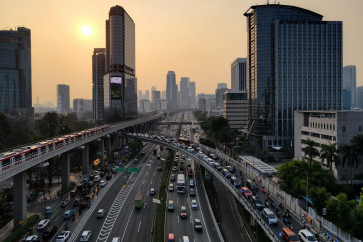
Jakarta downtown area of Thamrin-Sudirman -- which is typically swarmed by the capital’s executives and white-collar workers, and is known colloquially as SCBD -- has now semi-turned into the playground of youngsters with limited budgets eager to express themselves.
Known for their distinctive fashion, the youths are also marked by their fondness for mingling around the area’s Dukuh Atas transit-oriented development (TOD). The TOD includes parks, Sudirman commuter-line-train station, Dukuh Atas BNI MRT station, BNI City airport-train station and Transjakarta Bus Rapid Transit shelters.
The Dukuh Atas Station was Jakarta’s first completed Transit-Oriented Development (TOD) project, first announced in 2017 and later officiated in 2019 as part of Jakarta’s long-awaited MRT line.
Right smack in the middle of the city’s downtown, the TOD has direct connections to and from Jakarta outskirts. The TOD is also adorned with various cafes, pubs and other points of interest.
When operated, Light Rapid Transits (LRTs) from Bogor, Depok, Tangerang and Bekasi also connect to the TOD.
Since COVID-19 restrictions were relaxed in April, the youths from outskirt cities seemed eager to enter Jakarta at a much higher frequency.
Thirst for public space
Galuh Syahbana, a postgraduate lecturer at Bogor-based IPB University specializing in cities and developments, agreed that the Thamrin-Sudirman TOD area was particularly attractive to the youths due to the accessibility factor.
Cities like Bogor where the youths supposedly hail from, for example, tended to have unorganized public spaces that were inaccessible to those living in the outskirts, he explained.
“The public areas of Jakarta and its satellite cities are generally quite lackluster, though Jakarta is still much better in comparison to the rest. SCBD is a logical choice, because it is highly available as a TOD. It connects people from all sorts of places to downtown. TODs are magnets,” he said to The Jakarta Post on Thursday.
“It is apparent that there is a public thirst for more inclusive public spaces.”
Galuh noted that many projects involving public spaces in Jakarta, such as city parks and TODs, only began during governor Basuki “Ahok” Tjahaja Purnama’s administration (2014-2017), a legacy fortunately continued by current Jakarta Governor Anies Baswedan.
In 2018, a year after his inauguration, Anies had expressed his desire to create more “third rooms” in Jakarta, which he described as communal spaces that the public can enjoy outside of their homes (“first rooms”) and their work or study institutions (“second rooms”).
The recent emergence of Citayam youths was responded to with glee by the governor, who later issued a statement over his Instagram account conveying support.
“We have built third rooms as spaces to equalize and unify,” he wrote. “Everyone is welcome to enjoy Jakartan public spaces in their own ways and expressions [as long as] cleanliness and order is maintained.”
Other than its accessibility, the Sudirman area was also “architecturally powerful”, Galuh added. Most of Jakarta’s skyscrapers were placed within the compound, which could strongly provoke a sense of fantasy especially among the youths, he suggested.
“It gives out a cool image. It is a peek into how it feels to work in a [white-collar] environment. It is exclusive -- it is magnetic,” he said.
Urban expert Yayat Supriatna of Trisakti University elaborated on Wednesday that the TODs can also become a powerful social tool to promote a sense of empowerment for those living in Jakarta’s outskirts.
“The [Citayam youths] phenomenon can be interpreted as a form of self-actualization in an area that represents value and status positioning. [...] There is a sense of pride to be seen existing in [the capital’s downtown],” he told the Post.
Space for all
Last week, Anies announced three new TOD projects soon-to-be-completed. The projects are additions to the existing Dukuh Atas TOD as well as a new development in Lebak Bulus.
Among other goals, the new TODs are also aimed at helping to facilitate micro-transportation avenues such as pedestrian traffic and bike-sharing. Current plans of the project revealed the possibility of new bridges, offices and retail shops in the area.
“Pedestrians will be able to reach the stations through underground tunnels,” said the governor. “This is the future. Going forward, we want all MRT [Mass Rapid Transit] stations to be constructed in tandem with spaces to reach the buildings and other developments around it.”
While experts are supportive of the new plan, Yayat noted that more efforts need to be made to ensure that the spaces would remain inclusive for all in the far future. While it was good to connect transportation hubs to retail, operators should look into how residential areas can be involved in the matter, he said.
“TODs in Jakarta ought to have a fair spatial layout. This means how those employees earning Rp 8 million (US$532.93) to Rp 10 million a month can afford to live near a station or a TOD,” he said.
“These areas can become an urban-tourism zone. [...] The crowds of visitors will add value to the area.”