TheJakartaPost
Please Update your browser
Your browser is out of date, and may not be compatible with our website. A list of the most popular web browsers can be found below.
Just click on the icons to get to the download page.


Popular Reads
Top Results
No results found. Please check your search term and try again
Can't find what you're looking for?
View all search results
Popular Reads
Top Results
No results found. Please check your search term and try again
Can't find what you're looking for?
View all search resultsSupreme Court vows to eradicate corruption
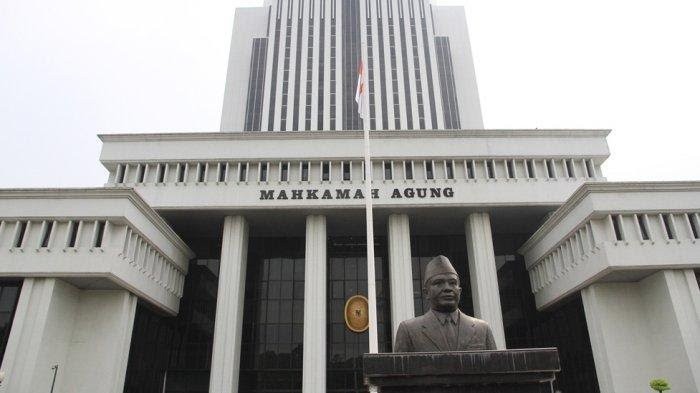
The Supreme Court has taken several measures in an attempt to clean up judicial corruption and improve internal oversight after it was hit by a mega-corruption scandal that involved dozens of justices and workers.
Change text size
Gift Premium Articles
to Anyone
Share the best of The Jakarta Post with friends, family, or colleagues. As a subscriber, you can gift 3 to 5 articles each month that anyone can read—no subscription needed!
T
he Supreme Court has taken several measures in an attempt to clean up judicial corruption and improving internal oversight after it was hit by a mega-corruption scandal that involved dozens of justices and workers.
However, critics have said a thorough reform is needed to ensure that corruption is eradicated from the highest court.
On Dec. 19, the Corruption Eradication Commission (KPK) named another alleged graft-case suspect Edy Wibowo, a judicial justice, for accepting Rp 3.7 billion (US$237,656) in bribery in return for a Supreme Court appellate ruling favoring Sandi Karsa Makassar Hospital, South Sulawesi.
Edy was the 14th Supreme Court official named as a suspect in the case. In early December, KPK named inactive Justice Gazalba Saleh for alleged involvement in the bribery, following the arrest of Civil Chamber Justice Sudrajad Dimyati in September.
The large number of arrests of justices and workers in alleged bribery has scarred the country's highest court’s integrity, prompting calls to thoroughly reform the Supreme Court.
Supreme Court spokesperson Sobandi said that the highest court had suspended all the alleged suspects and imposed sanctions on several high-ranking officials who failed to supervise their subordinates involved in alleged corruption, stopping short of specifying the names.
The Supreme Court also promised to eradicate corruption or case brokering by improving oversight mechanisms and imposing strict sanctions on those involved.
"We will not give up on clearing up the Supreme Court from judicial corruption or brokering cases. We will make changes and take firm action against those involved," Soebandi told The Jakarta Post on Dec. 26.
Sobandi went on to say that the Supreme Court is currently preparing corrective measures to prevent corruption by broadcasting the reading session of court rulings online, forming a special task force under the internal Oversight Body and formulating the concept of a joint probe between the Supreme Court and the Judicial Commission to handle public complaints.
Weak points
Also on Dec. 26, the Judicial Commission visited the KPK for an ethical-violation probe, questioning a total of nine people who had been named suspects.
The Judicial Commission member Binziad Kadafi said the corruption in the highest court was due to the weak oversight and selection process for judicial justices at the Supreme Court.
"In this case, those two points became the loophole for corruption," Binzaid said as quoted by Kompas TV.
Binzaid, who is also part of the liaison team between the Supreme Court and the Judicial Commission, said the team would draft recommendations and uncover corruption patterns so that the Supreme Court could run a judicial reform.
Yuris Rezha Kurniawan of Gadjah Mada University (UGM) Corruption Studies Center (PUKAT) said the graft case involving justices and workers of the highest court had shown that Supreme Court reform had not been carried out thoroughly.
He said judicial reform should be able to prevent corruption opportunities by ensuring the integrity of judges, a good work culture and strict supervision.
More needed
Yuris said strengthening internal controls would not be enough to eradicate judicial corruption as the dirty practice had been ingrained. He called on the Supreme Court to work with the Judicial Commission and the KPK to reform the corrupt ecosystem.
"The Supreme Court must be more welcoming to oversight by the Judicial Commission that was designed to carry out ‘positive intervention’ to maintain the ethics and dignity of justice," Yuris said.
Constitutional law expert Feri Amsari of Andalas University criticized the Judicial Commission's oversight for lacking in merit and thoroughness, calling the commission to be bolder in criticizing the highest court.
He also suggested limiting the number of justices as the Supreme Court currently has more than 50 justices, which complicates oversight by the commission and the public.
"We could have, for example, only nine people like in the Constitutional Court, so that the oversight could be more effective," Feri said.
He also called on the Supreme Court to be more transparent in running appellation and review trials so that the public could watch them.