TheJakartaPost
Please Update your browser
Your browser is out of date, and may not be compatible with our website. A list of the most popular web browsers can be found below.
Just click on the icons to get to the download page.


Popular Reads
Top Results
No results found. Please check your search term and try again
Can't find what you're looking for?
View all search results
Popular Reads
Top Results
No results found. Please check your search term and try again
Can't find what you're looking for?
View all search resultsRamadan reflection: What’s in a name? What’s in a gender identity?
March 31 is International Day of Transgender Visibility and it is high time that they are made visible in a way that gives them the respect that they deserve as human beings and citizens, and the rights that are rightfully theirs.
Change text size
Gift Premium Articles
to Anyone
Share the best of The Jakarta Post with friends, family, or colleagues. As a subscriber, you can gift 3 to 5 articles each month that anyone can read—no subscription needed!
L
ast week I had to have a new passport made as my old one had expired in 2020. Given the pandemic travel restrictions, I had no need to renew it, but this year, my son invited me to spend Idul Fitri in Singapore where he lives with his wife and son, so obviously, I need a passport.
I am a member of my neighborhood Rukun Warga (RW) WhatsApp Group, so I decided to ask what the requirements and process of getting a passport were as it has been a while since I last did so. One of them, a man, replied and addressed me as “Pak” (Mr.). I thanked him and said, by the way, I am a woman. He replied by saying again “Welcome Pak”. I told him again, I am a woman, I clearly wrote my name in the WhatsApp text: “Julia”. Apparently, he had only read jsuryakusuma (my name in the WhatsApp Group), and assumed I was a man, and would not change his mind until I told him three times. Sigh!
Simone de Beauvoir wrote her groundbreaking, controversial and best-known book The Second Sex in 1949, but it seems in 2023, women are still the second sex. Patriarchy dies hard. I wish it would. Die, that is, so that all of us can be more human, humane and accept and respect differences, not least, gender and sexual differences.
It made me think, here I am, a woman, irked at being thought of as a man. Imagine what it is like for our transgender friends.
March 31 is International Day of Transgender Visibility and it is high time that they are made visible in a way that gives them the respect that they deserve as human beings and citizens, and the rights that are rightfully theirs.
One of the rights of citizenship is to own an ID card (KTP), as it gives one legal status. One of the problems with being transgender is that their photo, i.e. their gender, does not match what they put in the biological sex column. But now, a transwoman can have her photo in her female persona while still being biologically male, which is stated in the sex column, and vice versa.
There was a time when it was impossible or very difficult for this to happen. Fortunately, things have changed and the Home Ministry’s Population and Civil Registration Directorate General has made it possible for transgender people to have an e-KTP, but there are only two sexes: male or female. In Indonesia, there is no third option where you can put in: transgender or indeterminate, as is increasingly happening in many countries.
The main factor behind Indonesia’s resistance to lesbian, gay, bisexual, transgender and queer (LGBTQ) existence, in general, is Islam, as is a similar case with most religions. Indonesia is a Muslim-majority country, where 96 percent consider religion as being important in their daily lives, never mind how superficial or hypocritical their practice may be.
It all has to do with interpretation, which has increasingly become conservative and dogmatic with the infiltration of Wahhabism and Salafism from the Middle East. Both favor a direct, “fundamentalist” interpretation of Islam, the difference being that the former rejects modern influences, while the latter seeks to reconcile Islam with modernism. Two sides of the same coin?
In addition, increasingly into the Reform Era (1998 – now), the Indonesian state uses the notion of keluarga sakinah (happy, peaceful family) and gender harmony. It is a way to restrict LGBTQ rights, as it only recognizes the traditional nuclear family.
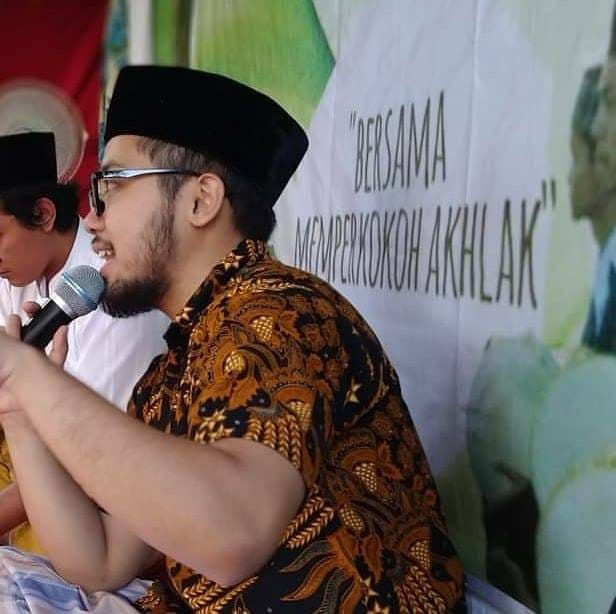
Queer Menafsir. Teologi Islam untuk Ragam Ketubuhan (Queer Interpretation. Islamic Theology for Body Diversity) (Gading, 2023), is a new book by Amar Alfikar, a transgender man, who recently graduated with a master’s in theology and religion, from Birmingham University in the United Kingdom. His book is about his personal experiences, reflections and theological underpinnings as a queer Muslim who tries to offer an inclusive interpretation of various body, divine and Islamic terminologies. He debunks the notion that gender and sexuality diversity is a “Western product”, and that religion definitively rejects gender and sexuality diversity.
This book takes on a refreshingly inclusive approach, in contrast with the condemnatory stance of a number of Muslims in an Indonesia that is seeing a rise in intolerant, dogmatic, self-righteous and condemnatory views.
However, Amar’s take is not exactly new. In 1973, there was the case of Vivian Rubianti, a transwoman, named at birth as Iwan Robianto, whose sex change drew attention not just in Indonesia, but also internationally. Her change of name, as well as gender and sexual status, had to go through a court process. Abdul “Hamka” Malik Karim Amrullah Datuk Indomo, a very well-respected Muslim scholar, and the first head of the Indonesian Ulema Council (MUI) from 1975-1981 was asked to testify as a religious expert. He drew on the Islamic tradition of ijtihad (reasoning) and stated:
"In the teachings of Islam, God gave humans reason, so that human reason is used to pursue knowledge as far as possible, as high as possible. God also does not want His people, namely His human creations like Vivian, to suffer continuously and protractedly for the rest of their lives. So, if the current level of human science and technology has reached the level of being able to change, repair, perfect human defects, deficiencies or weaknesses that makes her suffer continuously, just like Vivian who is able to perform genital surgery from male to female, so that the person concerned is released from her suffering and can become a better human being, able to express herself normally as a woman, then this is in accordance with Islamic teachings”.
This is even more progressive than the statement of Pope Francis in 2013 on LGBTQ, “If they accept the Lord, and have goodwill, who am I to judge them?”
But it is true also with the Muslim LGBTQ community, including of course transgender people. They also want to be practicing Muslims, so who is anyone to judge them?
Amar’s book made many young readers cry after reading it, posting on social media how it made them firmer as Muslims, strengthening their faith. Indeed, to negotiate a change in his gender identity, Amar did not want to choose between being a queer or a Muslim, but choosing to be both queer and Muslim. Islam and queer are not structures and norms where one must be overthrown, but two things that can be lived at once. Personally, he does this by performing surgery and hormone therapy, as well as wearing attributes that reflect the piety of a Muslim man, and promoting a humanist Islamic narrative in his daily life.
One of the noblest aims of Ramadan is to develop the spirit of peace, compassion and love for our fellow human beings. Why don’t we follow the example of the Gen Z Muslim transgender man Amar Alfikar and the late Hamka (1908-1981) in their way of being Muslims, using both the heart and the mind, in the way Allah intended us to do.
***
The writer is the author of Julia’s Jihad.