Can't find what you're looking for?
View all search resultsCan't find what you're looking for?

View all search resultsGlobal efforts to combat climate change have led to underinvestment in natural gas and oil exploration since 2015.
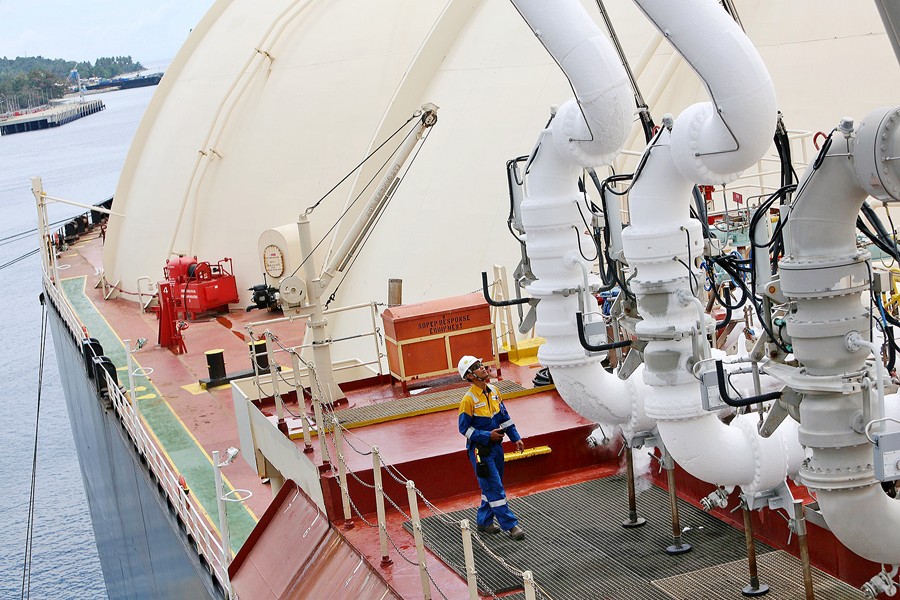
ince about 2010, Southeast Asian countries have been building various downstream liquified natural gas (LNG) facilities including receiving ports and terminals, storage facilities and regasification terminals, including floating units. According to the Global Data Oil & Gas Intelligence Centre, LNG imports to ASEAN countries have surged from almost zero in 2010 to 0.5 million tonnes per annum (mtpa) in 2011 and 12 mtpa in 2020.
The upward trend should continue until at least 2040, driven by two main factors. First, Southeast Asian countries need to diversify their energy sources to generate power. Natural gas is a relatively clean fuel, emitting only half the amount of carbon dioxide compared with coal when used in power plants. It has, therefore, been considered a viable energy resource in the energy transition, allowing emerging economies to reduce carbon intensity whilst keeping power and energy prices affordable. Second, the countries are aware that their domestic natural gas resources are depleting.
In the Philippines, regulatory support for LNG infrastructure stems from the declining and unreliable supply of the Malampaya field. A 2021 report by the Economic Research Institute for ASEAN and East Asia (ERIA) estimated that a total of almost 25 mtpa of new LNG terminals, storage and regasification facilities, including floating units, should enter commercial operation in the Philippines by the end of this year.
The same report said Vietnam plans to build three or four LNG terminals from 2021 to 2025, each with an estimated capacity of 1–3 mtpa. In 2026–2035, the country plans to build five or six LNG terminals, each with an estimated 3 mtpa. The Myanmar Investment Commission approved 15 LNG projects in May 2021, including a US$2.5 billion LNG-to-power project.
Indonesia, self-sufficient in natural gas, embraces the gas-to-power transition. In 2022, Energy and Mineral Resources Minister Arifin Tasrif tasked Pertamina, the state oil and gas company, to supply LNG to 33 small-scale gas-fired power plants across the country, especially the eastern region, which needs the support of LNG bunkering and shipping facilities.
However, global efforts to combat climate change have led to underinvestment in natural gas and oil exploration since 2015. This triggered a continuous increase in natural gas prices that finally peaked from late February to early September 2022, mainly due to the impacts of the Russia-Ukraine war and uneven post–COVID-19 recovery.
Although the LNG spot price in Asia stands at US$9 per million British thermal units (mmBtu), marking a more than 85 percent drop from its peak of more than $70 mmBtu in August 2022, the damaging effects are evident.
Price volatility has tarnished LNG’s reliability and affordability, making it relatively fiscally unsustainable, as securing LNG imports has become extremely difficult, especially during the steep price spikes in 2022. Several gas-to-power and LNG import facilities projects in the Philippines and Vietnam were delayed, whilst several proposed gas-fired power projects faced the risk of cancellation. The delay in gas-fired power plant projects caused power outages in several cities in Vietnam, including Hanoi.
A 2022 study by ERIA and the Institute of Energy Economy Japan examining ASEAN’s decarbonization highlighted the role of natural gas in reducing greenhouse gas emissions. The study foresaw that natural gas would play a crucial part not only during the initial stage of the clean energy transition (2020–2030), where it serves as a flexible baseload that allows the penetration of renewable electricity, but also in the longer term (2030–2050), when more advanced technologies such as carbon capture, utilization and storage, as well as cofiring with hydrogen in power generation, will be deployed.
So, the question is: how can Southeast Asian countries sustain LNG infrastructure development plans while minimizing the risks of price volatility?
First, leverage the European Commission’s plan, announced in December 2021, to ban long-term contracts for unabated natural gas after 2049. Gas-exporting countries should seek new and alternative markets in Asia that have the most potential for demand growth. Through ASEAN or its concerned body such as the ASEAN Council on Petroleum (ASCOPE), the countries should intensify dialogues with gas-producing countries and organizations such as the Gas Exporting Countries Forum to prepare for the new long-term contract framework that will benefit both.
Second, Southeast Asian countries should intensify regional discussions to formulate measures that can effectively mitigate excessive price volatility in the future. The discussions should aim at creating contingency plans to avoid situations like the 2022 crisis, where Southeast Asian LNG cargo was diverted to advanced economies, risking LNG security within the region during price spikes.
Exporting countries in Southeast Asia, such as Malaysia, Indonesia and Brunei Darussalam, that have some contractual freedom over destinations must take the initiative to optimize the operation of their LNG vessels and terminals and ports within the region.
Third, Southeast Asian countries, through ASEAN, must actively promote a universally accessible, real-time information platform for natural gas trade. ASEAN must engage in discussions with the international institutions and bodies that hold the gas market and trade data, whilst cooperating with economic groups such as the Group of Seven and/or Group of 20 to initiate the creation of a real-time information platform that is accessible to all countries and market players.
This platform will significantly increase the transparency and accessibility of the gas market, which will discourage dishonest market practices and unfair imbalances in the gas market.
Fourth, international institutions in Southeast Asia or across Asia should issue statements that can help create a more stable gas market. For example, the European Union, on Feb. 2, 2022, designated natural gas as a sustainable source of energy. Southeast Asian countries should also reverse negative perceptions of natural gas and encourage investors, financiers and countries to restart investing in upstream and midstream gas infrastructure.
The statements might have short- and long-term impacts on improving sentiments and can stabilize gas markets by instilling confidence and providing security to investors.
Finally, Southeast Asian governments must send a clear signal regarding the need for new gas investments. The governments must adopt sound and long-term policies that include transitional finance.
Negating fossil fuel investment in response to climate change concerns could prolong the current energy crisis, erode economic growth and hamper public support for climate actions.
***
The writer is an energy economist at the Economic Research Institute for ASEAN and East Asia (ERIA). The views expressed are his own.
Share your experiences, suggestions, and any issues you've encountered on The Jakarta Post. We're here to listen.
Thank you for sharing your thoughts. We appreciate your feedback.
Quickly share this news with your network—keep everyone informed with just a single click!
Share the best of The Jakarta Post with friends, family, or colleagues. As a subscriber, you can gift 3 to 5 articles each month that anyone can read—no subscription needed!
Get the best experience—faster access, exclusive features, and a seamless way to stay updated.