The Jakarta Post
Please Update your browser
Your browser is out of date, and may not be compatible with our website. A list of the most popular web browsers can be found below.
Just click on the icons to get to the download page.


Popular Reads
Top Results
No results found. Please check your search term and try again
Can't find what you're looking for?
View all search results
Popular Reads
Top Results
No results found. Please check your search term and try again
Can't find what you're looking for?
View all search resultsVoters must pay due attention to maritime security
The current state of Indonesia’s maritime security apparatus has improved, but it is still inadequate relative to Indonesia’s vast maritime territory.
Change text size
Gift Premium Articles
to Anyone
Share the best of The Jakarta Post with friends, family, or colleagues. As a subscriber, you can gift 3 to 5 articles each month that anyone can read—no subscription needed!
 Set as preferred source
A
s the legislative and presidential elections draw closer, maritime security is an issue that voters should pay attention to and study candidates’ policies regarding it.
Maritime security is not necessarily limited to warships and naval warfare. It also encompasses the maritime environment's integrity and maritime navigation safety. As an archipelagic nation, Indonesia has an inherent interest in keeping its maritime environment safe and secure from threats at and from the sea.
There are at least three primary maritime security concerns for Indonesia.
First, China’s assertive behavior in the South China Sea has had ramifications on regional stability. In addition, the renewed attention of great powers in the Indo-Pacific has generated differing visions of Indo-Pacific security. It is in Indonesia’s interests to ensure these tensions do not adversely affect its own security.
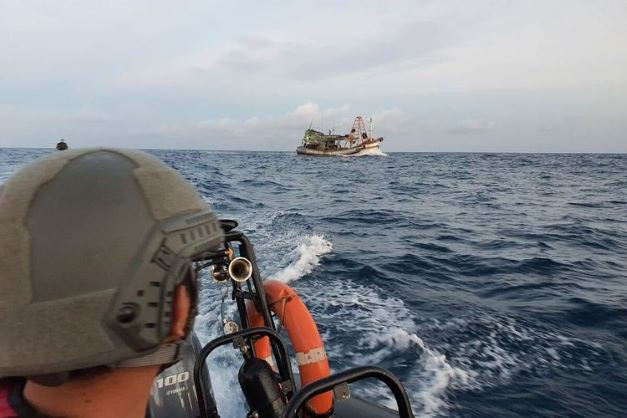
Second, the current state of Indonesia’s maritime security apparatus has improved, but it is still inadequate relative to Indonesia’s vast maritime territory. There are still gaps in routine patrols due to equipment and personnel shortages. Although imaging technologies may alleviate operational burdens, effective maritime law enforcement still requires hulls and crews at sea.
Third, environmental degradation of the marine environment will have catastrophic effects on Indonesia’s territorial integrity. It is estimated that by 2050, thousands of islands that make up the archipelago will be submerged. Moreover, environmental degradation affects global fish stocks. Drops in fish stocks force fishing vessels to venture further out into the high seas, contributing to a rise in illegal fishing and increasing the risk of fishing wars. Smaller fishermen without the means to fish in the high seas are limited to territorial waters, where declining fish stocks have often triggered violent conflict between traditional fishing communities.
Given this situation, it is crucial that the next administration has a coherent agenda that addresses both global and domestic maritime security problems. There are at least three major issues the next administration should pay attention to and seek to solve.