TheJakartaPost
Please Update your browser
Your browser is out of date, and may not be compatible with our website. A list of the most popular web browsers can be found below.
Just click on the icons to get to the download page.


Popular Reads
Top Results
No results found. Please check your search term and try again
Can't find what you're looking for?
View all search results
Popular Reads
Top Results
No results found. Please check your search term and try again
Can't find what you're looking for?
View all search resultsNew Apindo leadership prioritizes investment in RI industry
Change text size
Gift Premium Articles
to Anyone
Share the best of The Jakarta Post with friends, family, or colleagues. As a subscriber, you can gift 3 to 5 articles each month that anyone can read—no subscription needed!
T
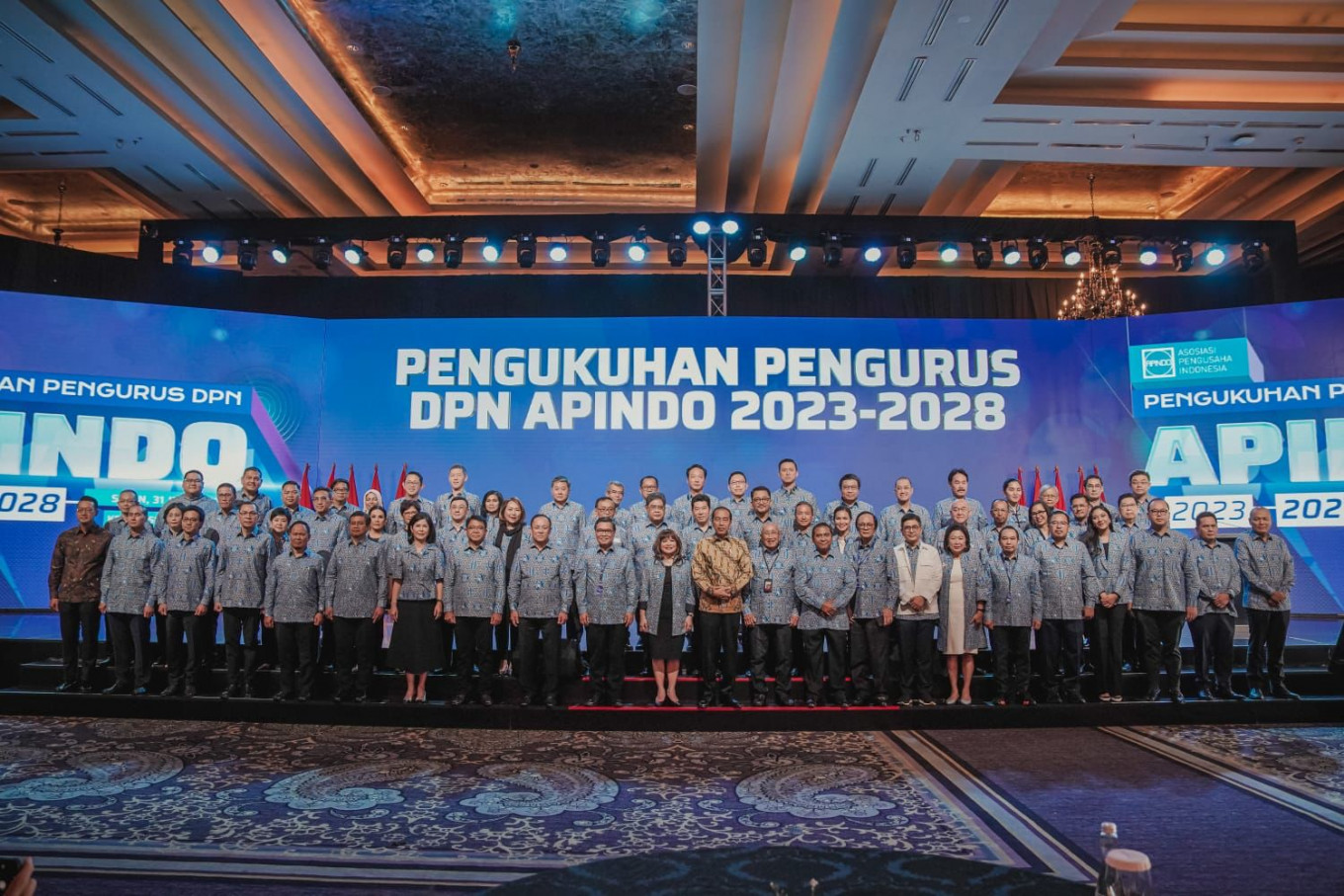
he newly appointed Indonesian Employers Association (Apindo) national leadership council says it will focus on boosting investment in Indonesia, among other priorities, to address the country’s economic growth challenges.
Newly appointed Apindo chairwoman Shinta Kamdani said on Monday that increased investment was necessary to speed up industrial development in Indonesia and reinvigorate the country’s economic drivers.
The new leadership also noted other priorities, namely strengthening labor; empowering micro, small and medium enterprises (MSMEs); and increasing Apindo’s role in policy advocacy.
“We believe that creating economic growth can only be achieved through increases in productivity and human capital competitiveness, good industrial relationships and cooperation in tripartite institutions,” Shinta told the audience at an inauguration event on Monday.
Shinta said Apindo had created a five-year road map that included the goals of supporting economic growth and advancing the Nusantara Capital City (IKN) project.
Seperately, Shinta told reporters that the IKN project was in need of local investors. That was why some businesses under Apindo had been involved in parts of the project, she said, either by themselves or in cooperation with foreign investors.
She added that another important aspect for the planned new capital was technology, especially sustainable and “smart city” technologies.
The association had launched initiatives to help alleviate stunting and improve MSMEs in the country as well, she noted.
“Superior human capital is not solely about increasing skills and capability, but also about a healthy, smart and adaptive generation,” said Shinta.
President Joko “Jokowi” Widodo, in his remarks at the event, urged Apindo’s leadership to think about improving downstream industries in the country.
“All products that are still sold in raw form [to foreign buyers], must be shipped in the form of partially processed or finished goods,” Jokowi told the audience.
He said the country would expand its export bans from nickel and bauxite to copper, tin and other kinds of resources.
This included expanding downstream industries for agricultural products, such as seaweed, which Jokowi said had significant potential for domestic processing.
“These are just some of the challenges that we face and that are usually the task of businesspeople,” Jokowi said.
Apindo also encouraged businesses to employ an environmental, social and governance (ESG) framework and pushed for renewable energy development.
In addition, the association noted that it was important to develop domestic human resources to keep up with challenges at a global level.
Its other plans include having a greater role in discussions and negotiations for trade agreements, particularly comprehensive economic partnerships, along with other stakeholders, such as the Indonesian Chamber of Commerce and Industry (Kadin).
As Apindo’s new chair, Shinta replaces Hariyadi Sukamdani, who will serve as deputy chair of Apindo’s advisory board, while Sofyan Wanadi remains the association’s advisory board chair.