TheJakartaPost
Please Update your browser
Your browser is out of date, and may not be compatible with our website. A list of the most popular web browsers can be found below.
Just click on the icons to get to the download page.


Popular Reads
Top Results
No results found. Please check your search term and try again
Can't find what you're looking for?
View all search results
Popular Reads
Top Results
No results found. Please check your search term and try again
Can't find what you're looking for?
View all search resultsCan Timor-Leste shape the future of the region?
The citizens of Southeast Asia have the prerogative, the right to hear their leaders talking more about democracy and human rights.
Change text size
Gift Premium Articles
to Anyone
Share the best of The Jakarta Post with friends, family, or colleagues. As a subscriber, you can gift 3 to 5 articles each month that anyone can read—no subscription needed!
L
ast week Timor-Leste Prime Minister Xanana Gusmão stated that the accession of his country to the ASEAN bloc was conditional on resolving the conflict now underway in Myanmar.
“Timor-Leste will not be joining ASEAN if ASEAN cannot convince the military junta in Myanmar [to end the conflict],” Xanana explained on Friday.
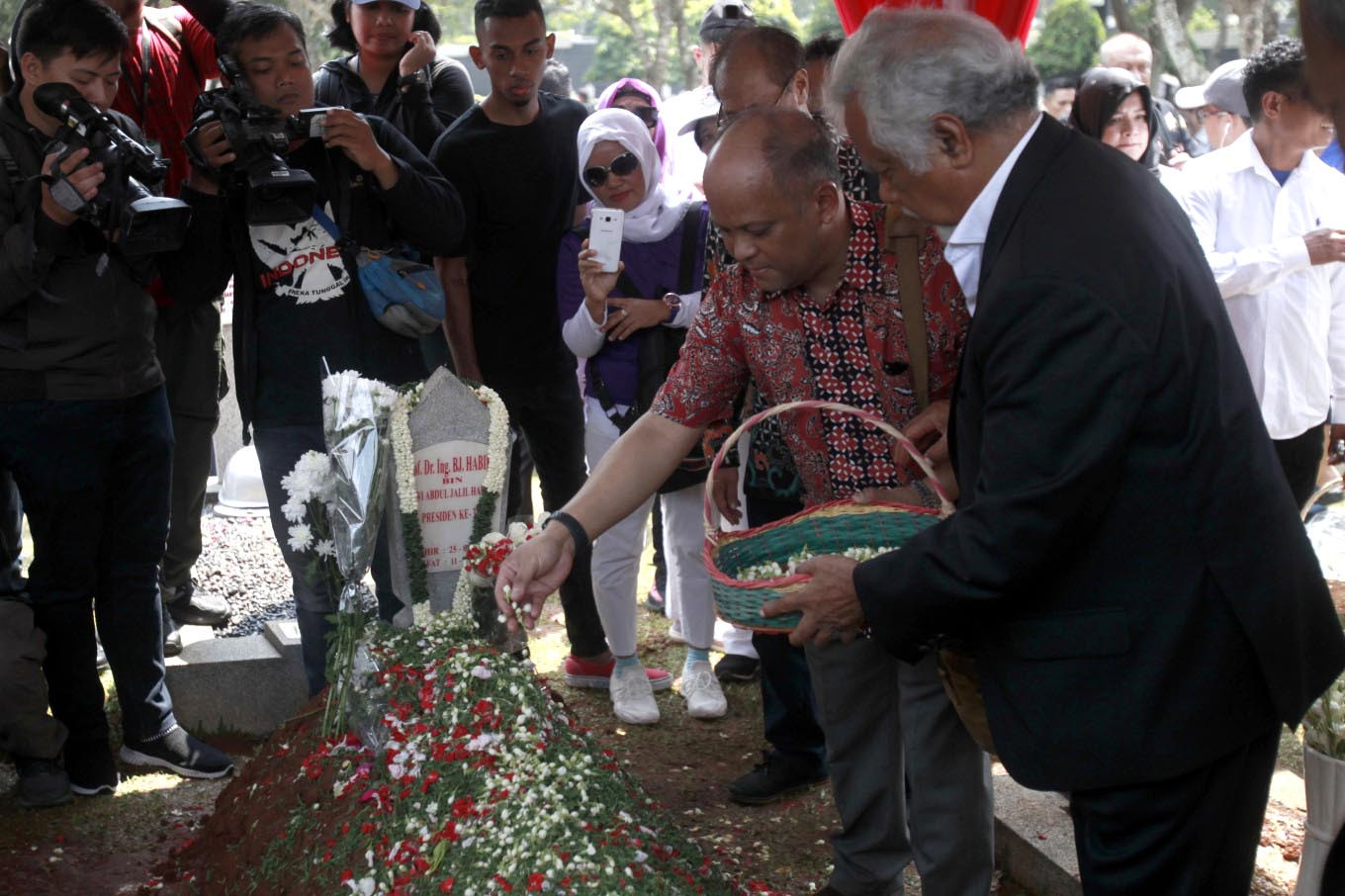
Speaking in Jakarta on the sidelines of The Jakarta Post’s Democracy Dialogue on Monday, however, Timor-Leste President Jose Ramos-Horta said the country was still on course to becoming a full ASEAN member and suggested that Xanana’s statement could have been “misquoted”.
Notwithstanding the discrepancy, let us remind ourselves that the decision by ASEAN governments to accept, in “principle”, the application of Timor-Leste to join the bloc is still a fairly new development in the geopolitics of the region. Many do not think of it as a game-changer in the balance of the regional dynamics.
However, what if the words of Xanana were not just a faux pas but actually the pillar of a foreign-policy doctrine that the newest Asian country intends to embrace and negotiate with?
Despite the uncertainties about when and well, if, Timor-Leste will really become part of ASEAN, it is refreshing to hear the founding father of this tiny and fragile nation talking about democracy. It is also unsurprising to hear so much indignation among regional pundits about what he dared to say publicly.
Yet it is what the region desperately needs. The citizens of Southeast Asia have the prerogative, the right to hear their leaders talking more about democracy and human rights.
So instead of begging for quick and full access, Xanana had the bravery to share his concerns about the inability of ASEAN to step in to resolve the most brutal conflict that the region has known in recent years.
The consensual approach and style of negotiations in place in Southeast Asia, as we know, is quite different and, unfortunately, the people of Myanmar are paying the price for it.
It is not that a military intervention against the coup leaders in Naypyidaw should be considered, but sticking to and being obsessive about the Five-Point Consensus that ASEAN reached at the start of the civil unrest, makes no sense.
So, let us praise Xanana for raising a tough topic and even having the courage to go against its own country’s short-term interests and to choose principles and values over political expediency. This is what we expect from real statesmen, which the whole region is lacking. And to be clear, at stake is not just the future of the people of Myanmar but the future of Southeast Asia.
While no one can expect a new member to overinfluence or dictate its vision to others, Timor-Leste brings some solid democratic credentials that are not so common in the region. This is already a novelty that is enriching the region and it is elevating the public debate especially because democracy and human rights in ASEAN are not fashionable topics.
Will such an attitude, which can be easily taken as insolence and arrogance pay off, change, albeit slowly, the internal dynamics of the region, or slow down Timor-Leste’s full membership of ASEAN? No one really knows. But for sure Jakarta or Bali are not the only places to talk about democracy and human rights in the region.
Why not think about a global Dili democracy and human rights forum? The international community, at least those who care about democracy and human rights, including Indonesia, should step in to realize it.
Meanwhile, even as a non-full member of the ASEAN, Timor-Leste could play a role in strengthening the ASEAN Inter-Parliamentary Assembly (AIPA) and the ASEAN Intergovernmental Commission on Human Rights.
With both institutions, Timor-Leste could share its own experiences and achievements, helping them make further steps in terms of their own organizational development so that they can become more meaningful, effective institutions in the region.
At the same time, Dili could do something that ASEAN member states have never done: Seriously and boldly involve its youth in imagining the meaning of their nations joining the bloc.
Involving and engaging youth, and offering them a chance to understand the full implications of their country becoming a member of ASEAN should be a priority for the Timor-Leste government. With some foresight, strategic planning and a bit of financial support, youth in the region should gather in Dili to discuss the future for ASEAN that they want.
Such initiatives would position Timor-Leste, a minnow, a new kid on the block, in a commanding place to shape the future of the region.
In regard to the negotiations with ASEAN, they are in the safe hands of Milena Maria da Costa Rangel, Timor-Leste’s deputy minister for ASEAN affairs. She knows the intricacies and complexities of dealing with the ASEAN mechanisms and will have the tough job of pushing forward the negotiations when her prime minister and president keep talking about democracy and human rights.
Also, confirming the bloc’s tradition of maintaining secrecy and a lack of transparency as foundational traits of its unique ASEAN way, a road map on Timor-Leste’s full membership was approved in May but no one knows much about it.
This is not acceptable and transparency should be guaranteed on this subject. The technical details, in order to become a full member, do matter a lot and should be made public.
At the same time, certain principles and values that are close to the hearts of the people of Timor-Leste matter as well. Therefore, as difficult as it is going to be, it is essential for Timor-Leste, to shape the technical negotiations based on the high principles expressed by Prime Minister Xanana and President Ramos-Horta.
As a strong believer in any process of regional integration, I still believe it is essential for Timor-Leste to join ASEAN. Yet, while pursuing its membership, it should not give up on its outspoken assertiveness in matters that are normally shrugged off in Southeast Asia.
It is positive that the ASEAN Secretariat recently held technical capacity-building training related to the ASEAN Economic Community. Even more encouraging news is that a key member like Singapore is opening an embassy in Dili.
These are all positive developments but, at the same time, key decisions will be taken at the political level. It is there where the tiny democracy in the region must continue to stand for an inconvenient truth: democracy and human rights should matter, including in Southeast Asia.
***
The writer comments on social inclusion, youth development, regional integration, SDGs and human rights in the context of Asia Pacific.