Can't find what you're looking for?
View all search resultsCan't find what you're looking for?

View all search resultsAgus insisted that the decision to include either Malaya or Papua be “based on the vote of the people in that area, those inhabitants who are able to vote”.
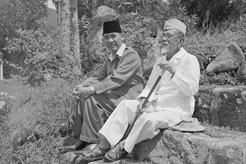
any have written about Indonesia’s proclamation of independence on Aug. 17, 1945, but few seem to care about the dynamics that preceded the historic day, including debates among the founding fathers who built the “new Indonesia”. One of these founding fathers, Agus Salim, deserves a highlight.
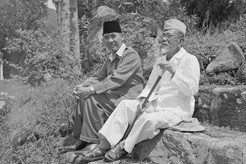
Agus, who lived from 1884 to 1954, retired in the early 1950s at 70 years old as a grandfather of Indonesia, having lived through the independence struggle. Fluent in nine languages, as foreign minister in August 1947 he brought Indonesia to the new United Nations Security Council. In 1949, as leader of the Indonesian delegation at the Round Table Conference at the Hague, he smoked a kretek (clove), defiantly sharing the aroma of Indonesian sovereignty.
Early in the struggle for independence, H.O.S. Tjokroaminoto, leader of Sarekat Islam, worked with Agus, whose daughter sang the national anthem at the Youth Congress in Batavia (now Jakarta), in October 1928, setting the scene for the historic Youth Pledge which decades later would triumph over Dutch colonial rule.
When Agus finished school in 1903 at Hoogere Burger School (HBS), the best school in Batavia, he was the top student in the Dutch East Indies. Before World War I, he served as a translator for the Dutch Consulate in Jeddah, Saudi Arabia and his uncle was the imam at the Haram Mosque in Mecca.
Agus established a solid foundation in Islam and gained wide experience in journalism, including various editorial roles in the Neratja Daily and the Baroe Indies Daily in Jakarta. He also founded the Fadjar Asia newspaper and edited for the Moestika daily in Yogyakarta. He was able to hone his diplomatic skills and understanding of international events, focusing on the future implications of current events.
Agus lent a voice of experience in 1945 when Indonesian nationalists under Sukarno and Mohammad Hatta, still under Japanese supervision, were debating the future borders of an independent Indonesia.
On page 144 of the records known as the Committee for Preparatory Work for Indonesian Independence (BPUPKI) discussions, it is clear that Agus’s perspective was that of international law. The majority of the 66 nationalists involved in the protracted debates about the boundaries of the “new Indonesia” wanted to include Malaya.
This proposal was based on ethnic and religious similarities and the geopolitical benefit of future control of the Strait of Malacca. Agus said he would approve of the proposal if the people of Malaya expressed their wish to join Indonesia by plebiscite.
When the discussion turned to the future reaches of the nation, including Western New Guinea, neither Agus nor soon-to-be vice president Hatta endorsed the proposal to include the territory of the Papuan people.
Hatta described the Papuans as a different race with their own future. Before the war, the Dutch had sent him into exile in Papua for one year. Hatta commented that during World War II, “Nippon soldiers sacrificed a lot of blood to expel Western imperialism from Papua”.
He realized, of course, that the Japanese had not been fighting to then hand the territory to a “new Indonesia”. The Japanese wartime plan, the Nanshinron (Southern Expansion Doctrine), was for the entire island of New Guinea to become a “new Japan”, an alternative to Manchuria as a source of raw materials.
Agus insisted that the decision to include either Malaya or Papua be “based on the vote of the people in that area, those inhabitants who are able to vote”. This was consistent with international law, but as Papua was occupied by Gen. Douglas MacArthur’s troops, who were at war with Japan, it was impossible to implement.
Agus, in the wartime context of 1945, spoke dismissively of the relevance of the geographical extent of Majapahit. Previously, perhaps hoping to capture some of the grandeur and glory of former times, Mohammad Yamin had exhorted all the nationalists to read the historiographical evidence written in 1365 by the poet Mpu Prapantja in the old Javanese text Nāgarakṛetâgama, 150 years before the arrival of the Portuguese.
In the BPUPKI discussion in 1945, Yamin advocated for the territorial extent of “new Indonesia” to have the same boundaries as those he supposed were the boundaries of the empire of Majapahit that he had gleaned from the text, which included Sumatra, Bali, all of Kalimantan including Brunei, the islands to the east including the Spice Islands, most of the Malay peninsula, the island of Timor and the entire island of New Guinea (Papua).
But with the dropping of the atomic bomb, the end of the war came too quickly for any of the nationalists’ discussions to be implemented with the approval of the Japanese commander in Saigon, Field Marshall Terauchi.
In Batavia, Shigetada Nishijima was the Japanese naval officer supervising the Indonesian nationalists. Despite a warning from Terauchi not to provoke or antagonize the Americans because of the power of the A-bomb, Nishijima arranged for Western New Guinea to become part of the “new Indonesia”. The day after the historic proclamation of Indonesia’s independence, which he organized, Nishijima and Sukarno decided to include the Dutch territory without mentioning the name specifically.
Agus’s absence was glaringly obvious when this decision was made. In fact, only 20 nationalists participated, including Sukarno and Hatta.
When I interviewed Nishijima in his house in Tokyo in 1983, I asked him what Sukarno’s reaction was to the inclusion of Western New Guinea, and he said Sukarno’s words were: “If you want to give it to us, we will take it”.
Hatta participated but responded with a warning, “If this continues, maybe we will not be satisfied with Papua, but we will ask for Solomon [Islands] and so on, to the middle of the Pacific Ocean”.
Agus resigned from politics in 1953 and returned to writing religious philosophy. He always lived in a humble way, his principles incorruptible and his concepts modern, in relation to Papua, perhaps too modern for his time. A devout Muslim up to his passing on Nov. 4, 1954, he was buried at Kalibata Heroes Cemetery in South Jakarta.
***
The writer is a historian, an adjunct professor of history at Malang State University, East Java and the author of JFK vs. Allen Dulles: Battleground Indonesia (Skyhorse, 2020).
Share your experiences, suggestions, and any issues you've encountered on The Jakarta Post. We're here to listen.
Thank you for sharing your thoughts. We appreciate your feedback.
Quickly share this news with your network—keep everyone informed with just a single click!
Share the best of The Jakarta Post with friends, family, or colleagues. As a subscriber, you can gift 3 to 5 articles each month that anyone can read—no subscription needed!
Get the best experience—faster access, exclusive features, and a seamless way to stay updated.