TheJakartaPost
Please Update your browser
Your browser is out of date, and may not be compatible with our website. A list of the most popular web browsers can be found below.
Just click on the icons to get to the download page.

Please Update your browser
Your browser is out of date, and may not be compatible with our website. A list of the most popular web browsers can be found below.
Just click on the icons to get to the download page.
Can't find what you're looking for?
View all search resultsCan't find what you're looking for?
View all search results
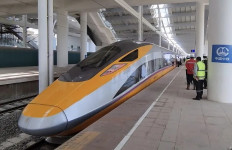
Billed the first export case of a Chinese bullet train system, the project to connect the Indonesian capital and the West Java provincial capital of Bandung was about 80 percent completed in late August and commercial operations are expected to start in June next year.
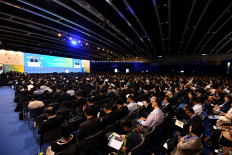
Senior officials of the Hong Kong Special Administrative Region and China used the 4th Belt and Road Initiative (BRI) Summit held here on Sept. 11 to 12 as an opportunity to reinvigorate international confidence in the city’s status and role as a global financial, logistics and business hub and as the gateway to the world’s second-largest economy.
The leaders in Hong Kong and Beijing both seemed to increasingly realize the deep interdependence between the semi-autonomous territory and mainland China, as Hong Kong Chief Executive Carrie Lam reiterated during the summit and which was confirmed by data from the Hong Kong Trade Development Council (HKTDC).
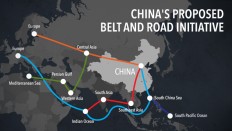
Since 2013, when it was launched by President Xi Jinping in Kazakhstan and Jakarta, the Belt and Road Initiative (BRI) has developed very fast. But since its inception, the BRI has undergone changes to become a common endeavor of many countries and international organizations for joint cooperation in infrastructure projects.
Vice President Jusuf Kalla has spoken out strongly against what he described as discrimination and negative campaigns against Indonesian palm oil under the pretext of environmental conservation, arguing that it should be put to an end because it hampers the country's ability to achieve the Sustainable Development Goals (SDGs).