The Jakarta Post
Please Update your browser
Your browser is out of date, and may not be compatible with our website. A list of the most popular web browsers can be found below.
Just click on the icons to get to the download page.


Popular Reads
Top Results
No results found. Please check your search term and try again
Can't find what you're looking for?
View all search results
Popular Reads
Top Results
No results found. Please check your search term and try again
Can't find what you're looking for?
View all search resultsieu-cepa
Economy 2 weeks ago
PREMIUM
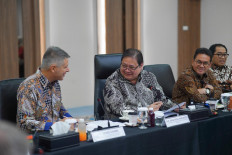
Stable rules key to luring investment, outgoing EU envoy says
The outgoing EU ambassador to Indonesia, Denis Chaibi, whose term ends this month, told The Jakarta Post that stable regulations and fewer trade barriers would be key to attracting European investment in view of the signing of the Indonesia-EU CEPA in October.


Economy 3 months ago
PREMIUM
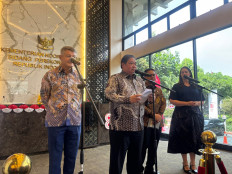
RI, France launch new business council to boost investment
French President Emmanuel Macron described Indonesia as one of France’s key strategic partners in the Indo-Pacific, adding that both countries could help build broader international cooperation without becoming overly dependent on any single economic power.
Europe 3 months ago
PREMIUM
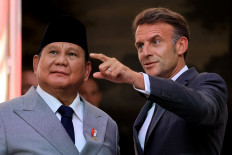
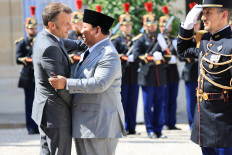
Defense, trade top agenda in Prabowo-Macron talks
French President Emmanuel Macron welcomed President Prabowo Subianto to the Élysée Palace on Thursday for talks focused on expanding defense ties and advancing a long-stalled trade agreement between Indonesia and the European Union.

Europe 6 months ago
PREMIUM
Cyprus steers EU toward reliable trade, global partnership
As Cyprus takes over the rotating presidency of the Council of the European Union, it seeks to navigate a volatile geopolitical landscape by bolstering “strategic autonomy” while offering partners stability and predictability.
Economy 9 months ago
PREMIUM
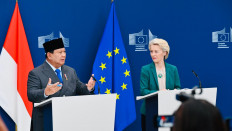
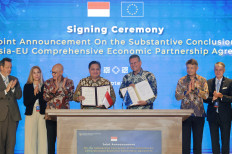
EU ambassador: Lots of mutual homework ahead of CEPA enactment
EU Ambassador to Indonesia and Brunei Darussalam Denis Chaibi sat down with The Jakarta Post’s M. Taufiqurrahman, Mark Lempp and Deni Ghifari on Friday to discuss what’s next in the process and how it will change the trade landscape.
Economy 10 months ago
PREMIUM
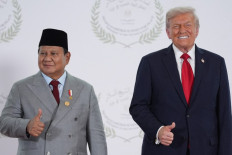
Mixed marks for govt navigating year of turbulent trade
The administration of President Prabowo Subianto has secured multiple trade agreements in its maiden year, partly thanks to the global pressure of an increasingly protectionist United States, but in bilateral talks with the US itself, Indonesia gave much and got little.
Editor's Picks
Popular
- Mass poisonings cast doubt on free meals reforms
- Much ado about asset forfeiture
- New data rules could unlock cross-border data flows
- Children are no longer the priority, were they ever?
- Indonesia, Hong Kong to host new 14-team FIFA ASEAN Cup
- Assessing the merit of the strategic commodities bill
- Free meals face seven-day ultimatum, possible lawsuit
- Prabowo’s approval slide fuels warm-up to 2029 elections
- Three more volcanoes erupt following Sinabung, Anak Krakatau
- Volcanic eruptions take toll on economy


