The Jakarta Post
Please Update your browser
Your browser is out of date, and may not be compatible with our website. A list of the most popular web browsers can be found below.
Just click on the icons to get to the download page.


Popular Reads
Top Results
No results found. Please check your search term and try again
Can't find what you're looking for?
View all search results
Popular Reads
Top Results
No results found. Please check your search term and try again
Can't find what you're looking for?
View all search resultskiara
Society 10 months ago
PREMIUM
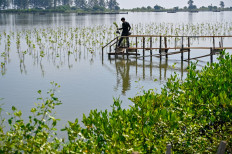
Calls grow for govt to protect ocean, small islands at COP30
As the United Nations climate summit enters its second week, calls are mounting for Indonesia to take stronger action to protect small islands and the ocean from the looming threats of global warming and industrial emissions.
Society 1 year ago
PREMIUM
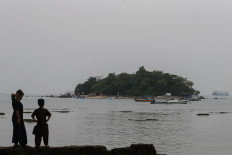
Indonesian islanders lose ground as islets put on sale
Once a private firm enters a small island to build its business, local residents often lose access to the island where they usually fish or dock their ships. The issue has become a complaint of local islander communities amid the brouhaha surrounding Indonesian islands being sold online.

National 6 years ago
PREMIUM
Activists denounce dumping of mine tailings in water off Central Sulawesi
If approved, the waste from the nickel and cobalt metallurgy industry would be dumped at sea. According to Environmental and Forestry Minister Regulation No. 18/2018, deep sea tailings must be dumped outside of “sensitive areas” with standard levels of water quality, where the thermocline layer (where water temperatures rapidly decline) is at least 100 meters below the surface and where seabed canyons would allow the tailings to sink to depths of 200 m or more.

National 6 years ago
NGO coalition calls for sustainable fisheries policies
A new coalition aims to push for fisheries governance that prioritizes national sovereignty and justice in fisheries and marine resources management, and upholds scientific-based recommendations, information disclosure and public participation, according to its statement.
National 6 years ago
PREMIUM
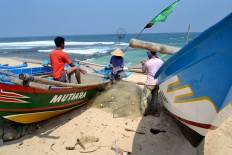
Fisherfolk, locals fight for rights as zoning plans ignore their wellbeing
In East Kalimantan, for example, coastal areas that are designated for fisherfolk amounted to 25.2 hectares for 137,553 families. Meanwhile, mining operations in the province cover 46,758 ha, according to Kiara’s report.


National 8 years ago
Sea offering ceremony held in Central Java to show gratitude
The People’s Coalition for Fisheries Justice (KIARA), together with the Forum of Central Java Fishermen (FJNT) and the Association of Indonesia’s Fisherwomen (PPNI), on Sunday held a sea offering ritual, or sedekah laut, at Bandungharjo village in Jepara, Central Java.
Editor's Picks
Popular
- PISA gains belie Indonesia’s persistent education crisis
- Not the Ministry of Magic
- Suahasil seen to prioritize fiscal discipline, continuity
- The benefit of the doubt has expired
- Osama the gamer: A list of Bin Laden’s video games from his hard drive
- Saudi civil defense sends all-clear after alerts issued for capital Riyadh
- Indonesian Navy welcomes former Italian warship as its first aircraft carrier
- Prabowo skips UNGA as RI seeks to bridge divides
- Another 150 Indonesians deported from Malaysia to Batam
- Saudi-led coalition says Houthis fired ballistic missile at Riyadh


