TheJakartaPost
Please Update your browser
Your browser is out of date, and may not be compatible with our website. A list of the most popular web browsers can be found below.
Just click on the icons to get to the download page.

Please Update your browser
Your browser is out of date, and may not be compatible with our website. A list of the most popular web browsers can be found below.
Just click on the icons to get to the download page.
Can't find what you're looking for?
View all search resultsCan't find what you're looking for?
View all search results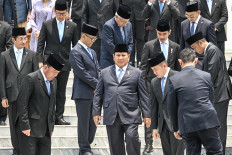
The lack of a checking mechanism for underperforming deputy ministers raises the risk of conflicts of interest for cabinet members holding double positions as state-owned enterprises (SOEs) commissioners, which may undermine the government's overall performance, experts have warned.

Public criticism is intensifying over President Prabowo Subianto's decision to appoint deputy ministers as commissioners in state-owned enterprises (SOEs), a practice critics warn threatens good governance and undermines anti-corruption efforts.
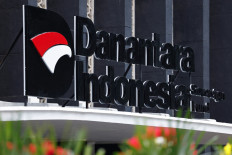
Sovereign wealth fund Danantara is embarking on an ambitious overhaul of state-owned enterprises (SOEs), aiming to consolidate 844 SOEs and their subsidiaries into around 200 entities. As the fund moves forward with its major consolidation plan, questions about investment returns, governance and long-term strategy remain front and center.
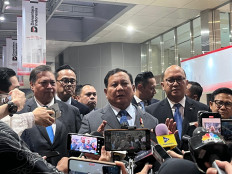
The recent appointment of directors and commissioners in Indonesia’s state-owned enterprises (SOEs) saw the assignment of President Prabowo Subianto’s allies, including retired and active-duty officers from the Indonesian Military (TNI) and the Indonesian Police (POLRI), along with fellow alumni of the elite Taruna Nusantara high school. The overt political calculation comes as the authority of the SOEs Ministry is increasingly eclipsed by Daya Anagata Nusantara Investment Management Agency (Danantara), the new sovereign wealth fund launched by Prabowo.

The government is banking on corporate participation to bridge Indonesia’s infrastructure funding gap, but experts warn that strained finances of state-owned construction firms and the current reluctance of private investors to commit to large-scale projects may hinder progress.
The state asset fund, which also acts as the holding body for SOEs, plans to consolidate the logistics sector from 18 firms into a single major player and to merge 16 state-owned insurers into just three entities.