The Jakarta Post
Please Update your browser
Your browser is out of date, and may not be compatible with our website. A list of the most popular web browsers can be found below.
Just click on the icons to get to the download page.


Popular Reads
Top Results
No results found. Please check your search term and try again
Can't find what you're looking for?
View all search results
Popular Reads
Top Results
No results found. Please check your search term and try again
Can't find what you're looking for?
View all search resultssinovac

Academia 4 years ago
China is developing its own mRNA vaccine – and it’s showing early promise
Both the Sinovac and Sinopharm vaccines use a traditional design, containing whole forms of the coronavirus that have been inactivated – a tried-and-tested way of making vaccines that work. However, while these vaccines were initially quite good at stopping people getting symptomatic COVID, this protection waned significantly over time. These vaccines also offer poor protection against infection with omicron. This has put pressure on China to develop more effective vaccines, as it is pursuing a strict containment policy with the virus.
Academia 4 years ago
PREMIUM
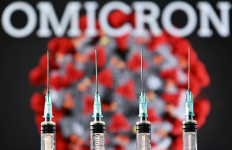
Omicron wandering around amid policy flip-flop
The contradictory statements from top government officials responsible for Indonesia's COVID-19 response indicate that the government has failed to learn from its struggle with the health crisis in the past, especially the first and second waves.
Society 4 years ago
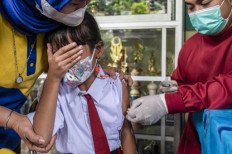
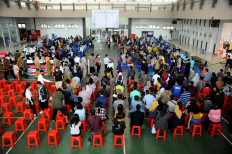
Indonesia to start vaccinating children aged 6-11 against COVID-19
Indonesia approved China's Sinovac Biotech vaccine for the age group last month and about 26.5 million children have been targeted for vaccination, Maxi Rein Rondonuwu, a senior health ministry official, told a briefing.
Indonesia 4 years ago
PREMIUM
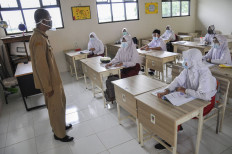
Parents eagerly await vaccine rollout for children as young as 6
Parents are thrilled that the government will begin administering COVID-19 vaccine to some 26 million children aged 6 to 11 years starting next year, saying they want to give their children as much protection from the virus as possible, including when the children are at school.

Society 4 years ago
PREMIUM
BPOM approves Sinovac vaccine for minors aged 6 to 11
“Children aged 6-17 years can now get vaccinated. We are still trying to get more complete data for children under 6, because children at this age require more caution,” BPOM head Penny Lukito said in a press briefing on Monday.
SE Asia 5 years ago
PREMIUM
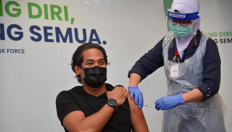
Sinovac's COVID shot highly effective against serious illness: Malaysia study
The latest data is a boost to the Chinese firm, whose COVID-19 vaccine has been under growing scrutiny over its effectiveness following reports of infections among healthcare workers fully immunized with the Sinovac shot in Indonesia and Thailand.
Editor's Picks
Popular
- New islands appear after Anak Krakatau volcano erupts
- Prabowo’s reshuffle bring ties with Jokowi back into focus
- The agrarian reform law and investment prospects of palm oil
- Philippines arrests 244 foreign workers in online scam crackdown
- New police chief orders major shake-up
- Bringing the military back in
- Public health measures urged amid El Niño's extreme heat
- Reshuffle shores up coalition support for 2029
- A ministry restored
- Myanmar migrants returned to war-torn nation from Malaysia


