The Jakarta Post
Please Update your browser
Your browser is out of date, and may not be compatible with our website. A list of the most popular web browsers can be found below.
Just click on the icons to get to the download page.


Popular Reads
Top Results
No results found. Please check your search term and try again
Can't find what you're looking for?
View all search results
Popular Reads
Top Results
No results found. Please check your search term and try again
Can't find what you're looking for?
View all search resultshomo-sapiens

Science & Tech 3 years ago
Neanderthals, humans co-existed in Europe for over 2,000 years: study
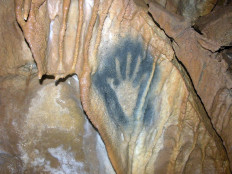
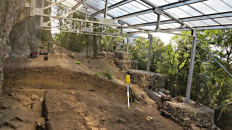
While the study, published in the journal Scientific Reports, did not provide evidence that humans directly interacted with Neanderthals around 42,000 years ago, previous genetic research has shown that they must have at some point.
Science & Tech 4 years ago
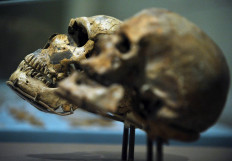
Study places Homo Sapiens in Europe earlier than thought
Up to now, archaeological discoveries had indicated that Neanderthals disappeared from the European continent about 40,000 years ago, shortly after the arrival of their "cousin" Homo sapiens, barely 5,000 years earlier and there was no evidence of an encounter between these two groups.

Science & Tech 4 years ago
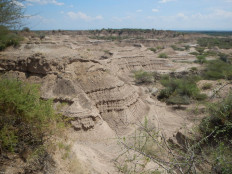
Child fossil find in South Africa sheds light on enigmatic Homo naledi
The latest find adds to the riddle surrounding Homo naledi -- a species of Stone Age hominids discovered less than a decade ago in a region called the Cradle of Humankind, named after the stunning fossils unearthed there.
Science & Tech 4 years ago
PREMIUM
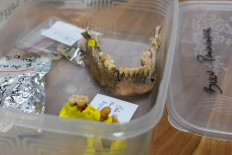
Ancient Indonesian woman reshapes views on spread of early humans
Theories about early human migration in Asia could be transformed by the research published in the scientific journal Nature in August, after analysis of the deoxyribonucleic acid (DNA), or the genetic fingerprint, of the woman who was given a ritual burial in an Indonesian cave.
Science & Tech 5 years ago
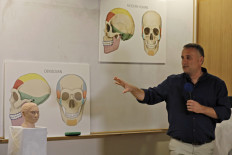
'New type of early human' found in Israel
Archeological digs near the city of Ramla by a team from the Hebrew University of Jerusalem uncovered prehistoric remains that could not be matched to any known species from the Homo genus, which includes modern humans (Homo sapiens).
Editor's Picks
Popular
- Malaysia must not breathe Indonesia’s governance failure
- Mass poisonings cast doubt on free meals reforms
- New data rules could unlock cross-border data flows
- The state's new muscle
- Jakarta airport and others reopen after volcanic ash crisis
- Anak Krakatau eruption halts flights, schools, fishing
- Barelang Police, Japanese diplomat hold meeting on Batam security
- Soekarno-Hatta airport extends closure after Anak Krakatau eruption
- Travelers scramble as Anak Krakatau ash exposes gaps in contingency plans
- Jakarta international airport extends closure after Anak Krakatau eruption


