The Jakarta Post
Please Update your browser
Your browser is out of date, and may not be compatible with our website. A list of the most popular web browsers can be found below.
Just click on the icons to get to the download page.


Popular Reads
Top Results
No results found. Please check your search term and try again
Can't find what you're looking for?
View all search results
Popular Reads
Top Results
No results found. Please check your search term and try again
Can't find what you're looking for?
View all search resultsnew-capital
National 5 years ago
PREMIUM
Jokowi presses on with capital city relocation despite pandemic
After more than a year’s delay, the plan to relocate the nation’s capital to East Kalimantan will proceed, the government has said, with the first order of business being to formalize the legal framework for the construction of the new city.
Politics 5 years ago
PREMIUM
House lists 33 priority bills for 2021. But can it really get them done?
Law experts and observers are looking askance at the Indonesian legislature as it announces its 33 priority bills for the year, most of which are holdovers from last year, notwithstanding the legislature’s poor performance that lawmakers blamed on "the pandemic".
National 5 years ago
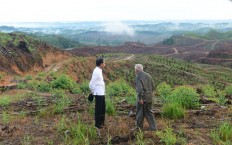
Indonesia's new capital city project put on hold amid pandemic: Bappenas
Bappenas head Suharso Monoarfa confirmed with The Jakarta Post on Wednesday that the capital relocation plan had been suspended for the time being, since the pandemic had forced the government to shift its policies.
Editorial 6 years ago
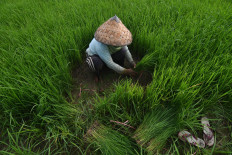
Food, not rice, security
The growing urban middle-income population has undergone dietary and lifestyle changes in recent years toward more grains and oilseed commodities, vegetables, fruit, fish and chicken. Hence, while the agricultural support policy should continue to aim at keeping our dependence on rice imports very low, the government should allocate more resources to the production of other food crops and horticulture.
Business 6 years ago
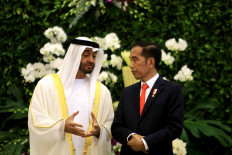
How a gulf prince charmed Jokowi and poured money into Indonesia
It was a strategic match. Jokowi, as the Indonesian president is known, is eager to find investors in an ambitious $400 billion infrastructure program. Sheikh Mohammed bin Zayed Al Nayhan is looking to expand his country’s presence in fast-growing Asian markets. But there’s more to it than that.
National 6 years ago
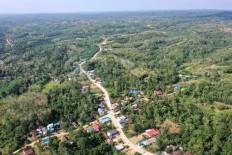
Despite COVID-19 pandemic, Indonesia continues to prepare to relocate capital
The process of relocating Indonesia's capital city to East Kalimantan is to go on as planned despite the COVID-19 pandemic in the archipelago, the Office of the Coordinating Maritime Affairs and Investment Minister has said.
Editor's Picks
Popular
- Malaysia must not breathe Indonesia’s governance failure
- Mass poisonings cast doubt on free meals reforms
- New data rules could unlock cross-border data flows
- The state's new muscle
- Jakarta airport and others reopen after volcanic ash crisis
- Anak Krakatau eruption halts flights, schools, fishing
- Barelang Police, Japanese diplomat hold meeting on Batam security
- Soekarno-Hatta airport extends closure after Anak Krakatau eruption
- Travelers scramble as Anak Krakatau ash exposes gaps in contingency plans
- Jakarta international airport extends closure after Anak Krakatau eruption


