The Jakarta Post
Please Update your browser
Your browser is out of date, and may not be compatible with our website. A list of the most popular web browsers can be found below.
Just click on the icons to get to the download page.


Popular Reads
Top Results
No results found. Please check your search term and try again
Can't find what you're looking for?
View all search results
Popular Reads
Top Results
No results found. Please check your search term and try again
Can't find what you're looking for?
View all search resultsscandal

Politics 1 year ago
PREMIUM
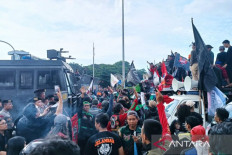
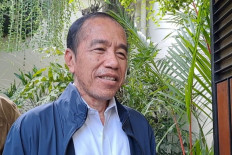
Jokowi suspects political motive behind diploma scandal, calls to impeach Gibran
The former president alleges that political motivations are behind the twin scandal plaguing the Widodo family: one regarding his academic credentials that has seen a recent resurgence, the other a petition to impeach his son over judicial irregularities related to Gibran’s 2024 vice presidential bid.

Opinion 1 year ago
Analysis: Bobby Nasution: Black sheep of the Jokowi clan
North Sumatra Governor Bobby Nasution consistently attracts negative press. The 33-year-old Gerindra politician and son-in-law of former president Joko "Jokowi" Widodo may soon be questioned by the Corruption Eradication Commission (KPK) after his close aide was arrested in a recent graft scandal in the province.
Opinion 1 year ago
PREMIUM
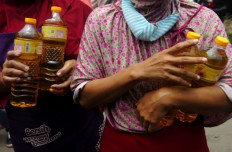
Analysis: MinyaKita scandal exposes weakness in govt’s anti-market policy
The recent scandal over MinyaKita has exposed a crack in the government and structural flaws in the domestic market obligation (DMO) policy. According to economists, the anti-market policy fails to account for volatile crude palm oil (CPO) prices, leaving producers struggling to meet costs and incentivizing violations.


Companies 1 year ago
PREMIUM
Consumers flee to rival brands, fueled by Pertamina scandal
Customers are up in arms over the massive corruption scandal implicating Pertamina, with some turning to more expensive but quality-assured rival brands and others deliberately purchasing potentially doctored nonsubsidized fuel to ensure that taxpayer-funded subsidies reached their intended recipients.
Opinion 1 year ago
PREMIUM
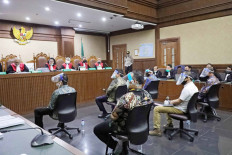
Analysis: AGO names Budget Director General suspect in Jiwasraya scandal
Despite its scheduled dissolution in 2025, new revelations have emerged regarding the massive graft case at state-owned insurer PT Jiwasraya. The case, which led to state losses of Rp 16.8 trillion (US$1.06 billion), is among the largest financial scandals in Indonesia’s history. The Attorney General’s Office (AGO) recently named Isa Rachmatarwata, the Finance Ministry’s budget director general, as a suspect in the case. According to the AGO, Isa allegedly played a key role in approving Jiwasraya’s ill-fated JS Saving Plan in 2009 despite knowing that the company was already financially insolvent at the time.
Editor's Picks
Popular
- PISA gains belie Indonesia’s persistent education crisis
- Not the Ministry of Magic
- The benefit of the doubt has expired
- Suahasil seen to prioritize fiscal discipline, continuity
- Saudi-led coalition says Houthis fired ballistic missile at Riyadh
- 3% deficit cap revision puts Indonesia’s fiscal credibility at risk
- Osama the gamer: A list of Bin Laden’s video games from his hard drive
- Court decision tightens House oversight on free meals funding
- Police probe kidnapping, murder of Ukrainian tourist in Bali
- UN peacekeeping chief in Lebanon says smooth transition is critical before pull-out


