The Jakarta Post
Please Update your browser
Your browser is out of date, and may not be compatible with our website. A list of the most popular web browsers can be found below.
Just click on the icons to get to the download page.


Popular Reads
Top Results
No results found. Please check your search term and try again
Can't find what you're looking for?
View all search results
Popular Reads
Top Results
No results found. Please check your search term and try again
Can't find what you're looking for?
View all search resultsIndigenous Surinamese accept Dutch king's apology for colonial slavery
The monarch made the apology back in 2023 but it was accepted during a meeting and ceremony behind closed doors Monday in Paramaribo, the Surinamese capital, according to the state-run Suriname Communication Services (CDS).
Change text size
Gift Premium Articles
to Anyone
Share the best of The Jakarta Post with friends, family, or colleagues. As a subscriber, you can gift 3 to 5 articles each month that anyone can read—no subscription needed!
 Set as preferred source
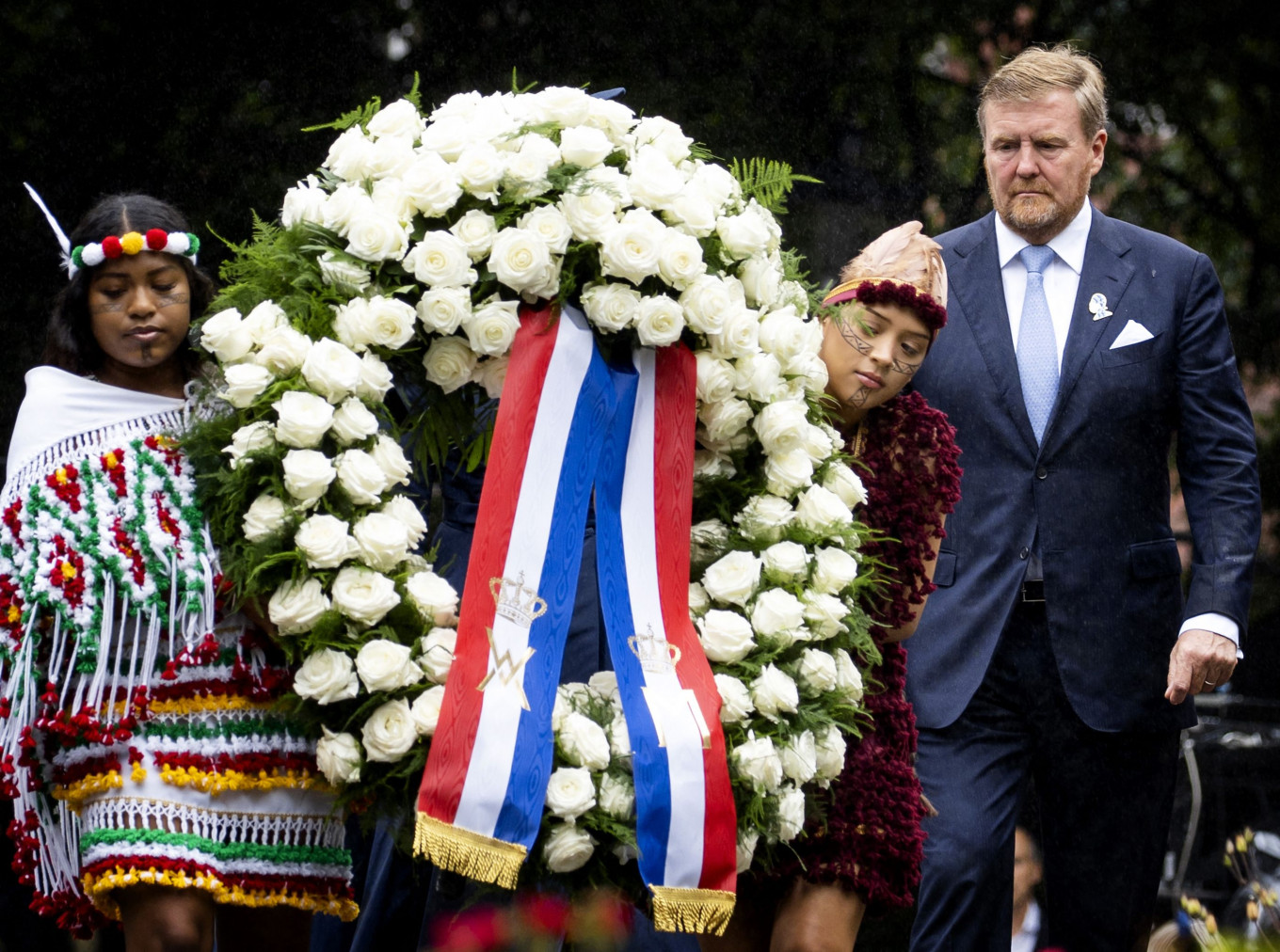 Netherlands' King Willem-Alexander (right) lays a wreath during the National Remembrance Day of Slavery in The Oosterpark, Amsterdam on July 1, 2023. Dutch King Willem-Alexander has formally apologized as regent of the Netherlands for the country's involvement in slavery, saying he felt “personally and intensely“ affected. This year marks the 150th anniversary of the end of slavery in the Dutch colonies. (AFP/ANP/Remko de Waal)
R
epresentatives of the descendants of African slaves and Indigenous peoples of Suriname on Monday formally accepted an apology from visiting King Willem-Alexander of the Netherlands for widespread slavery during Dutch colonial rule.
The monarch made the apology back in 2023 but it was accepted during a meeting and ceremony behind closed doors Monday in Paramaribo, the Surinamese capital, according to the state-run Suriname Communication Services (CDS).
"We accept the apology and the request for forgiveness with the full conviction that the king, with a clear conscience, wishes to cooperate in healing and restoration," said Wilgo Ommen, representative of the Indigenous communities.
Willem-Alexander arrived in Suriname on Sunday with Queen Maxima, a week after the small South American country marked 50 years of independence from the Netherlands.
The three-day visit is the first by members of the Dutch royal family in nearly five decades.
Earlier in the day, the Dutch monarch vowed that the topic of slavery would not be off-limits during his visit to the former colony, where the practice ended just over 150 years ago.
"We will not shy away from history, nor from its painful elements, such as slavery," Willem-Alexander said.
Slavery was formally abolished in Suriname and other Dutch-held lands on July 1, 1863, but only ended in 1873 after a 10-year "transition" period.
The Dutch funded their "Golden Age" of empire and culture in the 16th and 17th centuries by shipping about 600,000 Africans as part of the slave trade, mostly to South America and the Caribbean.
At a meeting with Surinamese President Jennifer Geerlings-Simons on Monday, the king said he was "aware of how deeply this resonates with the descendants of enslaved people and Indigenous communities. We are eager to engage in dialogue with them."
Suriname, on the north coast of South America, has been plagued by rebellions and coups since independence in 1975.
But the recent discovery of vast offshore oil reserves holds the promise of changing the country's fortunes.
Willem-Alexander said the Netherlands was eager to deepen ties with its erstwhile colony "based on equality and mutual respect."
The Netherlands issued an official apology for slavery in December 2022 through then-prime minister Mark Rutte, followed by a royal apology from the king the next year.
A group of Afro-Surinamese people, however, have criticized the royal program for not including a wreath-laying at a Paramaribo monument celebrating the abolition of slavery.
A 2023 study found that the Dutch royal family earned 545 million euros ($595 million) in today's terms between 1675 and 1770 from the colonies, where slavery was widespread.
The king's ancestors, Willem III, Willem IV and Willem V, were among the biggest earners from what the Dutch report called the state's "deliberate, structural and long-term involvement" in slavery.
In 2022, Willem-Alexander announced he was ditching the royal Golden Coach that traditionally transported him on state occasions because it had images of slavery on the sides.