TheJakartaPost
Please Update your browser
Your browser is out of date, and may not be compatible with our website. A list of the most popular web browsers can be found below.
Just click on the icons to get to the download page.


Popular Reads
Top Results
No results found. Please check your search term and try again
Can't find what you're looking for?
View all search results
Popular Reads
Top Results
No results found. Please check your search term and try again
Can't find what you're looking for?
View all search resultsCentral Java draws investors thanks to strong work ethic
Change text size
Gift Premium Articles
to Anyone
Share the best of The Jakarta Post with friends, family, or colleagues. As a subscriber, you can gift 3 to 5 articles each month that anyone can read—no subscription needed!
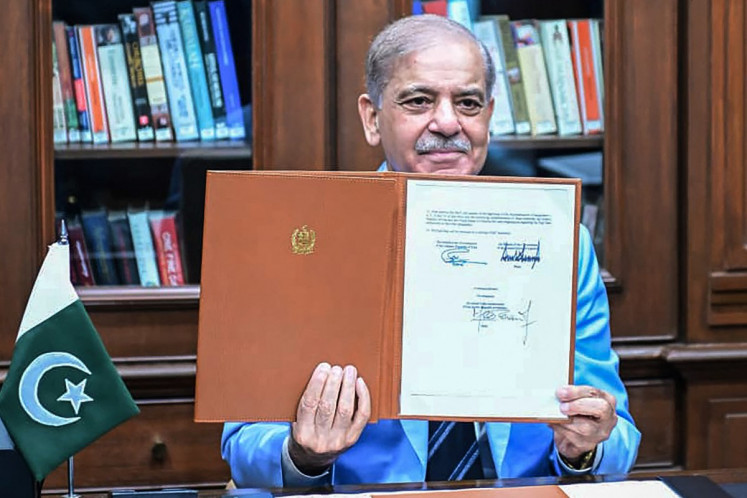
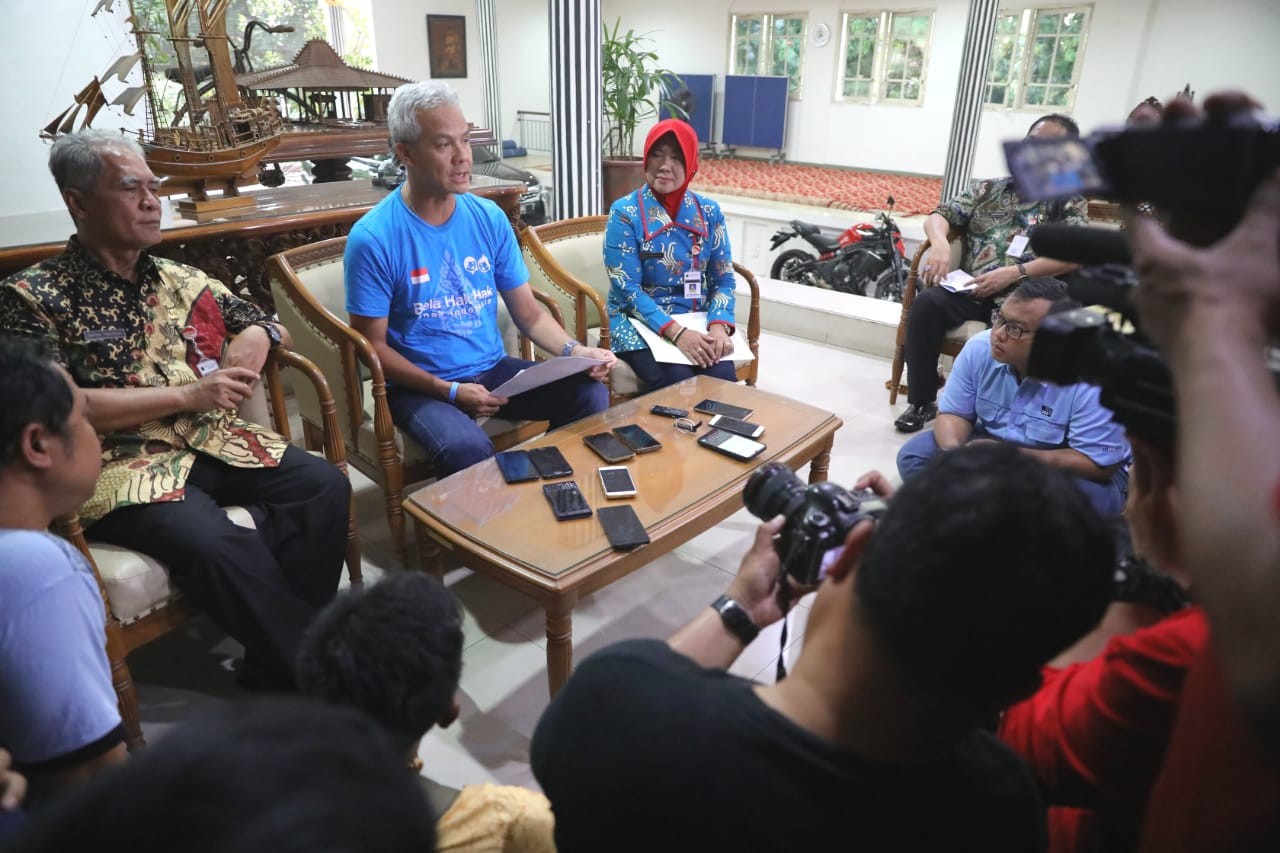 Central Java’s Governor Ganjar Pranowo (center) announces UMK 2020 at the official residence in Puri Gedeh Semarang, Central Java, on Wednesday.
A
number of investors are gearing up to do business in Central Java thanks to the province’s labor availability, relatively low cost and the area’s strong work ethic.
Central Java is known to be highly conducive to working. Central Java’s Manpower, Transmigration and Population Office acting head Susi Handayani explained that even ahead of the announcement of the regency minimum wage (UMK), Central Java’s working environment remains stable.
In addition, Central Java’s price of labor is very competitive. Central Java’s Governor Ganjar Pranowo said the monthly average wage amounted to Rp 1.9 million (US$134.46). This is, certainly, a big draw compared to West Java, East Java, Banten and Jakarta.
Currently, foreign direct investment (FDI) and domestic investment together total Rp 211.19 billion (US$15 million). This amount was calculated from 2015 to the second quarter of 2019.
Ganjar said the total investment, with FDI totaling Rp 110.85 billion, was generated from more than 4,000 projects employing more than 300,000 workers. Domestic investment contributed Rp 100.l34 billion from more than 7,000 projects employing more than 200,000 workers.
The region is currently enjoying a demographic bonus, a situation in which productive-age workers are widely available. The number of productive-age workers in Central Java is more than half of its population.
This demographic bonus makes for a good environment for business owners. Philip D Kaligis from PT Anugrah Cipta Mould says the strong work ethic of residents of Central Java is a magnet for investors. Several factories in West Java and Banten employ workers from Central Java, due to their work ethic and flexibility in communication.
“We think that it’ll be better to open [factories] in Central Java, since the workers are highly available. Besides, our industries in other places also employ workers coming from Central Java,” Philip says.
The company opened a new factory in Jepara, Central Java in 2017. Currently, the company is preparing to open another plant in Pati regency with a total investment of Rp 2 billion. Philip is impressed with Central Java’s working environment and its workers. Within two years of opening a shoe component factory in Jepara, Philip plans to open factories for metal work and shoe printing in Pancur Mayong, Jepara.
Apart from the area’s work ethic, the human resource availability and cost in Central Java are also competitive, evinced by the investment of Rp 2.1 billion made by PT Parkland World Indonesia in 2015.
Absori, a staff member from the company’s general division, said that the company employs 15,000 Central Java residents and that this added an investment of US$50 million. He also said that many of his business partners had shown interest in investing in Central Java as well.
He expressed hope that the region could retain that value for a long time.
The great value of labor and work environment has to be maintained. “Good relations between the government, business practitioners and workers should also be retained,” he said.