TheJakartaPost

Please Update your browser

Your browser is out of date, and may not be compatible with our website. A list of the most popular web browsers can be found below.
Just click on the icons to get to the download page.


Jakarta Post

Indonesian gastronomy: On the knife-edge of a golden age

Indonesia’s culinary scene is bursting with achievements, recognition and government-sponsored programs, but more work remains to shape its global narrative and ensure inclusivity.

Cindy Julia Tobing (The Jakarta Post)
Premium
Contributor/Jakarta
Sat, October 25, 2025 Published on Oct. 24, 2025 Published on 2025-10-24T07:28:35+07:00

Change text size

Gift Premium Articles
to Anyone

Share the best of The Jakarta Post with friends, family, or colleagues. As a subscriber, you can gift 3 to 5 articles each month that anyone can read—no subscription needed!
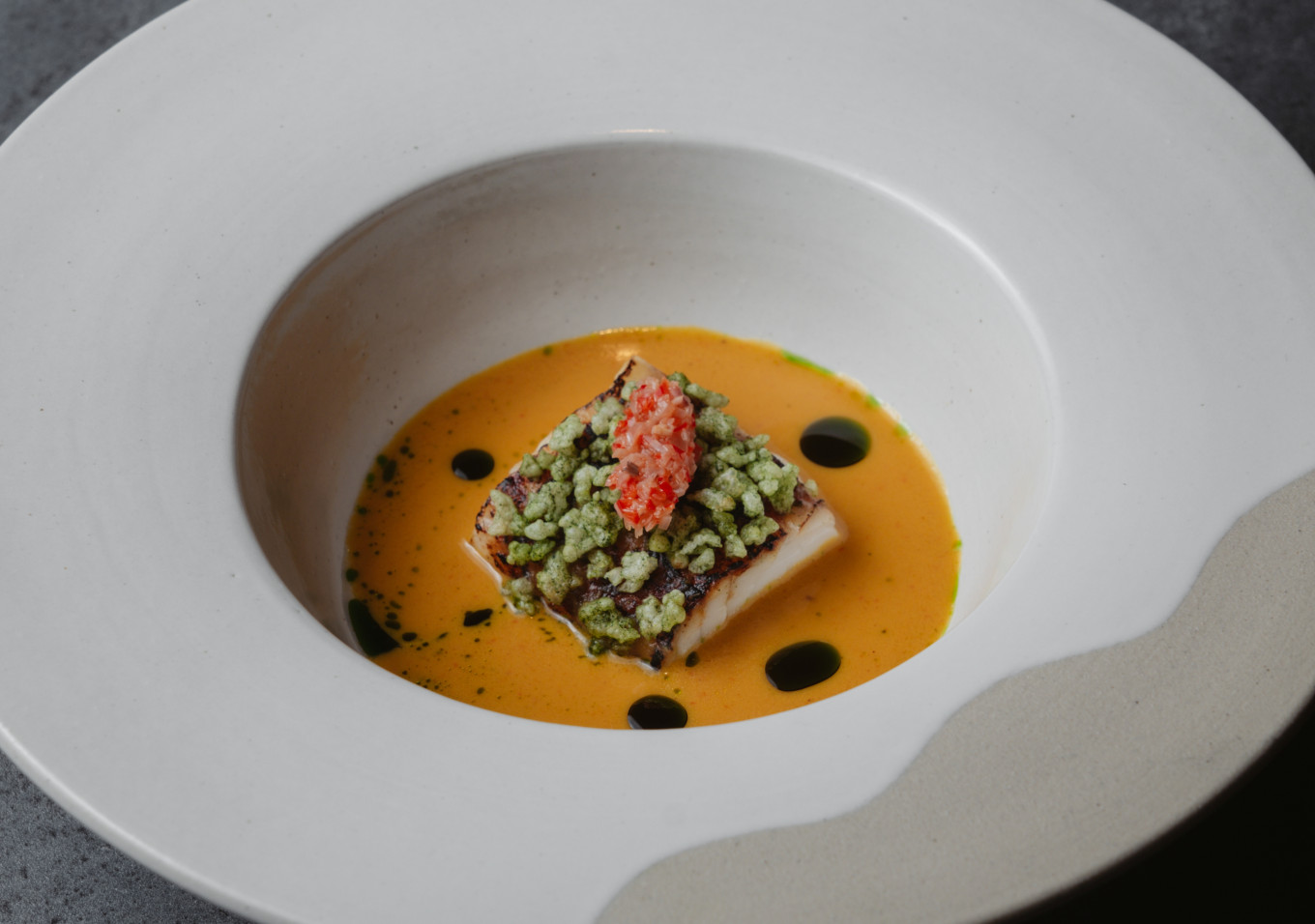
Local flair: Toothfish glazed in lemon sugar, served with ‘belimbing sayur’ (bilimbi) and rice crispies in a broth made from ‘bumbu kuning’ (yellow spice paste), exemplifies the infusion of local ingredients that is one of the hallmarks of August Jakarta. (Courtesy of August Jakarta) Local flair: Toothfish glazed in lemon sugar, served with ‘belimbing sayur’ (bilimbi) and rice crispies in a broth made from ‘bumbu kuning’ (yellow spice paste), exemplifies the infusion of local ingredients that is one of the hallmarks of August Jakarta. (Courtesy of August Jakarta) (August Jakarta/-)

Cindy Julia Tobing

Contributor/Jakarta

The Indonesian gastronomy scene is joyous and hopeful at the moment, and adding to the momentum is Wonderful Indonesia Gourmet (WIG), an initiative from the Tourism Ministry to place the country on the global gastronomy map.

From The Weekender

Living with borrowed certainty: A Gen Z reflection on the climate of our times

When dry roads feel like a gift, what kind of future are we really holding on to?

Read on The Weekender

Launched in late September in Jakarta and Bali through a week of events from gourmet tours and artisan markets to restaurant collaborations and talks, WIG connected international media and tastemakers with chefs, artisan producers and culinary practitioners across the country.

The timing feels right. In recent years, Indonesia’s culinary landscape has been reinvigorated by globally trained chefs, a renewed focus on local ingredients and creative documentation of the archipelago’s culinary stories.

Some of these efforts are gaining international attention: Locavore NXT in Ubud has been recognized for its sustainability ethos, while August Jakarta remains the only Indonesian restaurant included among the prestigious Asia’s 50 Best Restaurants.

So why does this moment feel like a long time coming, and what needs to happen next?

‘Accessibility and trust’

WIG 2025 committee lead Kevindra Soemantri, who is also a food writer, has long believed in the power of exposure through culinary festivals and events.


According to him, the initiative aligns with the ministry’s broader agenda to elevate Indonesian gastronomy and attract quality tourists, with hopes of establishing WIG as a flagship annual program akin to the United Kingdom’s Taste of London or Hong Kong’s Wine & Dine Festival.

“During the pilot’s launch, many international guests were pleasantly surprised at what Jakarta had to offer, because they arrived with little expectation. That’s why we started with gourmet first, to build a sense of accessibility and trust,” Kevindra says, adding that the timing could not be better.

“Globally, Southeast Asia is also being seen as the new dining hot spot, and I think hyper-regional cuisine is the next big thing. Indonesia, with our many distinct regional cuisines, is well-positioned for this,” he says.

Toast to tradition: Journalists and tastemakers share a toast with glasses of ‘jamu’ (herbal medicine) at South Jakarta’s Mayestik Market during the September 2025 launch of the Wonderful Indonesia Gourmet pilot program, in this undated handout photo. (Courtesy of Wonderful Indonesia Gourmet) (Wonderful Indonesia Gourmet/-)

While some may see WIG as a parade of trophy restaurants, Kevindra describes the program as the beginning of a more strategic and inclusive era.

“We want to show that Indonesian gastronomy is not just about restaurants. Our artisan producers are also ready for the global stage,” he says.

Plans for the next edition include delving into cities such as Yogyakarta and Surakarta, further exploring heritage dishes and collaborative exchanges.

“We also hope that WIG becomes a platform that uplifts the intellectuals behind Indonesian gastronomy – the historians, the anthropologists, the ethnographers, the writers – because that’s the way we can grow together,” says Kevindra.

Treading carefully

Food has long been part of Indonesia’s cultural conversation, from Mustika Rasa, the 1960s cookbook commissioned by President Sukarno to more recent works such as Rijsttafel by food researcher Fadly Rahman and the archival projects of the Nusa Gastronomy Foundation.

Yet these efforts remain fragmented, driven by individual scholars, embassies and collectives, instead of as a national strategy, so initiatives like WIG could provide a more cohesive structure.

Hardian Eko “Seto” Nurseto, a food anthropologist and cofounder of culinary research collective Parti Gastronomi, also notes the lack of a unified direction.

“We still don’t have an overarching framework, a clear vision for what we want to promote through gastronomy and why,” he says, referring to Indonesia’s relatively nebulous global visibility.

While he welcomes government initiatives that work in tandem with industry efforts, Seto hopes the movement will inspire a more thoughtful and well-rounded approach.

“Any effort to introduce Indonesian cuisine is always good, but when food becomes part of tourism, it risks standardization,” he says.

“We should aim to balance the pursuit of global standards without losing sight of our own culinary stories and wisdom.”

Progressive vision

For chefs and writers who have gained cross-border renown, global recognition is more than validation: It is also a chance to expand an understanding of Indonesia through food.

For Hans Christian, the chef-owner of August Jakarta who was recently recognized in The Best Chef Awards 2025, the acknowledgement extends beyond personal success to national pride.

He admits that visibility remains a challenge.

“Often it feels like we, as chefs, are building the foundation and the stage at the same time,” says Hans.

“But I’m hopeful because I’m seeing more [of a] collective effort. In the future, official organizations can connect chefs, producers and educators so that our food is understood globally.

“Even small steps, like smoother visa processes or easier import access to ingredients for use in international collaborations, can make a huge difference,” he says.

Culinary map: Copies of the inaugural Indonesia Gourmet Guide, which contains a curated list of notable restaurants in Bali and Jakarta, are displayed during its launch in conjunction with the Tourism Ministry’s Wonderful Indonesia Gourmet 2025 pilot program, in this undated handout photo.. (Courtesy of Wonderful Indonesia Gourmet) (Wonderful Indonesia Gourmet/-)

Looking ahead, how should Indonesian gastronomy be developed in ways that feel organic and globally relevant?

Patricia Tanumihardja, an author based in Washington, DC, who is known for the Mortar and Pestle cookbook of classic Indonesian recipes, underlines the value in storytelling and everyday advocacy.

“While the Indonesian diaspora is not large, I still believe that we have many stories to share,” she says, noting the limited number of Indonesian restaurants abroad.

According to a Foreign Ministry survey, only 1,221 such eateries were open across the globe as of late 2024.

“It would be a good idea to harness the power of the diaspora to spread the word. They have local connections and can build awareness at the grassroots level. Perhaps appoint food ambassadors to facilitate?” she suggests.

Patricia is currently collaborating with Leiden University, as well as Indonesian chefs and cookbook authors across Europe and the United States, to highlight the global evolution of the country’s cuisines.

“I believe cross-country collaborations like this will be instrumental,” she says.

“Everyone is attracted to a story, so tell the stories of the tempeh maker at the market, the farmers who produce gula merah [palm sugar], and weave in aspects of our culture that are already familiar to global audiences.

“There’s no one way to achieve this goal. We need a well-thought-out, multi-pronged effort.”

Your Opinion Matters

Share your experiences, suggestions, and any issues you've encountered on The Jakarta Post. We're here to listen.

Enter at least 30 characters
0 / 30

Thank You

Thank you for sharing your thoughts. We appreciate your feedback.

Share options

Quickly share this news with your network—keep everyone informed with just a single click!

Change text size options

Customize your reading experience by adjusting the text size to small, medium, or large—find what’s most comfortable for you.

Gift Premium Articles
to Anyone

Share the best of The Jakarta Post with friends, family, or colleagues. As a subscriber, you can gift 3 to 5 articles each month that anyone can read—no subscription needed!

Continue in the app

Get the best experience—faster access, exclusive features, and a seamless way to stay updated.