The Jakarta Post
Please Update your browser
Your browser is out of date, and may not be compatible with our website. A list of the most popular web browsers can be found below.
Just click on the icons to get to the download page.


Popular Reads
Top Results
No results found. Please check your search term and try again
Can't find what you're looking for?
View all search results
Popular Reads
Top Results
No results found. Please check your search term and try again
Can't find what you're looking for?
View all search resultsIndia space agency launches its heaviest satellite
The world's most populous nation has flexed its spacefaring ambitions in the last decade with its space program growing considerably, and rivaling the achievements of established powers at a much cheaper price tag.
Change text size
Gift Premium Articles
to Anyone
Share the best of The Jakarta Post with friends, family, or colleagues. As a subscriber, you can gift 3 to 5 articles each month that anyone can read—no subscription needed!
 Set as preferred source
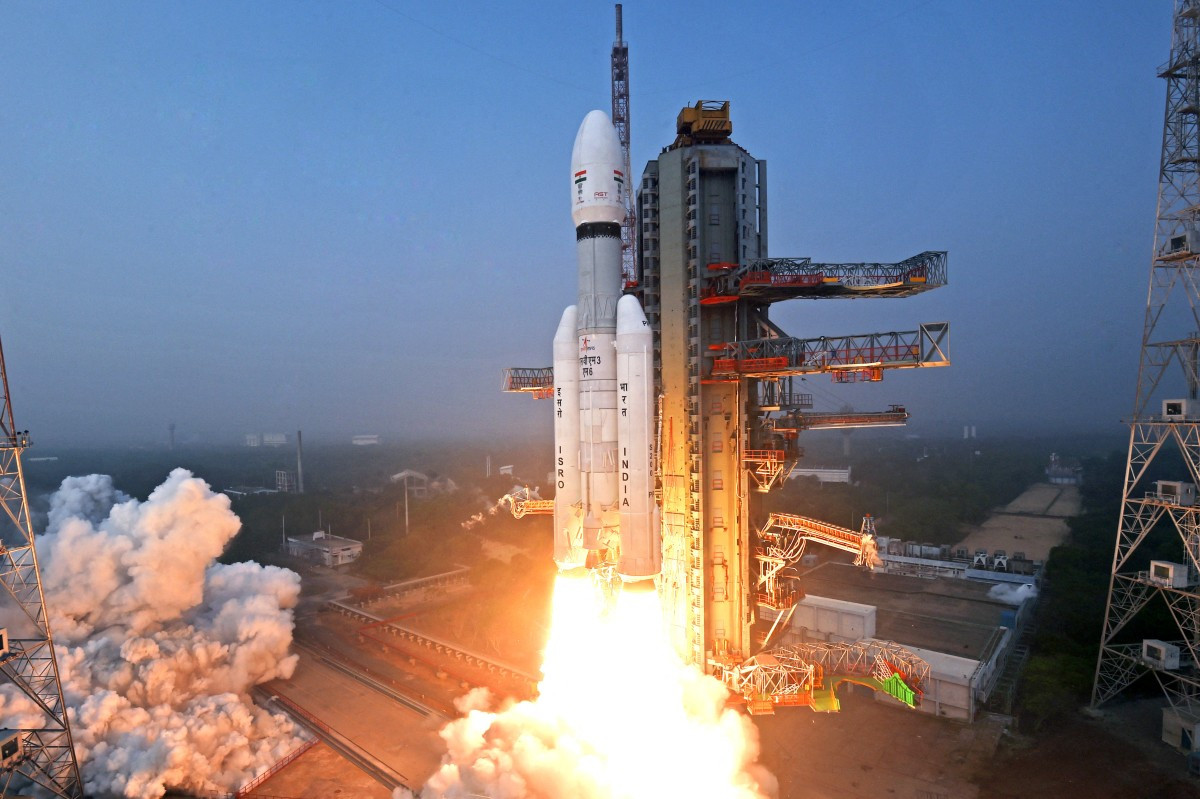 Indian Space Research Organization's (ISRO) launch vehicle LVM3-M6 carrying the United States' next-generation BlueBird Block-2 communication satellite of AST SpaceMobile lifts off from the launch pad at the Satish Dhawan Space Center in Sriharikota in India's Andhra Pradesh state on Dec. 24, 2025. (AFP/Handout/Indian Space Research Organization (ISRO))
India's space agency launched its heaviest ever payload on Wednesday, with Prime Minister Narendra Modi calling the deployment "a significant stride" for the space sector.
The LVM3-M6 rocket launched the United States-built AST SpaceMobile communications satellite into low-Earth orbit.

The Indian Space Research Organisation (ISRO) said it was the "heaviest payload to be launched from Indian soil".
The launch is a boost for India's ambitious low-cost space program, with plans for an uncrewed orbital mission and human spaceflight in the coming years.
The satellite, weighing 6,100 kilograms, was launched on a modified version of a rocket that India plans to use for its future space missions.
India is vying for a larger slice of the booming commercial satellite business as phone, internet and other companies seek expanded and more high-end communications.
Modi said the launch marked "a proud milestone in India's space journey".
"It strengthens India's heavy-lift launch capability and reinforces our growing role in the global commercial launch market," he said in a statement.
Earlier this year, ISRO launched the CMS-03 communication satellite, which weighs about 4,410 kilograms.
For these heavy launches, India has deployed an upgraded version of the rocket it used to send an unmanned craft to the Moon in August 2023.
The world's most populous nation has flexed its spacefaring ambitions in the last decade with its space program growing considerably, and rivaling the achievements of established powers at a much cheaper price tag.
It has said it plans to launch an uncrewed orbital mission before its first human spaceflight in 2027. Modi has also announced plans to send an astronaut to the Moon by 2040.




More from The Weekender

Questioning and nurturing the self with Abell Octovan
The visual artist explores new grounds and mediums in his first solo exhibition, Am I an Artist.

Radio still gives you something an algorithm can't
You can choose almost anything you want to hear these days. So why are young people still tuning in to radio?

Travels in the land of Gen Z (Part 2)
Beyond the fragility and short attention span, my students proved sharper, more open-minded and more generous than I’d expected. Second of two parts. Read the first here.