TheJakartaPost
Please Update your browser
Your browser is out of date, and may not be compatible with our website. A list of the most popular web browsers can be found below.
Just click on the icons to get to the download page.


Popular Reads
Top Results
No results found. Please check your search term and try again
Can't find what you're looking for?
View all search results
Popular Reads
Top Results
No results found. Please check your search term and try again
Can't find what you're looking for?
View all search resultsFamily financial planning essential to maintaining lifestyle, growing wealth
A global insurance and financial planning company advises families to plan ahead in 2026 with strategies to ensure that their household and lifestyles are secure when the unexpected takes place.
Change text size
Gift Premium Articles
to Anyone
Share the best of The Jakarta Post with friends, family, or colleagues. As a subscriber, you can gift 3 to 5 articles each month that anyone can read—no subscription needed!
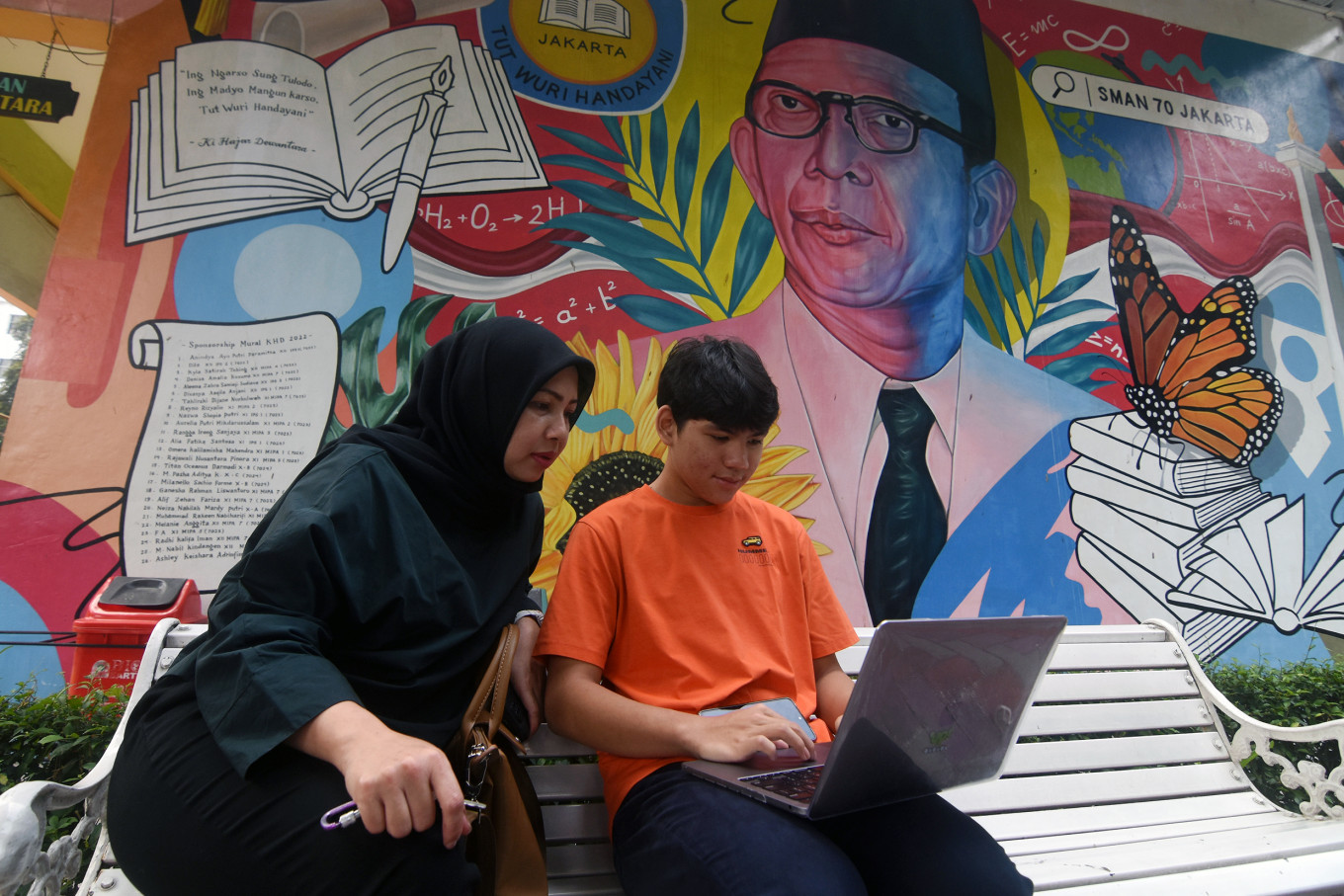 A woman accompanies her son to fill in an online registration form
outside State High School 70, South Jakarta, on June 13, 2023, the first day of enrolment in elementary schools, junior high schools and senior high schools. (Antara/Indrianto Eko Suwarso)
A woman accompanies her son to fill in an online registration form
outside State High School 70, South Jakarta, on June 13, 2023, the first day of enrolment in elementary schools, junior high schools and senior high schools. (Antara/Indrianto Eko Suwarso)
A
s 2025 nears its end and families prepare to welcome a new year, PT Sun Life Indonesia has advised better future planning, including for household finances.
It is the dream of every family to have a proper home, good education and a stable lifestyle, but each must confront and manage a vulnerability gap.
“The vulnerability gap comes from equating stability with security, while in truth, they don’t walk hand in hand,” Sun Life marketing chief Maika Randini said in a press release issued on Dec. 26.

“There are several factors causing vulnerability gap among Indonesian families,” she said.
The first is relying on a single breadwinner, which is typical among many families. This increases a household’s financial risk significantly, not only in terms of stability but also long-term planning for their children’s future.
The second is a lifestyle increase as incomes rise. Stable families in general have a high cost of living, such as tuition from premium schools, installment payments for major assets, regular travel and maintenance.
The third is having many non-liquid assets, meaning they cannot be easily converted to cash.
While families typically measured their financial stability in assets such as property, businesses and long-term investments, Maika cautioned that most of these “are not liquid, because they are not easily sold when necessary”.
The last factor is cross-generational responsibility. The more stable a family is, the larger the responsibility it bears for both previous and future generations.
“For families in a sandwich generation, their responsibility covers supporting children’s education and future while at the same time taking care of elderly parents,” she said.
According to the Sun Life Asia Financial Resilience Index Indonesia 2025, as much as 71 percent of Indonesian families aspires to build theire wealth.
Maika said there were several steps that families could take to realize their aspiration while managing more complex risks, such as having an income replacement plan and a protection plan for high earners to maintain stable household cash flow.
Families with large but non-liquid assets might want to take out a tax-free inheritance protection, which was liquid and could be used immediately by heirs, she suggested.

For long-term protection, families should have a structured, cross-generational financial plan so that inheritance can be both legally compliant and fulfill a family’s needs.
Meanwhile, parents should prepare education finance plans because school tuitions are increasing every year.
July data from Statistics Indonesia (BPS) showed that the education sector recorded 1.95 percent inflation, with the highest increase of 3.12 percent recorded in early childhood and elementary education.
“That is why preparing education funds is a fundamental thing that parents must do, especially those in the sandwich generation. [...] Parents can start by deciding when their children will enter each [education] level and then find out the estimated tuition fees for that year, including projected inflation,” said Maika.
Once all related educational costs were estimated, the next step was for parents to have a consistent financial strategy, such as setting aside 5 to 10 percent of their monthly income.
Parents must also decide on a clear target, such as how much money to save over a certain period.
In addition to savings and protection, Maika suggested parents also consider diversifying their financial instruments so the fund keeps growing, such as equity mutual funds or mixed mutual funds.
“Investment instruments help to grow the funds while protection instruments can provide a safety net in case of an emergency,” she said.


More from The Weekender

Show up, show off and call it self-care: Strong is the new flex
With toned arms as the new status symbol, maybe it’s time we rethink why we come to the gym and pick up those dumbbells.

When a friend becomes a stranger: Healing after a platonic breakup
We expect heartbreak in romance, but no one warns us how much it hurts when a friendship falls apart.

The power of small acts: Glimmers of hope from 2025
In a year marked by despair, it was small, human acts that broke through the noise, reminding us that hope doesn’t vanish. It’s passed hand to hand, one person to another.