TheJakartaPost
Please Update your browser
Your browser is out of date, and may not be compatible with our website. A list of the most popular web browsers can be found below.
Just click on the icons to get to the download page.


Popular Reads
Top Results
No results found. Please check your search term and try again
Can't find what you're looking for?
View all search results
Popular Reads
Top Results
No results found. Please check your search term and try again
Can't find what you're looking for?
View all search resultsNASA says targeting ISS medical evacuation for January 14
Details of the medical evacuation, the first in ISS history, were not provided by officials, though they said it did not result from any kind of injury onboard and that the unidentified crewmember is stable and not in need of an emergency evacuation.
Change text size
Gift Premium Articles
to Anyone
Share the best of The Jakarta Post with friends, family, or colleagues. As a subscriber, you can gift 3 to 5 articles each month that anyone can read—no subscription needed!
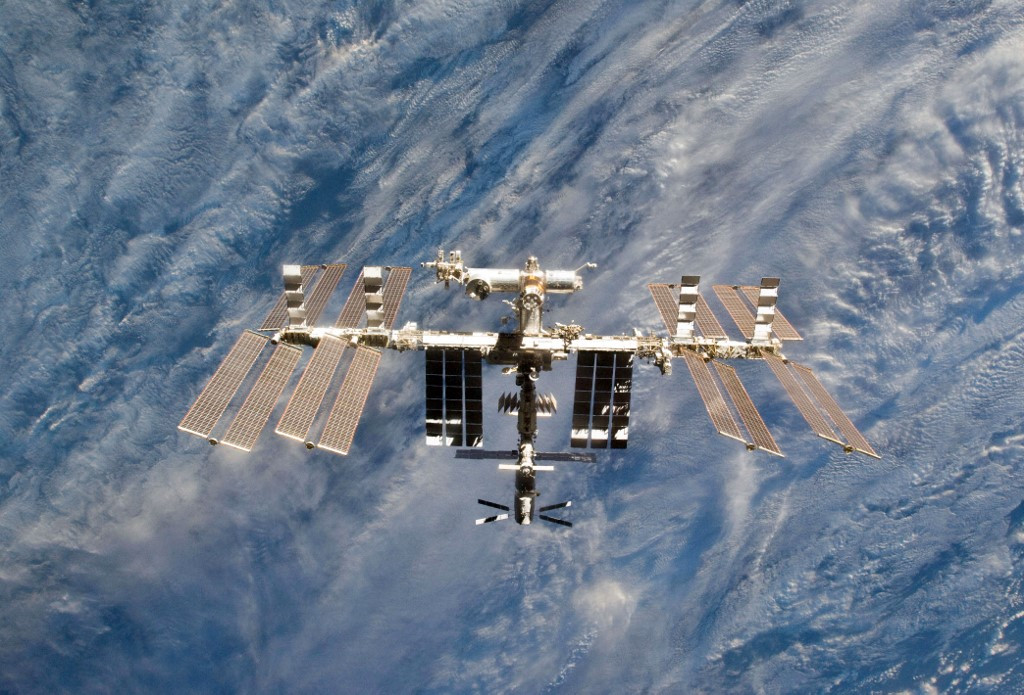 In this file photo taken on March 07, 2011 this NASA handout image shows a close-up view of the International Space Station is featured in this image photographed by an STS-133 crew member on space shuttle Discovery after the station and shuttle began their post-undocking relative separation. (AFP/NASA)
NASA crewmembers aboard the International Space Station (ISS) could return to Earth as soon as Thursday, the US space agency said, after a medical emergency prompted the crew to return from their mission early.
"NASA and SpaceX target undocking Crew-11 from the International Space Station no earlier than 5 p.m. [Eastern Time] on Jan. 14, with splashdown off California targeted for early Jan. 15 depending on weather and recovery conditions," the agency said in a post on X.

Details of the medical evacuation, the first in ISS history, were not provided by officials, though they said it did not result from any kind of injury onboard and that the unidentified crewmember is stable and not in need of an emergency evacuation.
The four astronauts on Nasa-SpaceX Crew 11 have been on their mission since Aug. 1. These expeditions generally last around six months, and the crew was already due to return to Earth in the coming weeks.
American astronauts Mike Fincke and Zena Cardman, as well as Japan's Kimiya Yui and Russia's Oleg Platonov, would be returning, while American Chris Williams will stay onboard the international body to maintain a US presence.
Officials indicated it was possible the next US mission could depart to the ISS earlier than scheduled, but did not provide specifics.
Continuously inhabited since 2000, the ISS functions as a testbed for research that supports deeper space exploration, including eventual missions to Mars.
The ISS is set to be decommissioned after 2030, with its orbit gradually lowered until it breaks up in the atmosphere over a remote part of the Pacific Ocean called Point Nemo, a spacecraft graveyard.



More from The Weekender

Show up, show off and call it self-care: Strong is the new flex
With toned arms as the new status symbol, maybe it’s time we rethink why we come to the gym and pick up those dumbbells.

When a friend becomes a stranger: Healing after a platonic breakup
We expect heartbreak in romance, but no one warns us how much it hurts when a friendship falls apart.

The power of small acts: Glimmers of hope from 2025
In a year marked by despair, it was small, human acts that broke through the noise, reminding us that hope doesn’t vanish. It’s passed hand to hand, one person to another.