The Jakarta Post
Please Update your browser
Your browser is out of date, and may not be compatible with our website. A list of the most popular web browsers can be found below.
Just click on the icons to get to the download page.


Popular Reads
Top Results
No results found. Please check your search term and try again
Can't find what you're looking for?
View all search results
Popular Reads
Top Results
No results found. Please check your search term and try again
Can't find what you're looking for?
View all search resultsFrom Fatboy Slim to Nine Inch Nails, electronic music dominates Coachella
The traditionally rock-centric festival in Indio, California -- headlined this year by singers Sabrina Carpenter, Justin Bieber and Karol G -- reflects the surge in popularity of electronic music in the aftermath of the Covid-19 pandemic.
Change text size
Gift Premium Articles
to Anyone
Share the best of The Jakarta Post with friends, family, or colleagues. As a subscriber, you can gift 3 to 5 articles each month that anyone can read—no subscription needed!
 Set as preferred source
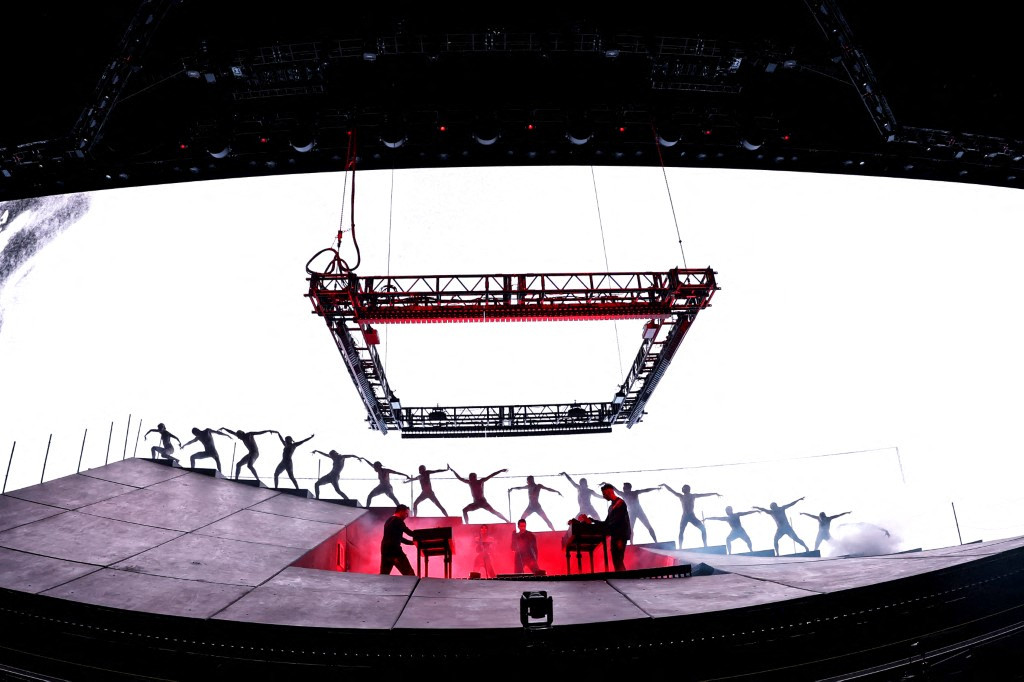 (L-R) Atticus Ross, Mariqueen Maandig, Trent Reznor and Boys Noize of Nine Inch Noize perform at the Sahara Tent during the 2026 Coachella Valley Music and Arts Festival at Empire Polo Club on April 11, 2026 in Indio, California. (AFP/Matt Winkelmeyer)
F
rom established stalwarts like Fatboy Slim to rising artists like Australia's Ninajirachi, this year's edition of the annual Coachella music festival dedicated nearly half of its lineup to electronic musicians.
The traditionally rock-centric festival in Indio, California -- headlined this year by singers Sabrina Carpenter, Justin Bieber and Karol G -- reflects the surge in popularity of electronic music in the aftermath of the Covid-19 pandemic.
"It's testament to the rise of electronic music, generally," Swedish DJ Adam Beyer told AFP.

"Much of it is so much more accessible. Also, there is a lot of electronic collaboration and influence in pop so it feels much more visible across the board now," he added.
Among the highlights of the festival's second weekend was the premiere of electronic musician Anyma's "ÆDEN" show on the festival's main stage, after the set was canceled the previous weekend due to high winds.
"I mean man, I love it, it's like... a rave after another, you know?" festival attendee John Good said as he left the Nine Inch Noize show, a joint act by industrial rock band Nine Inch Nails and German producer Boys Noize.
The second day of the festival featured a set by Beyer with trance legend Armin van Buuren, who popularized the subgenre for a global audience.
"The term is now so broad," van Buuren told AFP, referring to electronic music.
"It's no longer just 'house music,' but even tracks by Sabrina Carpenter have some sort of electronic drums in them. I guess electronic music has spread through and had an impact on all genres of music," he said.
Beyer and van Buuren agreed that the delineation between electronic and traditional genres has faded in recent years along with listening habits.
"This younger generation doesn't really approach music through strict genre labels anymore. It's more about mood, energy and context," van Buuren noted.
The 49-year-old Dutch DJ argued the festival setting was optimized for electronic acts.
"Festivals and large-scale shows have become more immersive and experience-driven, and electronic music is built exactly for this kind of setting," he said. "It's physical, emotional and repetitive in a way that works on this larger scale."
'Unpredictable'
At the Sahara tent, Coachella's stage dedicated to electronic music, the lineup featured a variety of DJs from a range of subgenres.
Among them was Brazilian DJ Mochakk, who called his Coachella debut his "biggest gig to date."
The 26-year-old's influences include Brazilian genres like MPB and Tropicalia, as well as artists like Caetano Veloso and Chico Buarque.
"Music always goes in cycles," he told AFP.
"With electronic music I think it's this mix of old and new that people connect with.
"Also how open it is, you can blend so many genres in one set, keep switching energy, keep it unpredictable," he added.
"That keeps it exciting, and I think that's probably why it's been growing so much everywhere."
Techno-flamenco
Another electronic music act at Coachella this year was the duo MESTIZA, consisting of Spanish artists Pitty Bernad and Belah, who brought their cultural influences -- including flamenco dancers -- to the stage.
"Electric music has something very special, and that's why it's understood all over the world," Belah said.
The genre, she added, "has no borders."
"For a long time it was hard to find places where we could go to listen to electronic music," said Pitty, adding that "it has evolved in a dramatic way."
"Giving rise, for example, to this Coachella lineup," she said.


More from The Weekender

Of cats and writers
After 19 years, a beloved cat leaves behind more than memories: he survives in a family’s lore, two novels, and the peculiar bond between writers and their feline muses.

The girl I chose to forget
Growing up complicated a childhood love of Indonesia. Years later, an old song offers one young writer a way back: not to innocence, but to a more difficult kind of belonging.

A year after Affan: The anger that stayed
A year after Affan Kurniawan’s death, the fury that spilled into Jakarta’s streets has not disappeared. It has settled into other forms: exhaustion, distrust and a lingering sense that nothing has really changed.