The Jakarta Post
Please Update your browser
Your browser is out of date, and may not be compatible with our website. A list of the most popular web browsers can be found below.
Just click on the icons to get to the download page.


Popular Reads
Top Results
No results found. Please check your search term and try again
Can't find what you're looking for?
View all search results
Popular Reads
Top Results
No results found. Please check your search term and try again
Can't find what you're looking for?
View all search resultsDevelopmental state ambition: Reading Prabowo’s economic direction
President Prabowo’s visionary fiscal address signals a bold shift toward a state-driven, developmental state model aimed at unleashing Indonesia’s economic potential—but its ultimate success hinges entirely on dismantling the entrenched governance and bureaucratic failures of the past.
Change text size
Gift Premium Articles
to Anyone
Share the best of The Jakarta Post with friends, family, or colleagues. As a subscriber, you can gift 3 to 5 articles each month that anyone can read—no subscription needed!
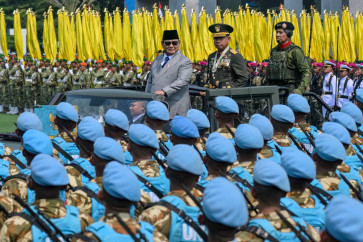
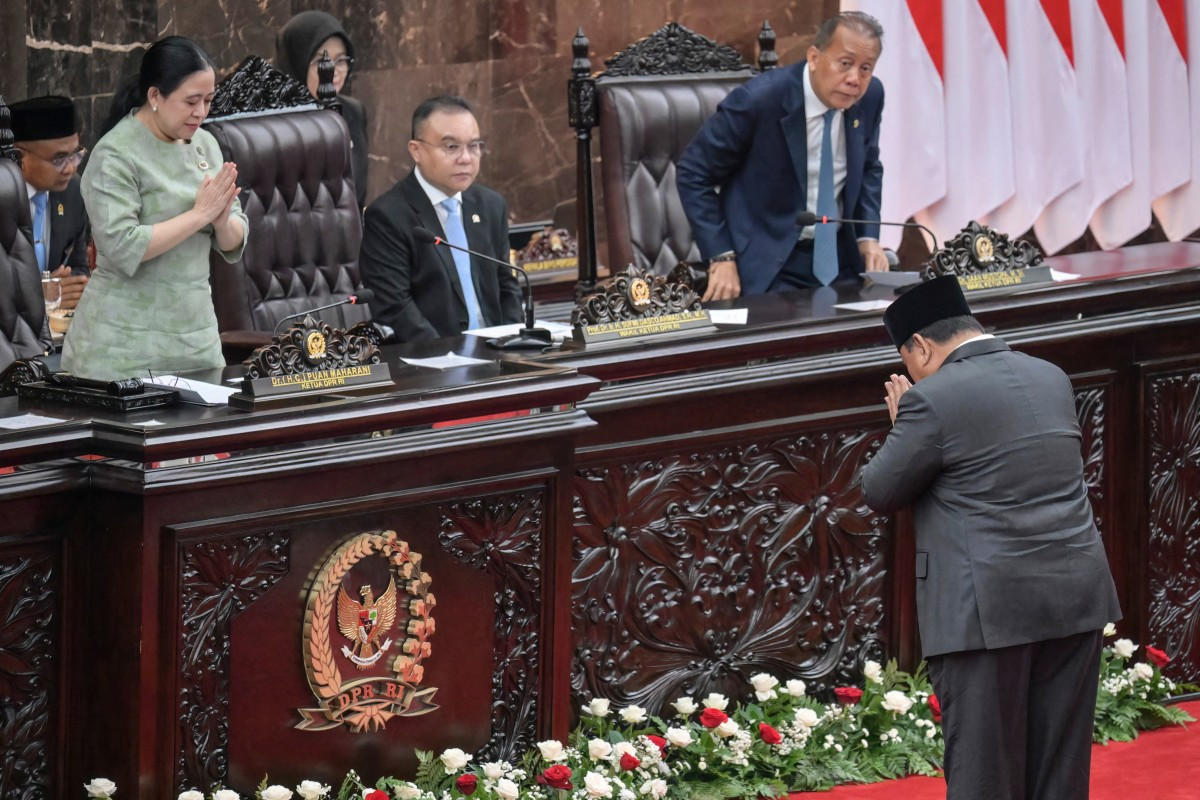 President Prabowo Subianto (right) greets House of Representatives Speaker Puan Maharani (left) before delivering a speech on the macroeconomic framework to lawmakers on May 20 at the Senayan legislative complex in Central Jakarta. (AFP/Bay Ismoyo)
P
resident Prabowo Subianto’s speech on the 2027 Macroeconomic Framework and Fiscal Policy Principles before the House of Representatives reflected not only strong optimism about Indonesia’s economic future, but also the government’s confidence in a more assertive, self-assured national development strategy. Unlike the typically technocratic and administrative tone of annual fiscal addresses, this speech carried a visionary character, emphasizing industrialization, state-led development and national economic self-reliance.
One of the speech’s clearest messages was Prabowo’s determination to ensure Indonesia no longer serves merely as a market for other nations. His emphasis on downstream industrialization, control over natural resources and the development of domestic industries demonstrated policy continuity in pursuing long-term economic transformation. Amid an increasingly competitive and protectionist global environment, this direction has become highly relevant for developing countries seeking to climb the industrial value chain.
Prabowo’s optimism about Indonesia’s domestic potential was striking. Blessed with a demographic bonus, a vast domestic market and abundant natural resources, Indonesia possesses strong foundations for higher growth compared to many peer economies. The government’s target of 5.8 to 6.5 percent growth in 2027—and its ambition to achieve 8 percent growth by 2029—reflects a belief that Indonesia should no longer settle for moderate expansion.
On the fiscal side, the government appears determined to balance development spending with fiscal discipline. The decision to keep the budget deficit within 1.8 to 2.4 percent of GDP signals an effort to preserve fiscal credibility while expanding national priority programs.
Yet these ambitious goals do not emerge in a vacuum. Prabowo’s administration inherits several structural challenges from the previous government. These range from fiscal pressures caused by rising social spending and strategic national projects to a continued dependence on commodity exports and growing public expectations regarding the continuity of state-led programs. At the same time, the government’s fiscal space is considerably narrower than it was at the beginning of Joko “Jokowi” Widodo’s presidency a decade ago.
While infrastructure expansion and downstream industrialization policies initiated during the Jokowi era laid important foundations for Indonesia’s industrial ambitions, they also left behind substantial financing burdens and pressure on the state budget. Rising public debt, largely used to finance infrastructure and pandemic recovery, has resulted in a much tighter fiscal environment today.

Consequently, Prabowo’s ambitions for high growth will require far more careful and disciplined fiscal management. In this context, the speech can be read not merely as a new policy direction, but as an attempt to consolidate and expand the developmental model that began to take shape under the previous administration.