TheJakartaPost
Please Update your browser
Your browser is out of date, and may not be compatible with our website. A list of the most popular web browsers can be found below.
Just click on the icons to get to the download page.


Popular Reads
Top Results
No results found. Please check your search term and try again
Can't find what you're looking for?
View all search results
Popular Reads
Top Results
No results found. Please check your search term and try again
Can't find what you're looking for?
View all search resultsIndonesia's oil and gas paradigm shift
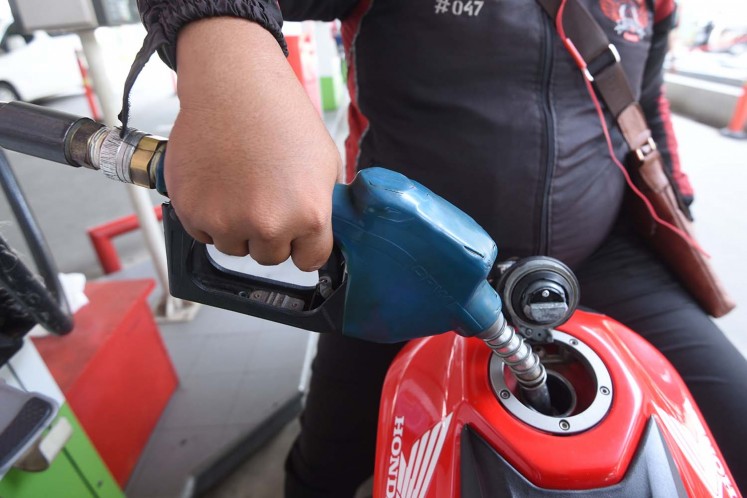
Joint effort: A gas station in Kuningan, South Jakarta
Change text size
Gift Premium Articles
to Anyone
Share the best of The Jakarta Post with friends, family, or colleagues. As a subscriber, you can gift 3 to 5 articles each month that anyone can read—no subscription needed!

J
span class="caption">Joint effort: A gas station in Kuningan, South Jakarta. Good oil and gas management means managing the resources to provide optimum results to the owner of the natural resources, the state, but also providing protection and legal certainty for investors. JP/Ricky Yudhistira
For investors, the law seems to create more uncertainty rather than guaranteeing the sanctity of contracts.
The falling price of crude oil in 2015 to below US$50 per barrel provides an opportunity for Indonesia to significantly reduce its trade deficit by cutting its huge oil import bill. Though, at first glance, tumbling oil prices are economically beneficial, there are also negative implications that may undermine the Indonesian economy, since the tumbling oil prices will slash revenue from gas and oil exports, negating the opportunities and benefits.
The implications of cheap oil on Indonesia's energy security in the long run would potentially be more harmful than beneficial. Indonesia desperately needs new oil reservoirs, as its reserves are expected to be depleted in about 10 years, according to estimates from oil and gas company BP.
Oil and gas activities in Indonesia have a long history of up and down trends. Increases in exploration activities at the beginning of the New Order government resulted in discoveries of new oil reserves and increased the oil production from about 600 thousands barrels per day in 1967 to 1.7 million barrels in 1977. In 1977, Indonesia also exported for the first time liquefied natural gas (LNG). Furthermore, since 1966, Indonesia has built new refineries and increased the daily refining capacity to 1.156 million barrels. This made oil and gas the main source of development funding. Such progress was attributed to a conducive business climate created by the government in cooperation with multinational companies, assisted by technology.
This expansion, however, did not last long; after reaching its peak in 1977, oil and gas upstream activity in Indonesia showed a declining trend, triggered by a change in the production sharing formula to 85/15. Other contributing factors included the fact that newly discovered reserves tended to be lower that those discovered in the 1970s and 1980s, as the exploration since 1990 has been focused on producing areas that have a lower risk. The commercial success rate tended to decrease, both in terms of the number of discoveries and the size of reserves. A large part of discoveries in the 1990s contained reserves below 25 million barrels.
Since 1996, oil companies' spending on exploration and production activities in real terms tended to stagnate. Compared to investment worldwide, investment in Indonesia for exploration has declined steadily. One constraint on investment growth was a legal system that failed to create certainty and to balance various conflicting interests to maintain stability and fairness.
The alarming situation is reflected in the fact that presently more than 85 percent of Indonesia's oil production comes from fields discovered before 1975, and one-third of Indonesia's oil production comes from fields having reserves of less than 50 million barrels, but they constitute 85 percent of the oil fields that are now in production. Such reserves have a relatively short producing life. The other concern is that 30 percent of the present production comes from two giant fields that were discovered before Indonesia's independence (Duri and Minas in Riau). Through prudent reservoir management and supported by a long-term view of the operators, these two fields are expected to recover at least 70 percent of the original oil in place, higher than many oil fields in the world. Also, gas production tends to be stagnant and declining, with the result that Indonesia is no longer the largest exporter of LNG. One of the constraints in Indonesia's oil and gas exploration is the relatively small initial oil or gas in place, as compared to fields in the Middle East and Africa, which makes Indonesia less attractive for oil and gas exploration.
This situation contributed to various notions, from those based on nationalism to more pragmatic approaches. Also, as in many countries. Indonesia is now delving into the potential of renewable energy; nonetheless the global importance of ' and dependency on ' oil cannot be denied, nor neglected. Fossil fuels will remain the most important source of global primary energy, with oil and gas accounting for 33 percent and 28 percent, respectively (IMF, April 2011). Renewable sources only constitute a fraction of the global primary energy supply (primary energy includes fossil fuels ' oil, coal and natural gas, nuclear energy and renewable energy ' geothermal, hydropower, solar and wind).
Indonesia's oil production fall was attributable to the decline in investor interest. As reports by PriceWaterhouseCoopers (from 2002 and 2005) showed, this was not attributable to a decline in investors' perception of Indonesia's resource potential, oil prices or political instability, but it was mainly associated with uncertainty in contract execution. For example, controversy is associated with Government Regulation No. 79/2010 on cost recovery, which production-sharing (PSC) contractors believe basically changed the commercial terms of existing contracts, which in the past were agreed through negotiation between the parties involved.
In downstream activities, no new refining capacity has been added to accommodate increasing demand since 1995. The distribution infrastructure has also remained practically stagnant, with no significant capacity addition or modernization efforts taking place since 1995. Until 2006, Indonesia was the world's largest LNG exporter, and LNG was shipped at premium prices to Japan, Korea and Taiwan. There was then lack of priority for its use domestically. The development of gas utilization infrastructure severely lagged behind.
Future activities
In order to increase oil and gas production to satisfactory levels, a high degree of exploration activities need to be maintained, particularly in areas where no production has been established. Such areas are located in eastern Indonesia, in remote and difficult areas and deep-sea locations. Exploration and production in these areas requires new technologies. Some growth in oil production may also be expected from enhanced oil recovery (EOR) methods. Application of EOR technology requires innovation and field pilot tests that may take a long time to complete.
By utilizing technological advances, the prospects for discovering new oil and gas reserves in Indonesia are still good. A successful effort to discover oil and gas reserves in a high-risk environment requires a business climate that is conducive to attracting investment. Good oil and gas management means managing the resources that are capable of providing optimum results to the owner of natural resources (the state), but also provide protection and legal certainty for the investor.
Such legal certainty is an absolute necessity given that oil and gas exploration and development require a long time, since it will require considerable time to reap the benefits. Investment will grow if the legal system can provide predictability, stability and fairness. This means that the law should generate certainty and accommodate or balance conflicting interests to maintain stability and fairness.
Likewise, downstream oil and gas development is crucial for energy supply security. The downstream sector is where the usable energy is produced and supplied. The availability of infrastructure is of immediate importance here. Also, as imports are continuously required, be it crude oil as refinery feedstock or oil products (fuel) or gas for domestic consumption, then appropriate supply, trading and strategic stock policies need to be in place.
The downstream sectors need huge investment, where existing processing and distribution infrastructure has insufficient capacity, design deficiencies and/or is in substandard technical condition. This already makes energy security very vulnerable today. A minor disruption of a refinery operation or disruption of bulk fuel transport can cause supply shortages in certain regions.
The national oil company and the government are not in a position of providing it, but private investment in this sector has been unattractive for some time amid low margins. It is clear that government incentives are required.
New paradigm
Given the changing conditions, Indonesia's policies in oil and natural gas exploitation, in the overall strategic national interest, need to be reexamined. Indonesia must explore carefully whether the present policies are able to balance effectively a number of competing factors, such as world demand and stability of oil prices, against Indonesia's urgent need to finance development. Whatever the case, Indonesia must not only maximize and manage prudently income from its oil reserves, but more importantly, it must create an investment climate that attracts risk capital. This will require no less than a paradigm shift; it is hoped that the government and the House of Representatives will both rise to this imminent challenge.
On the legislation side, Law No. 22/2001 has not been able to promote investment upstream. For investors, this law seemed to create more uncertainty rather than guaranteeing the sanctity of contracts. Foreign investment in oil and gas is 'resource-seeking', which means that one of the reasons for overseas oil and gas companies to invest outside of their own countries is the existence of oil and gas resources. Furthermore, the upstream business is a natural resource extractive industry, whereas downstream is a value-added processing or services industry. So, they have different risk profiles and considerations.
The paradigm shift includes the following:
Upstream oil and gas activities include the management of oil and gas resources for state revenues, while the downstream sector is to supply for the public a ready-made energy from oil and gas resources. Given their different characteristics, the regulation of downstream activities should be separated from the present oil and gas law.
An amended Oil and Gas Law should contain only provisions for upstream activities, which should be construed in such a way as to attract investment.
Oil and gas contracts should be based on public-private partnerships with equal rights and obligations, which replace the relationship between employers and labor in order to eliminate the institutional bureaucracy that has caused the delay in petroleum development.
In conclusion, the outlook for the petroleum sector is becoming increasingly uncertain, given the dwindling oil reserves in the country's maturing fields. The decline is mainly the result of the slow pace of exploration and development in the past decade, which has been exacerbated by an increasingly uncertain regulatory environment, as resource nationalism creeps into the government's policy toward the sector.
Indonesia's rapid economic development will continue to need active oil and gas exploration and development. Under such circumstances, the government needs to show sensitivity to the situation, responding with additional incentives directed towards maintaining Indonesia's international competitive position.