The Jakarta Post
Please Update your browser
Your browser is out of date, and may not be compatible with our website. A list of the most popular web browsers can be found below.
Just click on the icons to get to the download page.


Popular Reads
Top Results
No results found. Please check your search term and try again
Can't find what you're looking for?
View all search results
Popular Reads
Top Results
No results found. Please check your search term and try again
Can't find what you're looking for?
View all search resultsWhy Indonesia’s strategic autonomy goes unrecognized
Indonesia is transforming from a quiet diplomat into a "status-affirming" middle power, using proactive hedging to secure strategic autonomy in a multipolar world. By reviving the "Bandung Spirit," Jakarta can lead a global coalition of middle powers to restrain major-power conflict and build a more equitable international order.
Change text size
Gift Premium Articles
to Anyone
Share the best of The Jakarta Post with friends, family, or colleagues. As a subscriber, you can gift 3 to 5 articles each month that anyone can read—no subscription needed!
 Set as preferred source
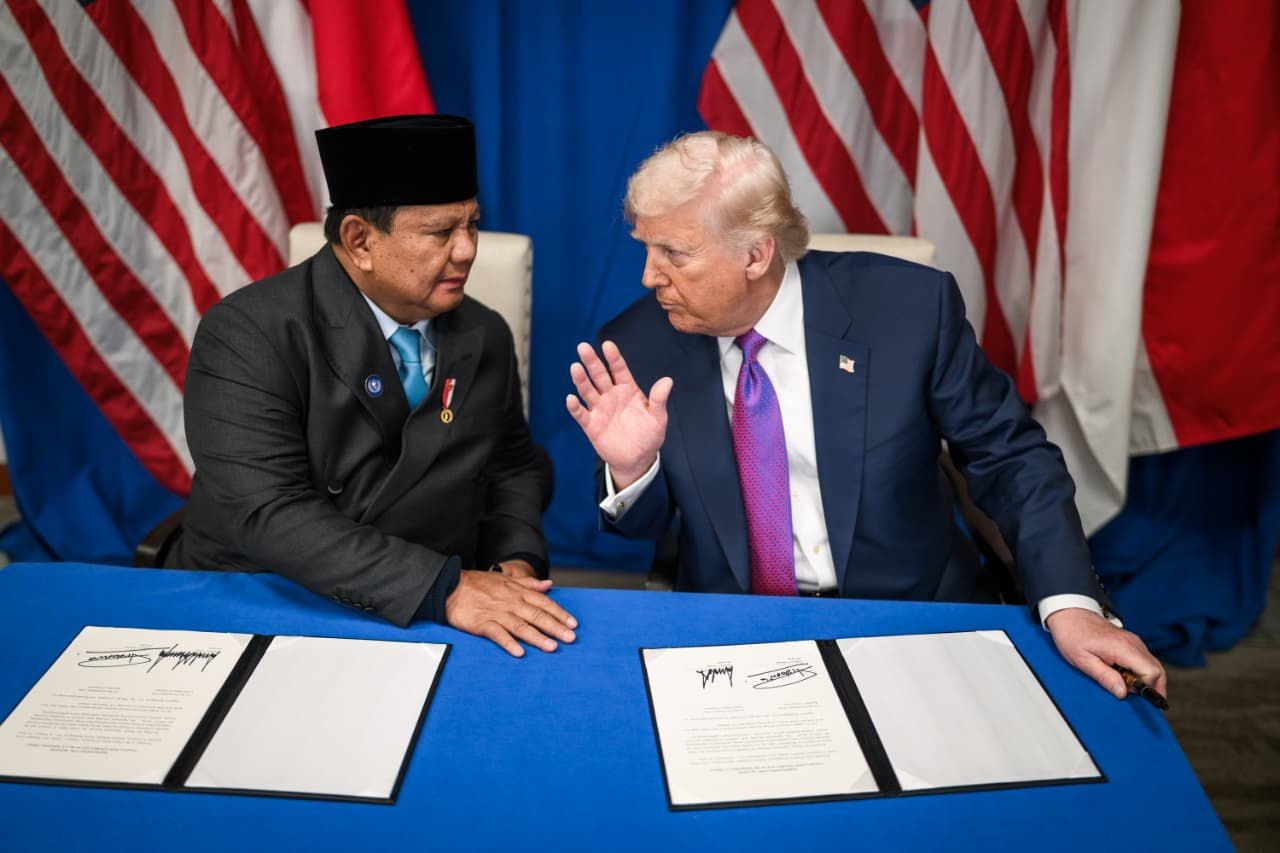 President Prabowo Subianto (left) speaks to United States President Donald Trump on Feb. 19 during the signing of the US-Indonesia Agreement on Reciprocal Tariffs (ART) in Washington, DC. (Courtesy of Presidential Secretariat/White House)
L
ately, Indonesia’s foreign policy has faced waves of criticism, as well as cautious praise, from intellectual figures, religious institutions and Islamic parties following its participation in the United States President Donald Trump-led Board of Peace (BoP).
Critics argue that by joining the BoP, Indonesia is abandoning its traditional bebas aktif (independent and active) foreign policy and aligning itself with a pro-US bloc. They contend this move results in unnecessary spending, leads to trade agreements that favor the US over Indonesia and alienates the nation from its historical role in defending Palestinian rights in the struggle for an internationally recognized independent state.
Historically, the decolonization era of President Sukarno was a defining phenomenon for the non-Western world; during that period, the Palestinian issue was supported through both clear political and ideological frameworks.
Nevertheless, despite this cloud of criticism, Indonesia’s enrollment in the BoP has received pragmatic scholarly evaluation. For instance, Moch. Faisal Karim of the Indonesian International Islamic University (UIII), has acknowledged the rational frustration regarding the isolation of Palestinians in discussions about their future. However, he notes that Indonesia’s participation in such global gatherings is primarily about gaining strategic flexibility.
Indonesia’s stated willingness to withdraw if Palestinian demands are not fulfilled, and President Prabowo Subianto’s recent call to halt membership in the BoP if the war on Iran continues, are clear indications of its middle-power positioning.
These are status-affirming actions: a demand for advanced recognition in the international arena conceptualized through the conduct of proactive hedging. Ambitious middle powers like Indonesia must be ready to take actions that serve their national interests and deliver the strategic autonomy necessary for a status-affirming stance on the global stage.

Indonesia has previously succeeded in moving closer to the BRICS founding nations, showcasing a strategic move beneficial for diversifying its economy while refraining from joining any specific bloc. Simultaneously, it has signed a strategic partnership with Australia to cooperate in military and security domains.