The Jakarta Post
Please Update your browser
Your browser is out of date, and may not be compatible with our website. A list of the most popular web browsers can be found below.
Just click on the icons to get to the download page.


Popular Reads
Top Results
No results found. Please check your search term and try again
Can't find what you're looking for?
View all search results
Popular Reads
Top Results
No results found. Please check your search term and try again
Can't find what you're looking for?
View all search resultsLand rights controversy hurts palm oil investment
If conservation areas are administratively interpreted as “unproductive land”, Indonesia risks engineering a policy contradiction of its own making.
Change text size
Gift Premium Articles
to Anyone
Share the best of The Jakarta Post with friends, family, or colleagues. As a subscriber, you can gift 3 to 5 articles each month that anyone can read—no subscription needed!
 Set as preferred source
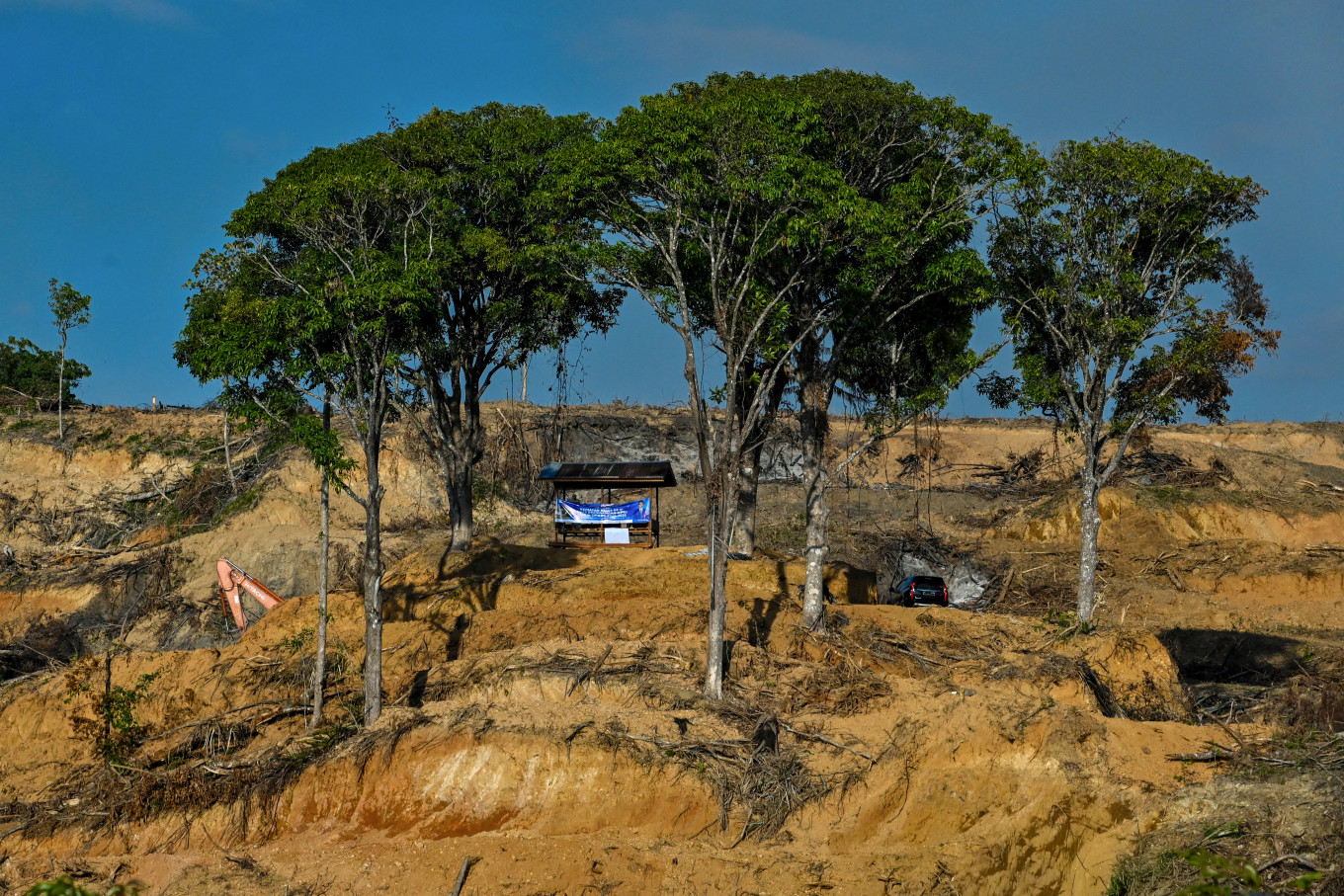 A bulldozed planting area for palm oil plantation is seen on Jan. 18 in Lamno, Aceh. (AFP/Chaideer Mahyuddin)
T
he government’s plan to tighten oversight of cultivation rights (HGU) and to reclaim land deemed “unproductive” has introduced a new layer of uncertainty to a sector that contributes more than US$30 billion annually in export earnings and supports roughly 16 million jobs, directly and indirectly.
At face value, reclaiming or repossessing idle land is justifiable. No serious economist would argue that speculative hoarding or deliberate neglect should be tolerated. Underutilized land represents inefficiency.
The state has both the authority and obligation to ensure productive use of natural resources. The problem lies not in the intent of reform, but in its design, sequencing and ramifications. What is unfolding risks being perceived not as calibrated governance, but as regulatory improvisation.
Palm oil is not a short-cycle industry. A new plantation requires seven to eight years before reaching optimal productivity. Capital outlays for seedlings, land preparation, mills and logistics are front-loaded, while returns stretch across decades. HGU permits, valid for 35 years with extension options, are the institutional backbone of this long-term calculus. When the interpretation of those rights becomes fluid, investment models are recalibrated immediately.
Evidence from development economics consistently shows that weakly protected property rights elevate capital costs and depress long-term investment. Institutions such as the World Bank have repeatedly demonstrated that regulatory ambiguity, not regulatory strictness, is what deters capital. Investors can price high standards. What they struggle to price is discretionary reinterpretation.
The government’s current rhetoric, however, blurs an essential distinction, the difference between enforcing clear rules and retroactively redefining them. If genuinely abandoned land is reclaimed through transparent, rule-based processes, governance is strengthened. But if the definition of “unproductive” expands without technical precision, the signal becomes destabilizing.

This concern is not theoretical. Within many HGU concessions, companies deliberately designate High Conservation Value (HCV) and High Carbon Stock (HCS) areas. These zones are intentionally left forested to preserve biodiversity, protect watersheds and maintain carbon reserves. They are not idle tracts; they are ecological assets embedded within commercial concessions. Compliance with sustainability frameworks such as the RSPO and ISPO increasingly depends on such allocations.