TheJakartaPost
Please Update your browser
Your browser is out of date, and may not be compatible with our website. A list of the most popular web browsers can be found below.
Just click on the icons to get to the download page.


Popular Reads
Top Results
No results found. Please check your search term and try again
Can't find what you're looking for?
View all search results
Popular Reads
Top Results
No results found. Please check your search term and try again
Can't find what you're looking for?
View all search resultsGetting Personal: Stories of Salman Aristo
WORDS YULIASRI PERDANI PHOTOS JERRY ADIGUNAScreenwriter Salman Aristo is undoubtedly one of Indonesia’s most respected and sought-after screenwriters
Change text size
Gift Premium Articles
to Anyone
Share the best of The Jakarta Post with friends, family, or colleagues. As a subscriber, you can gift 3 to 5 articles each month that anyone can read—no subscription needed!

WORDS YULIASRI PERDANI PHOTOS JERRY ADIGUNA
Screenwriter Salman Aristo is undoubtedly one of Indonesia’s most respected and sought-after screenwriters.
He is the screenwriter behind the critically-acclaimed Sang Penari (The Dancer), an adaptation of Ahmad Tohari’s Ronggeng Dukuh Paruk trilogy that touches on the anticommunist massacre in Indonesia.
Topping that, Salman wrote the movie adaptation of Andrea Hirata’s Laskar Pelangi (Rainbow Troops), which has become the best-selling Indonesian movie of all time, garnering a total viewership of 4.6 million.
The 40-year-old is also known for his original screenplays such as Garuda di Dadaku (Garuda in My Heart) and Hari untuk Amanda (Days for Amanda).
Aside from screenwriting, Salman has ventured into producing and directing a number of movies.
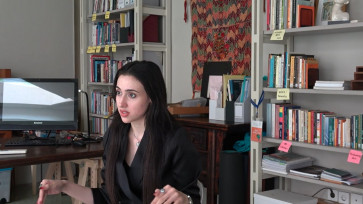
In his Wahana Penulis story-development office in South Jakarta, Salman sat down to talk about his passion for filmmaking.
“I have to love the story,” he says, talking about his criteria when choosing film projects.
“Writing is a long process. One script may take six months to one-and-a-half years to finish. If I don’t like the story, the rest of writing process will be hell for me. On many occasions, I took projects that offered half of my usual fee simply because I loved the stories.”
Salman worked under a specific method of screenwriting mainly to maintain his focus.
“When I was in high school, I was diagnosed as hyperactive. They [the psychologists] even told me that I would not be able to drive because I could hardly focus on a few things [at a time],” said Salman, who now can drive.
“I need a tool to keep my focus on the story. If not, I will wander around. My tool is called eight sequences, where each script is divided into eight sequences. In every sequence, there is a question sought to be answered,” he explained.
MOVIES, BOOKS AND MUSIC
Movies, books and music are things that describe Salman.
The self-proclaimed movie geek is influenced by Richard Linklater, Yasujirō Ozu and particularly Woody Allen.
He adores literature works of Chairil Anwar, Pramoedya Ananta Toer and Arswendo Atmowiloto. And in the indie music scene, Salman is the bassist of folk rock band Silentium.
Born to a Padang couple in Jakarta in 1976, Salman fell in love with film at the age of five when his parents first took him to the cinema.
“I instantly fell in love with motion pictures. However, I grew up in an era when the Indonesian film industry was collapsing. Making film was not something I thought I could do back then.”
Salman, instead, grew an interest in reading and writing.
“I guess my interest is due to nurture than nature. My late father, aside from being a civil servant, had a side job as newspaper and magazine agent, which enabled me to read all the time.”
In a bid to hone his writing skills, Salman took journalism at Padjadjaran University in Bandung, West Java. There, he was introduced to filmmaking by the campus’ arts community and started to write scripts for short movies.
Inspired by the vibrant indie music scene in Bandung in the 1990s, Salman launched his music career with folk rock band Silentium.
And just like a sequence in a movie, this phase of his life brought an important life question to the 20-year old Salman: Will he be able make it in the music industry?
“In 1996, I made a deal with myself that I would do whatever I can to break into the music industry. [And] after five years, I had to evaluate everything,” he said.
Five years passed and his band was largely going nowhere. Salman lived up to his deal by returning home to Jakarta.
On the sidelines of sending job applications to television stations and publications, Salman used his ample spare time to read classic movie scripts at Usmar Ismail Movie Center (PPHUI) near his home.
“I have read all of Asrul Sani’s movie scripts,” Salman said about the late moviemaker behind several Indonesian cinematic masterpieces, such as Lewat Djam Malam (Past Curfew), Naga Bonar and Kejarlah Daku Kau Kutangkap (Chase Me, I’ll Catch You).
“For me, he is a dewa [God] because nobody in Indonesia has been able to write better than him until now. His scripts taught me a sense of structure in screenwriting.”
Salman landed a job as film columnist for MTV Trax magazine, which enabled him to build a network within the film industry, while constantly learning to write screenplays and spending his monthly salary to buy imported books on screenwriting.
His big break came in 2003 when director Hanung Bramantyo asked him to rewrite the script of romantic movie, Brownies. The movie catapulted their careers with Salman getting his first nomination for a Citra Award, an Indonesian equivalent to the Oscars, and Hanung earned his first Citra Award for Best Director.
Salman went on to write four other screenplays before taking a break in 2005 and tying the knot with fellow scriptwriter Ginatri S. Noer. The newlyweds then collaborated in adapting Ayat-Ayat Cinta (Love Verses), an Islamic romance novel by Habiburrahman El Shirazy, onto the silver screen.
“When doing projects, I sometimes see the need of adding a woman’s perspective into the story. This was the case with Ayat-Ayat Cinta. I told the director, Hanung, that it would be interesting if the film was written by a couple.”
The movie caught the country by storm in 2008, garnering some 3.5 million viewers and becoming one of the best-selling Indonesian movies of all time.
When handling film projects based on novels, Salman always aims to have discussions with the novelist prior to writing the film script.
“I want to discover things that are not written in novels,” he said.
For Laskar Pelangi, Salman spent ten days with the author Andrea Hirata, director Riri Riza and producer Mira Lesmana in East Belitung, where the story is set.
“I tried to know him [Andrea] so that I could understand the way he thought, his storytelling style and the way he viewed life.”
Laskar Pelangi, an inspiring story about underprivileged students and teachers, is particularly personal for Salman.
“My mother was an elementary school teacher and served as headmaster before retiring. I closely watched how my mother worked and I came to understand the problems of Indonesian education.” Salman recently worked on Athirah, a movie based on Alberthiene Endah’s novel on the mother of Vice President Jusuf Kalla, directed by Riri Riza.
He has just finished the screenplay of Bukaan 8, a comedy-drama that centers on a young couple who is expecting their first child. The movie, directed by Angga Dwimas Sasongko, is in its filming process.
Salman is slated to take multiple roles as co-producer, director and screenwriter, in the upcoming Satu Hari Nanti (One Fine Day).
“The film is about three Indonesians and a Malaysian in their late 20s and early 30s, who are struggling to learn about commitment, friendship and love in Switzerland — where they are far away from their families and conventional values.”
Directing and producing film is not something new for Salman. He made his directorial debut in 2004 with short movie Patah (Broken). He took the role of producer for the first time in the 2009 teenage-drama movie, Queen Bee.
“I wanted to be an all-rounded scriptwriter who knows the filmmaking process. So, I challenged myself with Patah. The movie was screened at the Rotterdam International Film Festival,” he said.
Salman went on to direct Jakarta Maghrib (Jakarta at Maghrib) in 2010 and Jakarta Hati (Jakarta Heart) in 2012—two omnibuses that center on the life of Jakartans.
CREATIVE HUB
At his office, Salman and his small team of writers create new characters and meticulously develop the setting, conflict, plot and theme of stories. Aside from movies, they develop stories for comics, novels and radio-drama.
Just like many creative companies, Wahana Penulis offers a casual work environment. On that day, one writer brought his young son to the meeting, which has a room that resembles a classroom, where one wall is covered with a white board showing a complicated diagram of a story; and a black board that is written with the office’s rules.
Some of the rules are “be on time”, “respect other people’s ideas” and “have fun with the story!”
“We work under a specific writing pattern with a measurable method,” Salman said. “However, it is just a tool and our creativity is surely not limited by it.”
Outside of his job, Salman plays with his band Silentium and shares his filmmaking knowledge in classes and workshops.
“When I entered the film industry in 2004, scriptwriters were so scarce. To be honest, I am not happy with working on five titles a year. It is worrying that the industry is only supported by 10 to 15 scriptwriters. One way to address the issue is by sharing my knowledge.”
“Teaching is the best learning process for me because it gives me the chance to meet new people and find fresh ideas.”
His current interest in teaching reminded him of the time when his family, many of whom were teachers, tried to persuade him to follow their path.
“It feels like an omen. When I was studying in university, my uncle kept encouraging me to work as teacher just like him. But I had always convinced myself that I didn’t have such talent. It turns out I really enjoy teaching.”