The Jakarta Post
Please Update your browser
Your browser is out of date, and may not be compatible with our website. A list of the most popular web browsers can be found below.
Just click on the icons to get to the download page.


Popular Reads
Top Results
No results found. Please check your search term and try again
Can't find what you're looking for?
View all search results
Popular Reads
Top Results
No results found. Please check your search term and try again
Can't find what you're looking for?
View all search resultsWhen Indonesian citizenship is hard to prove
The risks of statelessness in Indonesia are best understood not as a single condition affecting one clearly defined group, but as a pattern produced through ordinary administrative processes.
Change text size
Gift Premium Articles
to Anyone
Share the best of The Jakarta Post with friends, family, or colleagues. As a subscriber, you can gift 3 to 5 articles each month that anyone can read—no subscription needed!
 Set as preferred source
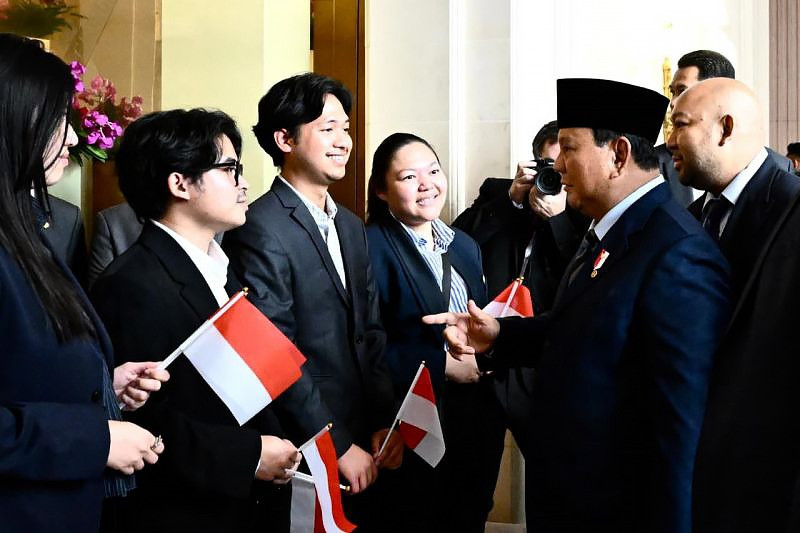 Diaspora connection: President Prabowo Subianto (second right) greets Indonesian students based in France on May 26, 2026 as he arrives in Paris for a state visit. (Antara/Presidential Secretariat Media and Press Bureau)
R
isks of statelessness in Indonesia are rarely treated as a central public policy issue. When it does appear in public discussion, it is usually framed through refugee protection or cross-border movement.
Less attention is paid to people who may be Indonesian citizens in law, but struggle to prove, transmit or exercise that citizenship in everyday life.
Indonesia has legal safeguards intended to reduce these risks, particularly through birth registration and access to citizenship. Yet legal entitlement does not always translate into recognized proof of nationality.
The problem is not only whether someone has citizenship under the law, but whether administrative systems allow that citizenship to be documented, used and passed on.
The risks of statelessness in Indonesia are best understood not as a single condition affecting one clearly defined group, but as a pattern produced through ordinary administrative processes.
Children are often among the most affected by documentation systems because their legal identity is closely tied to the records of their parents. Many children who are legally entitled to Indonesian nationality still face obstacles in obtaining proof of citizenship. Unregistered marriages can leave families legally incomplete in the eyes of the state and weaken children’s access to official recognition.

Although birth registration is legally possible regardless of parents’ marital status, it often depends on parental documentation. Because nationality is primarily transmitted through descent, incomplete or contested parental records can prevent children from establishing citizenship in practice, even when the law supports their entitlement. This is particularly significant where recognition depends on compliance with registration procedures and deadlines, which can turn a child’s legal entitlement into a documentation problem.