The Jakarta Post
Please Update your browser
Your browser is out of date, and may not be compatible with our website. A list of the most popular web browsers can be found below.
Just click on the icons to get to the download page.


Popular Reads
Top Results
No results found. Please check your search term and try again
Can't find what you're looking for?
View all search results
Popular Reads
Top Results
No results found. Please check your search term and try again
Can't find what you're looking for?
View all search resultsAnalysis: Controversy persists as House passes KUHAP bill into law
Change text size
Gift Premium Articles
to Anyone
Share the best of The Jakarta Post with friends, family, or colleagues. As a subscriber, you can gift 3 to 5 articles each month that anyone can read—no subscription needed!
 Set as preferred source
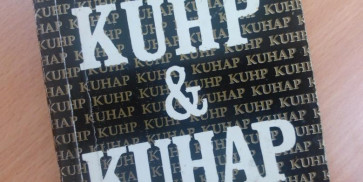
 Illustration of the Indonesian Criminal Code (KUHP) and Criminal Law Procedures Code (KUHAP). (kompas.com/Palupi Annisa Aulian)
T
he House of Representatives has enacted the Criminal Law Procedures Code (KUHAP) bill in a significant move by the government to overhaul the colonial-era framework on Indonesia's criminal procedures, despite widespread objections.
Beyond debates over the substance of the new KUHAP, the concept of "meaningful participation" has become a point of contention. While the House insists it conducted extensive public consultations in drafting the bill, civil society organizations dispute this and accuse the legislature of misrepresenting the extent of public involvement.
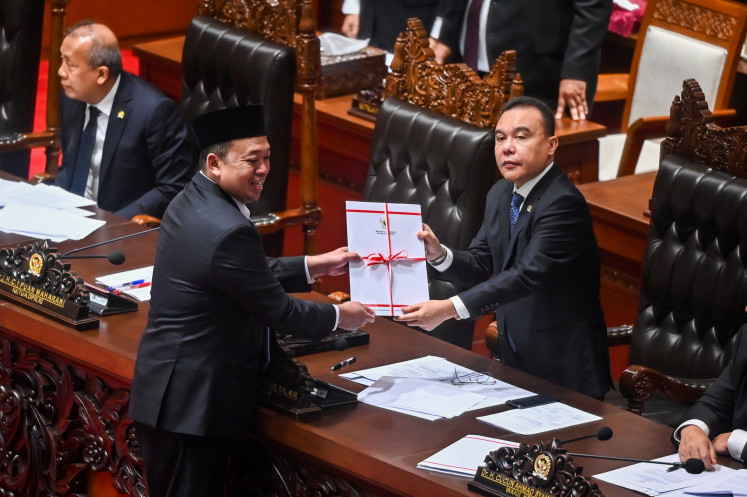
Amid strong criticism from civil society groups and as students protested outside the Senayan Legislative Complex, the House passed the bill into law during a plenary session on Tuesday, marking a milestone in the country's criminal justice system: Deliberations on the KUHAP bill had stretched on since 2012, across multiple administrations and through shifting political landscapes.
Fundamentally, the KUHAP serves as the procedural framework on how law enforcement authorities, from the police to prosecutors, may exercise their powers.
Law Minister Supratman Andi Agtas, who led the government's engagement with the bill, said the new KUHAP and the new Criminal Code (KUHP) would both go into effect on Jan. 2, 2026. The KUHP was enacted in January 2023 with a three-year transition period. Supratman emphasized that the government would use the remaining time to draft around 18 implementing regulations, including three government regulations (PP).
One of the most debated provisions in the new law is Article 74A, which formalizes the "peace agreement" as a form of restorative justice. This mechanism may be initiated between perpetrator and victim(s) as early as the investigation stage. Civil society groups warn that this provision opens the door to coercion and extortion.

Habiburokhman, who chairs House Commission III overseeing law enforcement, rejected claims that the mechanism could be weaponized. He explained that under articles 74A and 79, while a peace agreement could be established during the investigation phase even before the criminal act was formally determined, the process was tightly regulated and left no room for individuals to exploit it for financial gain.