The Jakarta Post
Please Update your browser
Your browser is out of date, and may not be compatible with our website. A list of the most popular web browsers can be found below.
Just click on the icons to get to the download page.


Popular Reads
Top Results
No results found. Please check your search term and try again
Can't find what you're looking for?
View all search results
Popular Reads
Top Results
No results found. Please check your search term and try again
Can't find what you're looking for?
View all search resultsAnalysis: Garuda–Pelita merger plan advances amid financial, political headwinds
Change text size
Gift Premium Articles
to Anyone
Share the best of The Jakarta Post with friends, family, or colleagues. As a subscriber, you can gift 3 to 5 articles each month that anyone can read—no subscription needed!
 Set as preferred source
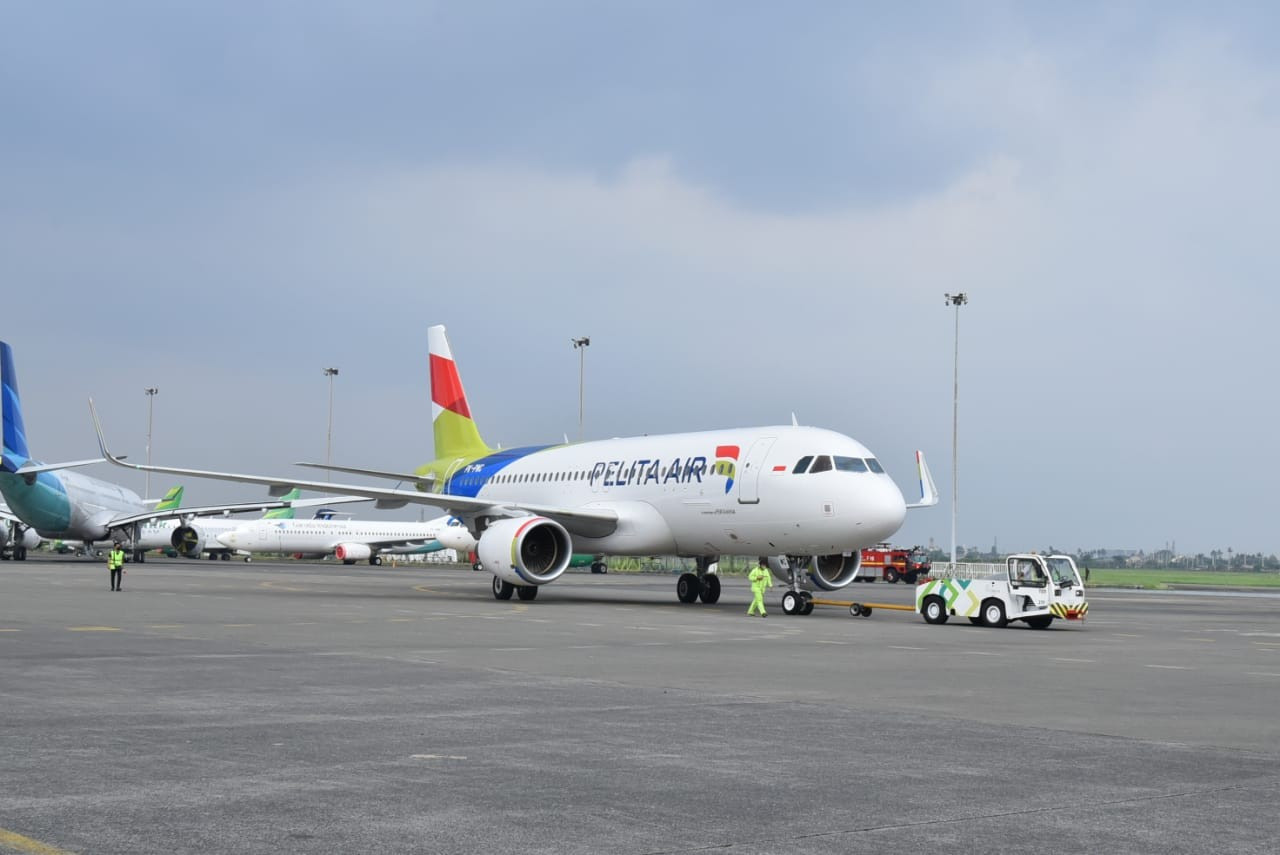 Ground crew inspect an Airbus A320 aircraft operated by Pelita Air on April 11, 2022, on an apron at Soekarno-Hatta International Airport in Tangerang, Banten (Courtesy of Pertamina)
T
he plan to merge national flag carrier PT Garuda Indonesia with PT Pelita Air Service, a subsidiary of energy holding state-owned enterprise (SOE) PT Pertamina, has reached a new stage. State asset fund Danantara has brought Garuda and Pertamina together to assess share structures and other corporate aspects. The move aligns with broader efforts to streamline SOEs. However, critics argue that the merger primarily serves as an effort to rescue the financially distressed Garuda.
Danantara stated that the proposed merger aims to reduce market cannibalization between the airlines while advancing its mandate to streamline and consolidate SOEs. Under this plan, the airlines would operate with clearer segmentation while sharing best practices. Danantara targets a reduction of holding SOEs to one per industry, and a cut in the overall SOE ecosystem from roughly 1,000 companies to 200.
The Garuda and Pelita merger was first proposed by the former SOEs Ministry, now the SOEs Regulatory Agency, in 2023 while Garuda was on the brink of bankruptcy with Rp 142 trillion (US$8.5 billion) in debt. At the time, Garuda, Pelita and Garuda's subsidiary PT Citilink Indonesia were envisioned to serve the full-service carrier (FSC), "medium-to-premium" carrier, and low-cost carrier (LCC) market segments, respectively, under a holding company.
A House of Representatives Commission VI member opposed the merger, citing risks to Pelita Air's management quality and corporate culture. Several experts have argued that consolidation alone will not solve Garuda's problems. Garuda posted US$142.8 million in losses in the first half of 2025. Pelita, while recording US$5.9 million of profit in 2024, only had US$101.5 million in assets. It also had Rp 519 billion in equity and Rp 1.1 trillion in liabilities.
Indonesia's high import duties on aircraft spare parts at 37.9 percent drove maintenance expenses from 13 percent of Garuda’s operating expenses in the first quarter (Q1) 2023 to 21.7 percent in Q1 2025. Suppliers also require upfront payments due to Garuda’s financial state, tightening cash flow and forcing the temporary grounding of 15 Citilink aircraft.
By the third quarter of 2025, Garuda's net loss widened to US$182.53 million, with liabilities reaching US$8.28 billion. In response, shareholders approved the issuance of 315.6 billion series D shares at Rp 75 per share, raising Rp 23.67 trillion consisting of Rp 17.02 trillion in capital deposits and Rp 6.65 trillion in shareholder loan conversions. Garuda allocated Rp 14.9 trillion to support Citilink's operations and help repay its Rp 3.7 trillion jet fuel debt to Pertamina, while Rp 8.7 trillion will fund Garuda's working capital and maintenance.

Danantara aims to restore Garuda to profitability by 2026 through four key pillars. First, financial overhaul, including the planned transfer of airport SOE Injourney Airports' land assets to Garuda's maintenance unit GMF AeroAsia. Second, service transformation across all customer touchpoints. Third, business transformation by prioritizing strategic and profitable routes. Fourth, operational and technological improvements to raise efficiency and performance. A key component of this turnaround is the reactivation of Garuda's grounded aircrafts. They continue to incur maintenance costs while generating no revenue, worsening Garuda's financial pressures.