TheJakartaPost
Please Update your browser
Your browser is out of date, and may not be compatible with our website. A list of the most popular web browsers can be found below.
Just click on the icons to get to the download page.


Popular Reads
Top Results
No results found. Please check your search term and try again
Can't find what you're looking for?
View all search results
Popular Reads
Top Results
No results found. Please check your search term and try again
Can't find what you're looking for?
View all search resultsHave we not learned our lessons?
In places where communities had been trained to respond to early warnings, the difference is striking: lives and properties were spared because people knew what to do.
Change text size
Gift Premium Articles
to Anyone
Share the best of The Jakarta Post with friends, family, or colleagues. As a subscriber, you can gift 3 to 5 articles each month that anyone can read—no subscription needed!
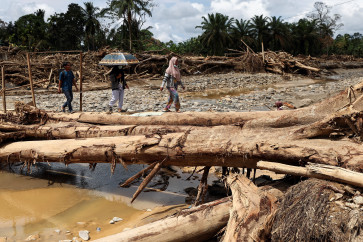
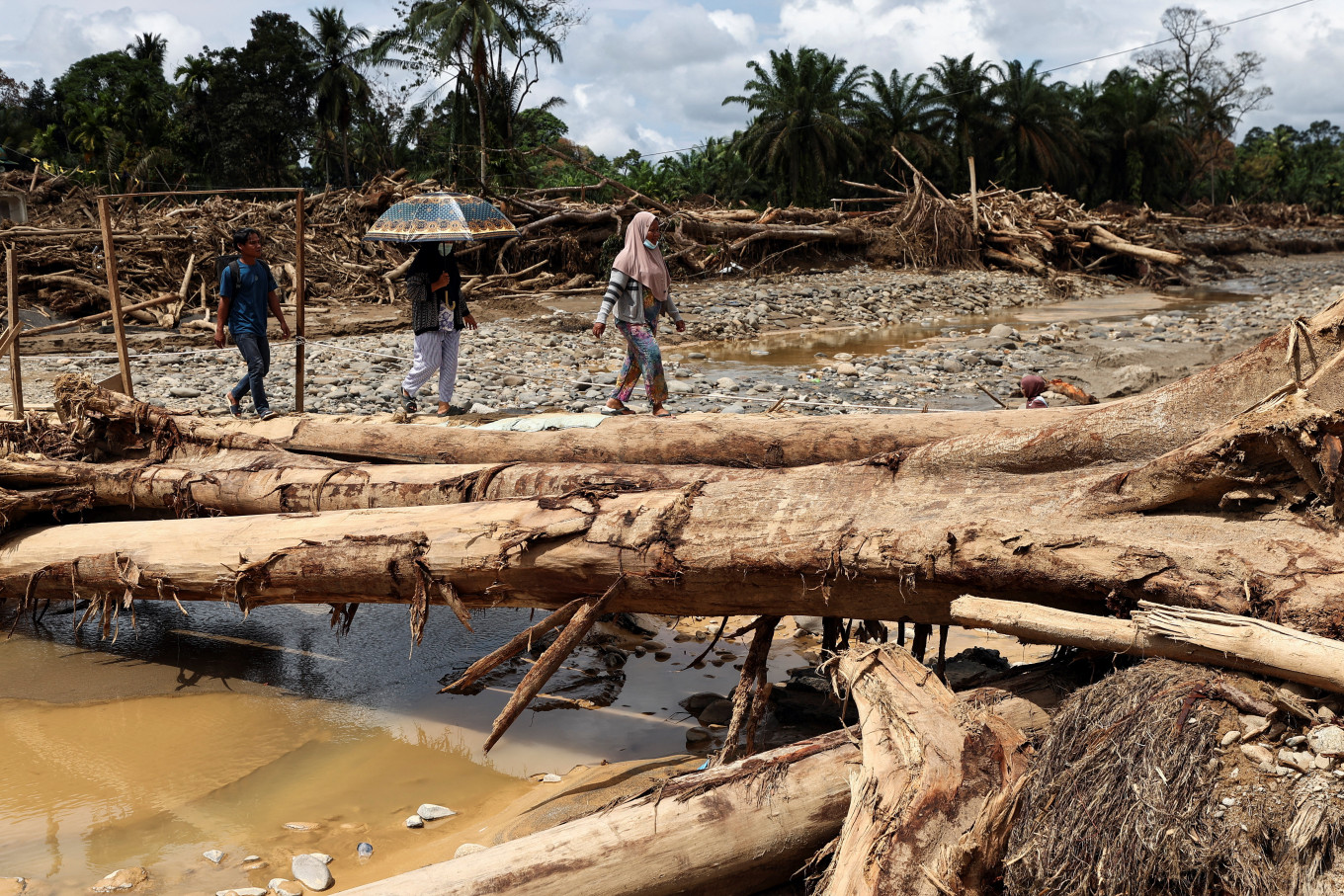 Local residents walk on logs used as a temporary bridge following a deadly flash flood on Dec. 7 in Batang Toru, South Tapanuli, North Sumatra. (Reuters/Willy Kurniawan)
W
hat we experienced in the past few weeks is not new. We have had a similar experience when Tropical Cyclone Seroja hit East Nusa Tenggara (NTT) back in April 2021. It is, however, unfortunate that we never learn our lessons. But what is more terrifying is that this incident will not be the last.
According to the State of Climate in Asia 2024, released by the World Meteorological Organization (WMO), Indonesia is among the most prone countries to extreme rainfall patterns due to rising sea surface temperatures. WMO also notes that Indonesia is among the most affected by a combination of monsoon-related rainfall and tropical cyclone activity.
Although the casualties in NTT were fewer than in North Sumatra, West Sumatra and Aceh, the notable lesson is that we can learn to reduce risks and impacts, including by developing preparedness and response strategies for tropical cyclone events.
Tropical Cyclone Seroja was ranked among the top 10 deadliest disasters of 2021 by the Emergency Event Database (EM-DAT) report, resulting in over 200 casualties in NTT. Alor Island was among the most affected, even though it was not as close to the cyclone's track.
Similar to Tropical Cyclone Senyar, Seroja triggered flash floods, floods and landslides. Alor Island experienced 236.5mm of rainfall a month's worth of rain in just 3 hours. The topography, the local government's low capacity and, most importantly, the vulnerable community conditions in the Alor Islands made the cyclone's impact more severe.
Interestingly, Tropical Cyclone Seroja was not the first cyclone to impact the region. There were several cyclones, such as Inigo in 2003 and Bonnie in 2002, however, poor documentation of complete impact data and lessons learned persisted.

When Cyclone Seroja approached NTT, the warning sirens may have sounded, but for many people, and even for government and non-government agencies, they barely registered. Living for years through "manageable" extreme weather events had bred a dangerous sense of familiarity.