The Jakarta Post
Please Update your browser
Your browser is out of date, and may not be compatible with our website. A list of the most popular web browsers can be found below.
Just click on the icons to get to the download page.


Popular Reads
Top Results
No results found. Please check your search term and try again
Can't find what you're looking for?
View all search results
Popular Reads
Top Results
No results found. Please check your search term and try again
Can't find what you're looking for?
View all search resultsRights on borrowed time
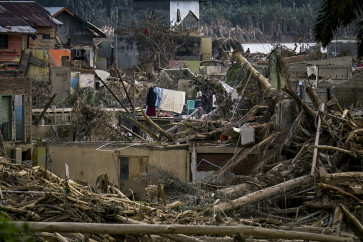
The state's disaster response in Sumatra only shows that victims of the floods and landslides have had their the rights to life, health and protection denied during emergencies.
Change text size
Gift Premium Articles
to Anyone
Share the best of The Jakarta Post with friends, family, or colleagues. As a subscriber, you can gift 3 to 5 articles each month that anyone can read—no subscription needed!
 A woman hangs up clothes to dry on Dec. 6 amid devastation caused by a flash flood that struck Aceh Tamiang, Aceh province. Ruinous floods and landslides have killed more than 900 people in Sumatra, officials said on Dec. 6, with fears that starvation could send the toll even higher. (AFP/YT Hariono)
H
uman Rights Day which falls today should remind nations of the promises they make to their citizens: dignity, safety and justice. This year, however, Indonesia faces the commemorative day with the uneasy recognition that its human rights foundations are steadily weakening.
Under the current administration, rights are not being dismantled through dramatic repression but through a slow and steady decline, a pattern that is harder to detect but ultimately more corrosive.
The appointment of Natalius Pigai as human rights minister once carried the hope of renewed seriousness. Yet the ministry’s mandate has not expanded, its authority remains narrow and its capacity unchanged.
As a result, Pigai’s presence appears symbolic within a structure that has long been sidelined. Tokenism does not reflect on him as an individual, but is a symptom of a system that treats human rights as a lowly political gesture rather than a governing priority.
When the minister himself dismisses public concerns about creeping militarism or shrinking civic space as products of “imagination”, it reinforces the perception that the portfolio is being used to pacify, not to protect.
This erosion becomes more visible when viewed alongside recent governance choices.

The ease with which graft convicts have been pardoned or the decision to elevate divisive historical figures to national hero status are not isolated actions. They form a pattern of shifting institutional norms, each step subtle enough to appear procedural, yet collectively amounting to a redefinition of accountability.