TheJakartaPost
Please Update your browser
Your browser is out of date, and may not be compatible with our website. A list of the most popular web browsers can be found below.
Just click on the icons to get to the download page.


Popular Reads
Top Results
No results found. Please check your search term and try again
Can't find what you're looking for?
View all search results
Popular Reads
Top Results
No results found. Please check your search term and try again
Can't find what you're looking for?
View all search resultsHow the global water cycle amplifies climate disasters
While weather extremes such as flooding and wildfires are frequently identified as visible consequences of climate change, global warming is also affecting a deeper factor: our planet’s water cycle.
Change text size
Gift Premium Articles
to Anyone
Share the best of The Jakarta Post with friends, family, or colleagues. As a subscriber, you can gift 3 to 5 articles each month that anyone can read—no subscription needed!
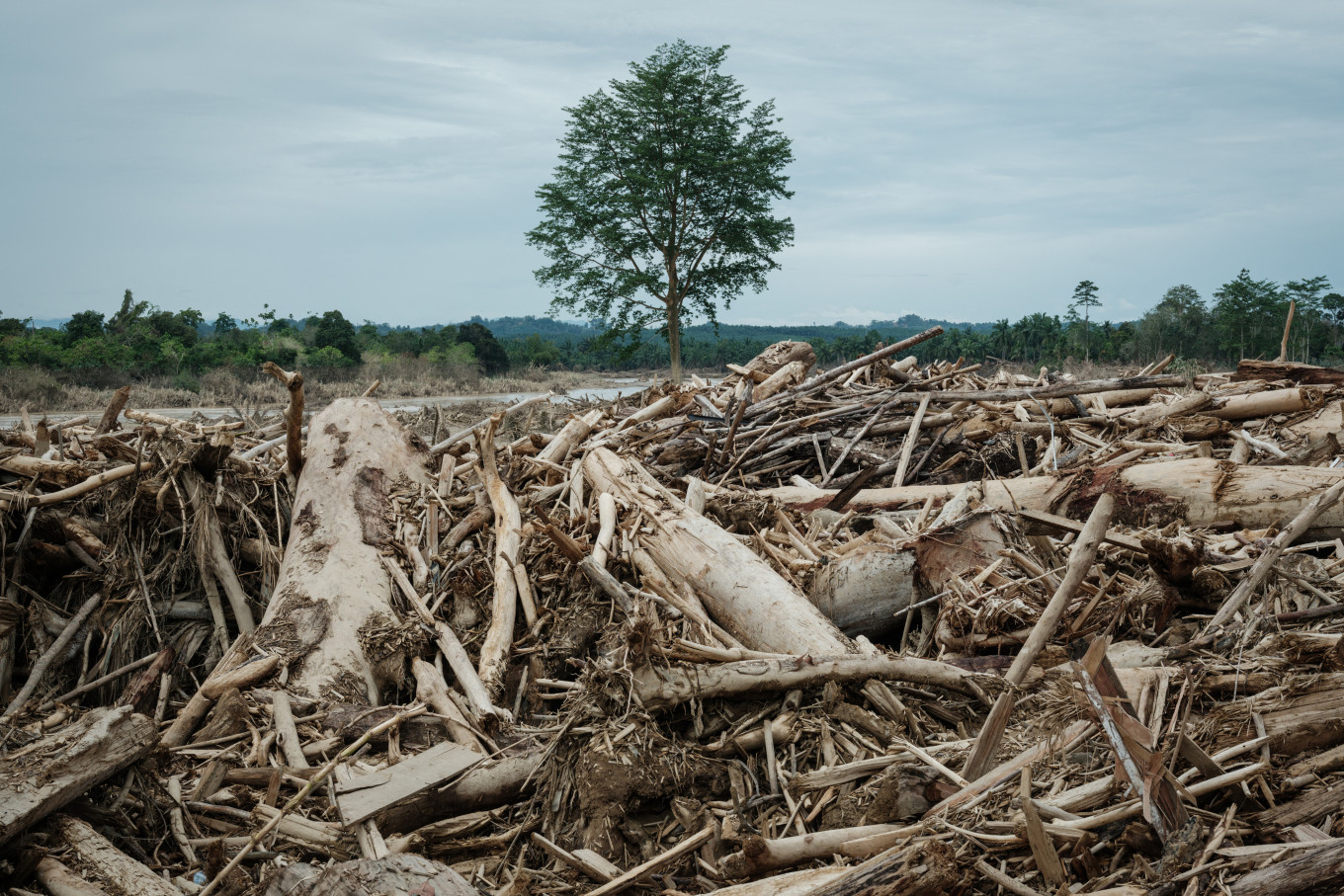 Logs and wood debris carried by floodwaters during the disaster in late November lay in a dense pile on Dec. 14, 2025, along a riverine area where homes once stood in Aceh Tamiang regency, North Sumatra. (AFP/Yasuyoshi Chiba)
Floods, droughts and heat waves continue to dominate headlines around the world and in Australia.
In the past few days, hundreds of bushfires have ignited in South-Eastern Australia during an extreme heat wave. And communities in North Queensland have been lashed by heavy rain and flash flooding from ex-tropical cyclone Koji. This is the seventh cyclone so far this season.
Behind these disasters is a deeper and less visible influence: ongoing shifts in the global water cycle. This is the process by which water evaporates, falls as rain and snow and ultimately evaporates again. Our latest report shows how changes in rainfall, air temperature and humidity combined to amplify water-related disasters across the world in 2025.
These floods and fires are not simply isolated weather extremes but signs of a water cycle that is being increasingly destabilized by global warming.
The global water cycle connects the atmosphere, land, oceans and ice. Water evaporates from the land and seas, falling as rain and snow. This feeds glaciers, rivers, lakes and groundwater and finally, either evaporates again or flows to the ocean. This cycle is driven by the energy from the sun and as the planet warms, it is becoming more powerful and more erratic.
Global land temperatures in 2025 were only slightly lower than the record-breaking year in 2024. This makes the last three years the hottest on record, in line with rapid global warming.

Higher temperatures accelerate evaporation from soil, vegetation and inland waters, producing dry conditions more quickly than before. At the same time, warmer air can hold more moisture, which increases the potential for intense rainfall. Together, these processes intensify both floods and droughts, sometimes in rapid succession.
In 2025, many regions of the globe experienced this pattern of extreme rainfall followed closely by heat and drying. Scientists describe these abrupt swings between dry and wet extremes as “climate whiplash”.
Climate whiplash occurs when wet and dry extremes follow one another so quickly that ecosystems, infrastructure and communities struggle to cope. One example in 2025 was the severe wildfires in Spain and Portugal.
A wetter-than-average spring promoted strong vegetation growth across parts of the Iberian Peninsula. Then a sudden heat wave was followed by rapid loss of soil moisture. The rapidly dried vegetation fueled severe wildfires later in the season.
Australia has also weathered shifts in the water cycle in the past year. In February 2025, Cyclone Alfred landed in South East Queensland. It is not unprecedented to have cyclones so far south, but this was the first time in 50 years. In the following months, the rest of Queensland was hit hard by torrential rains and severe flooding.
Also in early 2025, tropical low pressure systems near North Queensland produced rainfall totals comparable to those in a cyclone. More than 1,000 millimeters of rain fell within days in some areas, and Townsville recorded its wettest month on record. The event caused widespread damage to homes, transport and essential services, with economic losses exceeding A$1.2 billion (US$804 million).
The wet conditions, combined with high temperatures, also triggered an unprecedented outbreak of melioidosis. This is a disease caused by bacteria that occur naturally in soil and freshwater but can become dangerous when rainfall and flooding bring them to the surface. By May, Queensland Health had recorded 221 cases and 31 deaths, making it the largest outbreak in the state’s history.
This shows how water cycle extremes affect natural and human systems. Torrential rains and flooding have become a regular occurrence in Queensland and northern New South Wales.
Several other events in 2025 revealed how different parts of the water cycle are becoming more unstable. In the Himalayas, a series of unprecedented glacial lake floods occurred within just a few months following warm conditions. Meanwhile, a rare cyclone close to the equator took Indonesian and Malaysian communities by surprise.
The increasing frequency of tropical cyclones in historically uncommon locations reflects how warming oceans and shifting atmospheric conditions are expanding the reach of water-related hazards.
Globally, our report shows that water-related disasters in 2025 were associated with nearly 5,000 deaths, displaced around 8 million people and caused economic losses exceeding US$360 billion.
In Europe, prolonged heat waves were linked to many thousands of heat-related deaths. And in South and Southeast Asia, flooding displaced millions in countries such as Bangladesh, Thailand, Malaysia and the Philippines.
This shows how different parts of the water cycle, from the atmosphere to soil conditions, river flows and surface water, can influence ongoing global warming.
Our report finds that preparedness really matters. Early warning systems and evacuation planning saved many lives in several major floods, such as those on the West Coast of the United States in December 2025. However, severe disruption and economic damage still occurred where infrastructure had been designed for stable, historical conditions.
Conditions in the global water cycle at the end of 2025 point to greater drought risk in parts of the Mediterranean, the Horn of Africa, Brazil and Central Asia in 2026. On the other hand, wet conditions mean flood and landslide risks remain high in the Sahel, south of the Sahara Desert, southern Africa, northern Australia and much of Asia.
As climate instability continues, the global water cycle is likely to become even more variable. Understanding how water moves through the climate system and how quickly it can shift from one extreme to another will help us reduce the impacts of future disasters. Managing both heat and water extremes will be key to adapting to a rapidly warming world.
---
The writer is a professor at the Fenner School of Environment & Society at The Australian National University. This article is republished under a Creative Commons license.