TheJakartaPost
Please Update your browser
Your browser is out of date, and may not be compatible with our website. A list of the most popular web browsers can be found below.
Just click on the icons to get to the download page.


Popular Reads
Top Results
No results found. Please check your search term and try again
Can't find what you're looking for?
View all search results
Popular Reads
Top Results
No results found. Please check your search term and try again
Can't find what you're looking for?
View all search resultsWTE: A long journey toward tackling the waste emergency
Change text size
Gift Premium Articles
to Anyone
Share the best of The Jakarta Post with friends, family, or colleagues. As a subscriber, you can gift 3 to 5 articles each month that anyone can read—no subscription needed!
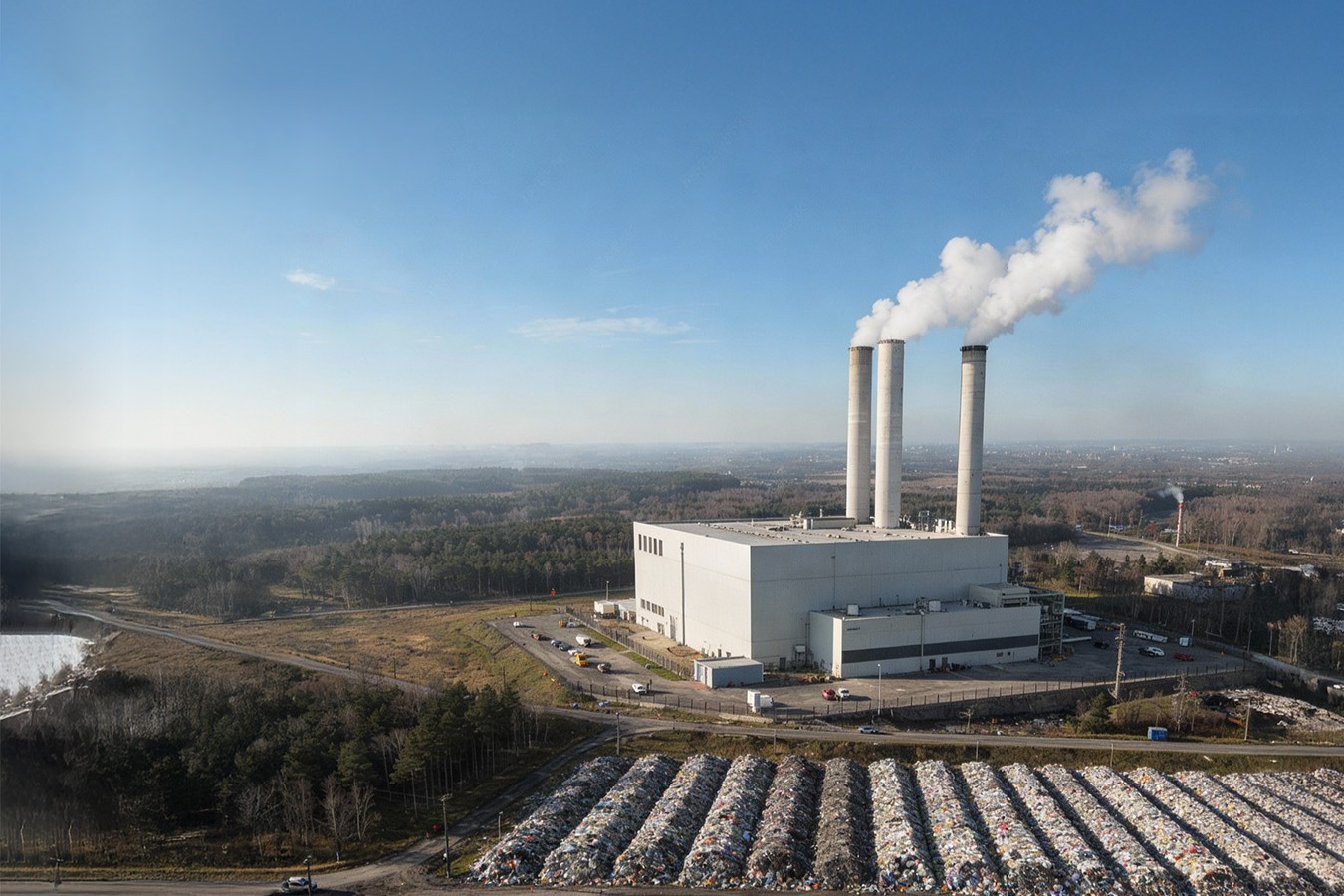 Illustration image is AI generated
P
resident Prabowo Subianto’s policy to address Indonesia’s waste emergency through the waste-to-energy (WTE) program continues to generate both support and opposition, particularly regarding the choice of technology, which some believe will generate air pollution. In fact, the latest technologies are already capable of addressing these pollution concerns. The alternative is business as usual, with waste disposed of in landfills without treatment along with all the problems that entail. Therefore, the WTE policy deserves support to achieve success.
Opposition or criticism of Prabowo’s WTE policy is largely based on Indonesia’s experience in addressing the waste crisis through the construction of waste-powered power plants (PLTSa), which are widely regarded as unsuccessful and had resulted in additional problems. However, the latest regulation governing WTE, Presidential Regulation (Perpres) No. 109/2025, was issued based on a thorough evaluation of the shortcomings of earlier WTE developments.
Various regulations have previously been issued to tackle Indonesia’s waste problem, including Perpres No. 18/2016 and Perpres No. 35/2018. Yet to date, only two PLTSa plants are in operation, namely PLTSa Benowo in Surabaya and PLTSa Putri Cempo in Surakarta, out of the 12 originally targeted. The problems faced by these two operating plants stem from two main factors: financial and technological issues.
From the financial standpoint, the electricity purchase price from PLTSa and the tipping fee scheme have been problematic. The price where PT PLN purchase electricity from PLTSa at US$0.1335, or 13.35 US cents, per kilowatt hour (kWh) is insufficient to cover the plants’ operating costs; necessitating tipping fees, or waste treatment service fees, jointly borne by the central and local governments. The central government committed to allocating Rp 500,000 per tonne of waste, with the remainder covered by local governments. In practice, tipping fees often become a major obstacle because they require long-term commitments while changes in local leadership occur every five or ten years, which do not align with PLTSa contracts that can last up to 25 years.
From the technological standpoint, the choice of gasification technology for both PLTSa Benowo and PLTSa Putri Cempo has raised concerns. Although gasification produces lower emissions than incineration, the technology is not yet mature, making its implementation highly risky. Furthermore, gasification technology is not well suited to processing hundreds of tonnes of heterogeneous waste per day, which negatively affects the gasification process’ efficiency.
In response to these problems, Perpres No. 109/2025 was issued to address the shortcomings of previous WTE projects and enable Indonesia’s waste problem to be resolved. The new regulation addresses the two main aspects of financing and technology to ensure the success of the WTE program. First, PLN’s electricity purchase price from WTE facilities has been increased to 20 US cents per kWh, and tipping fees that have often undermined revenue certainty for WTE business entities are eliminated.

Unlike the previous scheme, the government will provide compensation to PLN for the difference between PLN’s electricity purchase price from PLTSa and PLN’s BPP. This compensation or subsidy represents the government’s tangible commitment to addressing Indonesia’s prolonged waste emergency.
Even at a price of 20 US cents per kWh, some stakeholders still consider the returns on WTE projects to be relatively low, necessitating additional support. Presidential Regulation No. 109/2025 strengthens the investment appeal of WTE projects through several mechanisms. The electricity purchase scheme prioritizes power generated by PLTSa to be dispatched into PLN’s grid, known as must dispatched principle, according to agreed annual volumes to provide investors with a guarantee that all electricity produced by the PLTSa plants will be purchased by PLN.
Drawing lessons from WTE facilities that are already in operation, Danantara will play a critical role in ensuring the sustainability of WTE projects and preventing a recurrence of past technological and governance failures. The regulation explicitly requires WTE business entities to use proven, state-of-the-art and environmentally friendly technologies suited to the type of waste processed. Danantara is specifically mandated to select WTE operators and ensure that WTE investments are commercially viable, financially sound, and well managed in terms of risk. Within this framework, Danantara has decided to select advanced incineration technologies that have been successfully implemented in many developed and developing countries, including China and Singapore.
By adopting incineration technology, China has successfully increased its waste treatment rate from 52.1 percent in 2004 to 100 percent in 2024. China employs incineration technologies that include mechanical grate incinerators (MGI) and circulating fluidized bed (CFB) technologies, both of which produce emissions below European Union standards.
In Southeast Asia, Singapore has been a pioneer in incineration technology since 1979. Due to limited land availability, Singapore has built four WTE facilities with a combined processing capacity of 9,710 tons of waste per day. These facilities successfully incinerate 90 percent of the country’s waste while minimizing flue gas and ash. Effective waste treatment has allowed Singapore to reduce the number of landfills to just one, which operates without odor issues.
China’s and Singapore’s experiences are worth emulating in Indonesia, where waste continues to accumulate in landfills across the country. Environment Ministry data show that waste generation in 329 regencies and cities reaches 34.97 million tonnes per year. If waste from all 512 regencies and cities is included, total waste generation reaches 56.98 million tonnes annually. Of this volume, only 33 percent, or 11.57 million tonnes per year, is properly managed while the remaining 67 percent ends up in landfills, creating numerous problems.
The selection of WTE technology is the most critical factor in ensuring the success of WTE projects. MGI technology is a viable option, as it dominates the global market with a 71 percent share. By adopting a proven and mature technology, the government can significantly reduce the risk of failure for WTE projects.
Beyond WTE technology, waste sorting can improve incinerator efficiency as well as reduce odor and health issues during transportation of waste from its source to WTE facilities. Waste segregation requires public participation through reduce, reuse and recycle (3R) programs.
Singapore’s success in waste management is closely tied to its achievements in implementing 3R policies, with 50 percent of its waste successfully recycled. Similarly, Sweden has a strong track record in waste management by encouraging households to separate waste. Sweden’s success is driven by tax incentives, recycling centers located within approximately 300 meters of residential areas and strong public–private cooperation.
Indonesia has already adopted 3R policies, but implementation varies significantly across regions and remains limited to areas with relatively low-level waste generation. To increase public participation, the government could adopt Sweden’s 3R approach by involving the private sector through providing tax incentives for businesses in the waste management industry, incentives for households to practice 3R, and 3R facilities close to residential areas.
Based on the experiences of other countries, the success of WTE projects is achievable in Indonesia. However, drawing from Indonesia’s own past experiences, collective efforts from all stakeholders, including the Home Affairs Ministry, the Environment Ministry, the Energy and Mineral Resources Ministry, Danantara, PLN, local governments, the private sector or investors and the public, are essential to ensure the long-term success of WTE projects.