TheJakartaPost
Please Update your browser
Your browser is out of date, and may not be compatible with our website. A list of the most popular web browsers can be found below.
Just click on the icons to get to the download page.


Popular Reads
Top Results
No results found. Please check your search term and try again
Can't find what you're looking for?
View all search results
Popular Reads
Top Results
No results found. Please check your search term and try again
Can't find what you're looking for?
View all search resultsUnderfunding threatens Asia’s cervical cancer elimination promise
Without sufficient investment, many Asian nations risk perpetuating disparities in cervical cancer prevention and care, leaving women in low-resource settings at highest risk.
Change text size
Gift Premium Articles
to Anyone
Share the best of The Jakarta Post with friends, family, or colleagues. As a subscriber, you can gift 3 to 5 articles each month that anyone can read—no subscription needed!
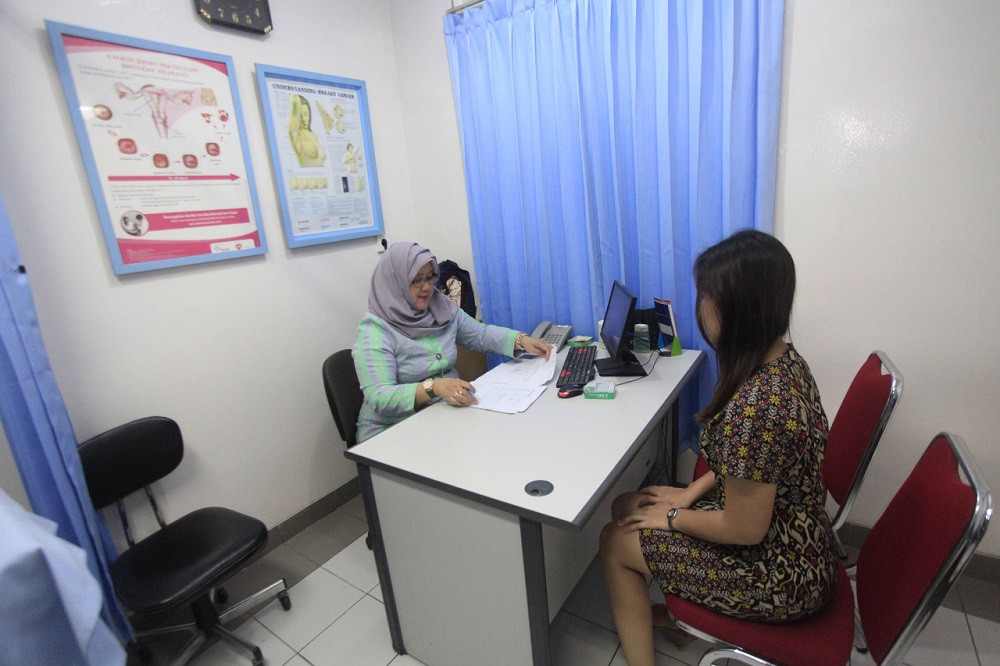 A patient consults her oncologist for early detection of cervical cancer at the Indonesian Cancer Foundation (YKI) in South Jakarta. (The Jakarta Post/Dhoni Setiawan)
A
sia carries the global burden of cervical cancer, with nearly 60 percent of global cases. Despite a largely preventable disease that claims a life every two minutes, the region faces worsening incidence and mortality rates over the next decade due to demographic transitions, urbanization, and persistent health financing gaps.
While science and technology have brought medical advancements that allows for eradication, it is still the fourth most common cancer among women globally. As of December 2025, it is estimated that cervical cancer claims 56 lives daily in Indonesia.
Cervical cancer is unique among cancers as effective treatments are possible, through vaccination, screening, and early treatment, making elimination a reality. The persistence of the disease has been mainly the challenge of scale and delivery.
Vaccination against human papillomavirus (HPV) can avert 17.4 deaths for every 1,000 girls vaccinated, yet less than five per cent of women in many Low- and Middle-Income Countries (LMICs) receive cervical cancer screening due to health system limitations, cost barriers and logistical challenges. Bridging this gap requires a collaborative funding model where non-government investments fortify the efforts by state-led programs.
Adequate funding is necessary for transitioning from successful pilots to universal national coverage. Innovative funding models can be a complementary resource to help reach marginalized groups, working alongside existing public frameworks and government initiatives to deliver HPV vaccines to remote areas where logistics can be complicated.
In Indonesia, the Health Ministry’s National Elimination Plan (2023–2030) has demonstrated the effectiveness of state-led intervention, with selected districts achieving first-dose rates as high as 90 percent.

As of November 2023, the national second-dose coverage was estimated at approximately 58.1 percent to 60 percent. Philanthropic involvement can complement these successes by filling in logistical gaps to the most vulnerable and hard-to-reach populations.
Not every country, district, or demographic within Asia has had the privilege of receiving free and timely HPV vaccines, like those who have been reached by the National Elimination program in Indonesia. Without sufficient investment, many Asian nations risk perpetuating disparities in prevention and care, leaving women in low-resource settings at highest risk for preventable disease and death.
Supporting these national goals through blended finance can help reach the vulnerable, ensuring no one gets left behind.
Cervical cancer prevention, detection and care is not a problem that belongs to individuals only.
As the population of Indonesia ages, this will lead to a 127 percent increase in per capita health spending on cancer between 2023 and 2050, all other things being equal.
Countries that do not close financing gaps will be unable to reach WHO elimination targets, meaning the pace of progress will stall or even regress, resulting in tens of thousands of preventable deaths annually. Persistent funding shortfalls deepen economic losses by increasing care costs, reducing women’s workforce participation, and destabilizing families and communities.
Business leaders and philanthropic foundations have a unique opportunity and responsibility to change this course. We already know the necessary ingredients for Cervical Cancer Elimination – awareness, vaccination, and early detection.
Strong leaderships from the business community and foundations can help create a public-private partnerships that allows for collective effort against this disease. This can fill funding gap and can help enhance government initiatives to help strengthen the health of marginalized and the community, and in turn protect the regional economic stability by supporting national health programs.
Eliminating cervical cancer is not just a public health achievement; it is an economic and social imperative. Champion funding, forge public-private partnerships, and amplify awareness so that Asia can be the first region to consign cervical cancer history.
***
The writer is executive director for health impact at AVPN.