TheJakartaPost
Please Update your browser
Your browser is out of date, and may not be compatible with our website. A list of the most popular web browsers can be found below.
Just click on the icons to get to the download page.


Popular Reads
Top Results
No results found. Please check your search term and try again
Can't find what you're looking for?
View all search results
Popular Reads
Top Results
No results found. Please check your search term and try again
Can't find what you're looking for?
View all search resultsThe UK must not sacrifice human rights for economic growth
We find it troubling that the partnership purports to protect the environment, when in Papua, these military-dominated monocultures are riding roughshod over local communities.
Change text size
Gift Premium Articles
to Anyone
Share the best of The Jakarta Post with friends, family, or colleagues. As a subscriber, you can gift 3 to 5 articles each month that anyone can read—no subscription needed!
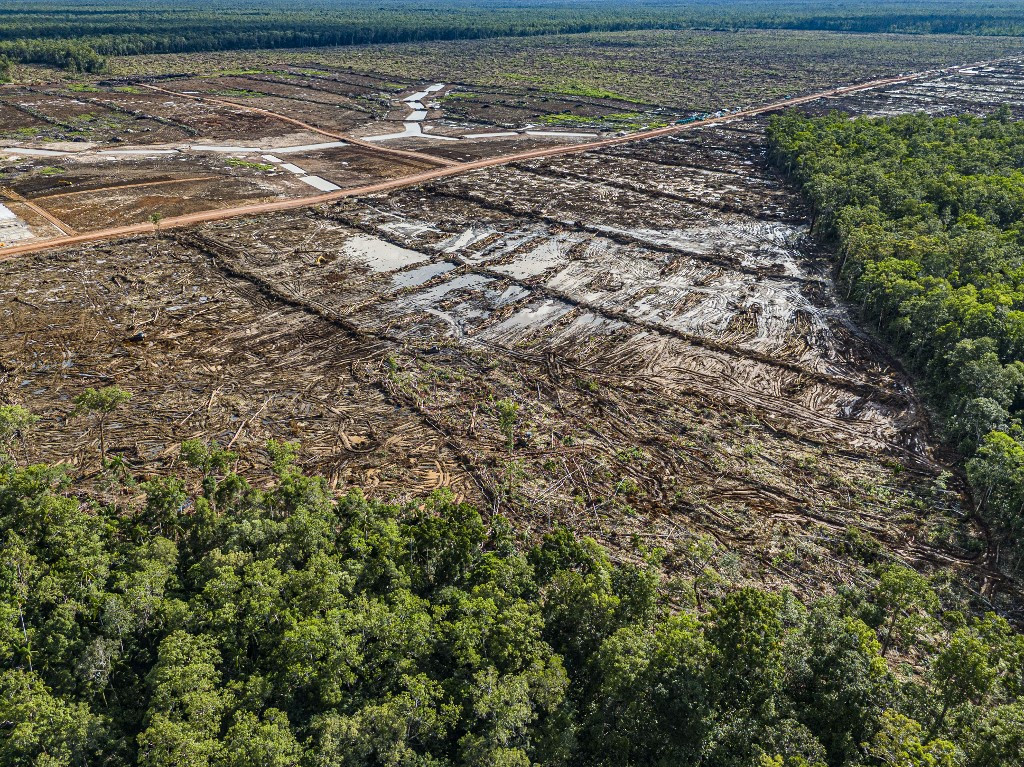 A deforested area that will be converted into a sugar cane plantation by PT Murni Nusantara Abadi, directly threatening the adjacent customary forest protected by the Kwipalo Clan, is seen in this photo taken in Mandiri Jagebob, Merauke regency, South Papua, on March 17, 2025. (AFP/Handout/Mighty Earth/Yusuf Wahil)
I
ndonesia's presidency of the United Nations Human Rights Council from Feb. 23 has rightly cast a spotlight on its own human rights record. But beyond its latest UN role, more attention must be paid to human rights in the context of Indonesia’s new bilateral relationships.
In January 2026, the United Kingdom and Indonesia signed an economic growth partnership (EGP), during President Prabowo Subianto’s UK visit. For all its seeming “potential”, the agreement is silent on the environmental damage and serious human rights implications of Indonesia's food estates, and the UK government's intention to boost arms sales in the name of economic growth.
The EGP follows a contract, reported to be worth 4 billion pounds (US$5.41 billion), signed in November 2025, for the UK government to build two Arrowhead frigates for the Indonesian Navy led by the UK firm Babcock. It is interesting to note that the construction of 1,000 fishing boats has been included in the deal, quite possibly to greenwash arms sales.
Indonesia is shopping for more arms and has purchased more ships and underwater drones for its navy, often under joint-production contracts with foreign manufacturers. In the last 10 years, the UK government approved arms exports to Indonesia totaling 806 million pounds; this figure could quadruple in the next decade under the current deal.
The agreement also raises questions over the UK government’s claims to be upholding environmental standards.
For example, the EGP purports that both countries will “encourage the conservation and sustainable management of forests”. Yet, Prabowo’s government has made no secret of its aim to cultivate biofuels (palm oil, sugarcane, and cassava) to reduce fuel imports and has begun actively expanding the cultivation of these crops.

The vehicle for this expansion is food estates. While under the EGP, Indonesia and the UK claim that primary forests will be “restor[ed] and protect[ed]”, in South Papua province, the Indonesian Military (TNI) controls food estates, which will replace primary forests with huge plantations growing biofuels.
The Indonesian government has designated food estates in Papua as a Strategic National Project (PSN), making it nearly impossible for local communities to challenge dispossession from their ancestral lands. This situation seemingly runs counter to the EGP commitments.
We find it troubling that the EGP purports to protect the environment, when in Papua, these military-dominated monocultures are riding roughshod over local communities.
Indonesia assumes the presidency of the UN's Human Rights Council at a time when many states are seeking to establish closer trading relationships. The UK can pursue international opportunities but would be advised first to recall a tawdry history of arms sales to the New Order regime, led by Prabowo’s former father-in-law, Soeharto.
The UK must require proper assessments on human rights lest lives be put in jeopardy. International partnership can be a positive development, but never at the cost of the rights and environment of the people of Indonesia and Papua.
***
The writer is a member of the board of directors at TAPOL, which has been working to promote human rights, peace and democracy in Indonesia since 1973.