The Jakarta Post
Please Update your browser
Your browser is out of date, and may not be compatible with our website. A list of the most popular web browsers can be found below.
Just click on the icons to get to the download page.


Popular Reads
Top Results
No results found. Please check your search term and try again
Can't find what you're looking for?
View all search results
Popular Reads
Top Results
No results found. Please check your search term and try again
Can't find what you're looking for?
View all search resultsNeither the US nor Iran can halt sea trade, insurance can
While missiles capture the headlines, it is the silent calculations of the insurance market that truly hold the power to paralyze global trade.
Change text size
Gift Premium Articles
to Anyone
Share the best of The Jakarta Post with friends, family, or colleagues. As a subscriber, you can gift 3 to 5 articles each month that anyone can read—no subscription needed!
 Set as preferred source
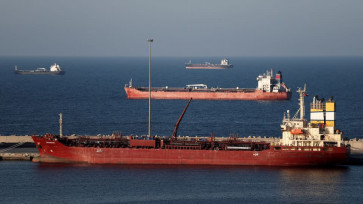
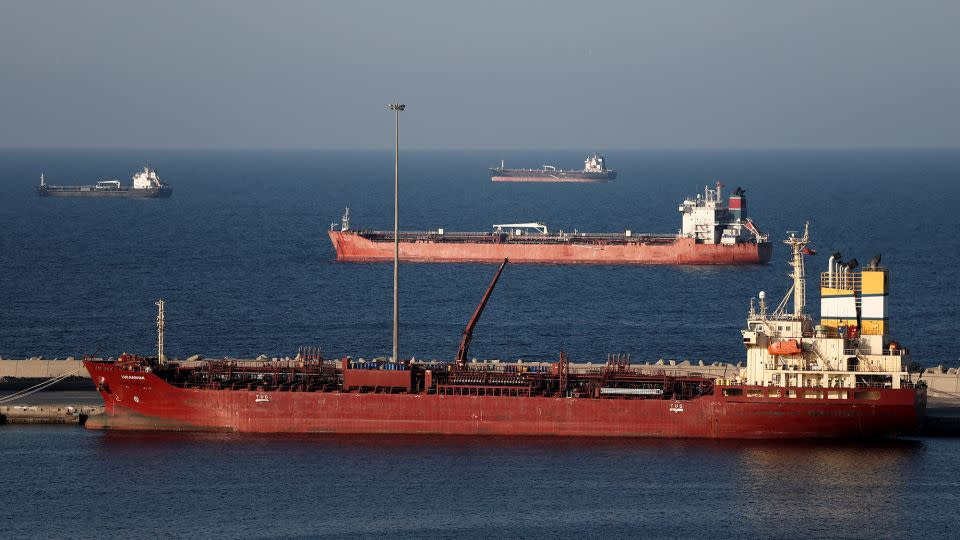 Luojiashan tanker sits anchored in Muscat on March 7, 2026, amid the United States-Israeli war with Iran that has disrupted shipping in the Strait of Hormuz. (Reuters/Benoit Tessier)
W
hen two Indonesian oil tankers were forced to wait near the Strait of Hormuz this month, the explanation seemed obvious: geopolitical tension in the Middle East. Yet the real constraint had not been missiles or naval blockades; it had been insurance.
That matters because the modern economy depends on ships. According to UNCTAD (2024), about 80 percent of global merchandise trade moves by sea. Such dependence inevitably exposes the global economy to maritime risk, particularly amid rising tensions in the Gulf.x
While the United States and Israel deploy precision weapons such as Tomahawk cruise missiles and Iran relies on a large arsenal of ballistic missiles, including the Shahab-3 and Emad, weapons rarely stop maritime trade on their own. In modern shipping, the true switch that halts vessels is insurance.
In modern maritime trade, insurance is not merely a financial safeguard. It is a critical infrastructure that determines whether shipping can occur at all, particularly during periods of geopolitical conflict. Commercial vessels typically require multiple layers of insurance, including marine hull insurance, which covers damage to the vessel itself, and war-risk insurance, which protects against losses caused by military attacks.
Marine hull insurance protects the physical structure of ships, including machinery and onboard equipment, against risks such as collision, piracy and severe weather. Because ships are capital-intensive assets operating in inherently risky environments, this insurance is essential for stabilizing global logistics.
While war-risk insurance is typically structured as a separate endorsement, marine hull insurance remains the core product. Globally, this market is concentrated in a handful of centers. Europe dominates with more than US$5.1 billion in premiums, driven by Nordic insurers and the London market, while in Asia, China has emerged as the largest market, followed by Singapore and Japan.

The importance of maritime insurance becomes most visible during crises. When conflict escalates, insurers reassess risk almost immediately. If coverage is withdrawn or premiums rise sharply, ships often stop sailing even without a physical blockade.