The Jakarta Post
Please Update your browser
Your browser is out of date, and may not be compatible with our website. A list of the most popular web browsers can be found below.
Just click on the icons to get to the download page.


Popular Reads
Top Results
No results found. Please check your search term and try again
Can't find what you're looking for?
View all search results
Popular Reads
Top Results
No results found. Please check your search term and try again
Can't find what you're looking for?
View all search resultsIndia’s balanced strategy in West Asia
As India navigates the volatile West Asian landscape, New Delhi’s masterclass in strategic autonomy proves that dialogue, not division, is the ultimate currency of power.
Change text size
Gift Premium Articles
to Anyone
Share the best of The Jakarta Post with friends, family, or colleagues. As a subscriber, you can gift 3 to 5 articles each month that anyone can read—no subscription needed!
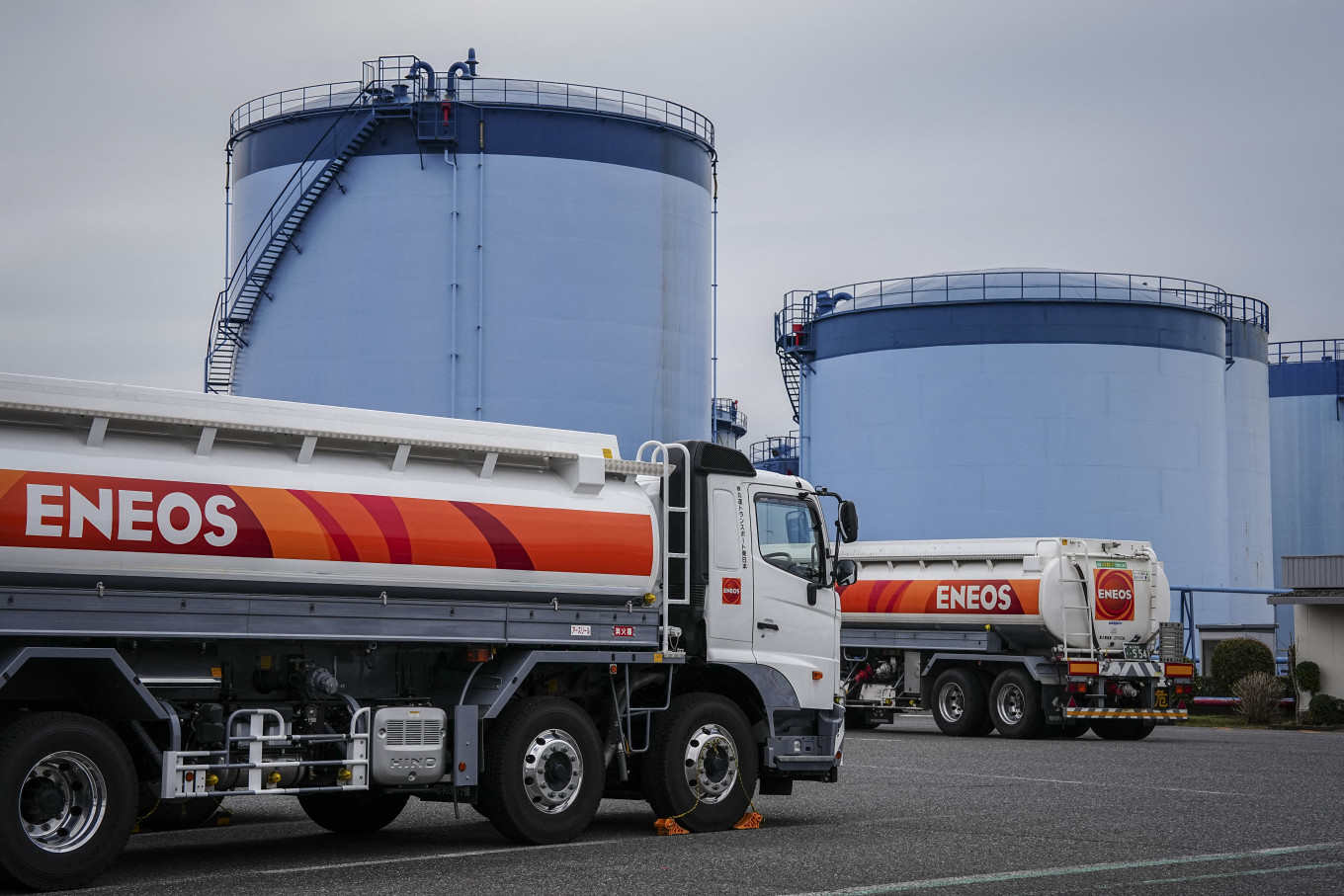 Trucks are seen at an oil terminal in Yokohama, Kanagawa prefecture on March 17, 2026. Oil prices resumed their push higher on March 17 as several countries pushed back against Donald Trump's demand that they help secure the key Strait of Hormuz, while Iran continued to target crude-producing neighbors in retaliation for attacks against it. (AFP/Yuichi Yamazaki)
F
or decades, India has been adept at pursuing a balanced approach to geopolitical crises, maintaining wide-ranging interests across various global theaters. The ongoing conflict involving Iran has been no exception. This approach is premised on India’s long-held principle of strategic autonomy: New Delhi refuses to be dictated into taking sides and instead pursues a strategy that serves its national interests while accounting for history, geography, and future opportunities.
While the India-Israel partnership has widened and deepened over the years—with technology emerging as a primary area of focus—New Delhi has pointedly not taken sides in the current crisis. A nuanced strategy has been adopted against the backdrop of India’s extensive interests in the Persian Gulf and the wider West Asian region. This area is home to 10 million Indian professionals and serves as a critical source of energy and investment.
India’s balanced approach is best illustrated by the fact that the Indian leadership has engaged with every regional actor since 28 February without discrimination. External Affairs Minister S. Jaishankar spoke with his Iranian counterpart twice since the conflict escalated, and New Delhi hosted the Iranian Deputy Foreign Minister in the first week of March.
During his visit, the deputy minister also addressed India’s premier foreign policy platform, the Raisina Dialogue. Throughout these engagements, India’s mantra has remained clear: dialogue and diplomacy are the only effective tools to end conflict.
Addressing the Upper House of the Indian Parliament on March 9, Jaishankar noted that the ongoing conflict has intensified the regional security situation. "The Prime Minister is closely monitoring developments," he stated. "We continue to believe that dialogue and diplomacy should be pursued to de-escalate tensions. We want West Asia to remain stable. Millions of Indians are in the Gulf countries; we are concerned about them."
Remittances from Indians in the Gulf play a critical role in the national economy. Given the government’s focus on the repatriation of citizens during global crises, New Delhi has already facilitated the return of thousands of Indians stranded in the Gulf region. In his parliamentary address, Jaishankar also acknowledged that the conflict has led to numerous casualties, including at the leadership level in Iran. Stressing that dialogue is the way forward, he added, "It is also imperative that the sovereignty and territorial integrity of all states in the region be respected." This message was intended for all sides involved.

The Gulf is also a vital trade partner for India, with annual trade amounting to nearly US$200 billion. It remains a traditionally large source of crude oil and natural gas. Consequently, a war in the region is never in India’s interest, whether in the short or long term.
It is in this context that Jaishankar informed Parliament: "For us, the interests of the Indian consumer have and will always be the overriding priority. Where required, Indian diplomacy has supported the endeavors of our energy enterprises in this volatile situation."
Compared to India’s neutral stance, Pakistan’s role in this conflict has been curious. Despite being Iran’s neighbor, Pakistan did not remain neutral and reportedly provided airspace for attacks on Iran during the Ramadan period. Under the Saudi Arabia-Pakistan defense pact, Islamabad is obligated to back Riyadh during wartime. Recent images of a Pakistani field marshal meeting with the Saudi defense minister have been too prominent for observers to ignore.
In contrast, Iran’s geographical significance and its weight in regional affairs cannot be underestimated. Once an aspiring middle power, Tehran remains critical as a counterbalance to Pakistan and serves as India’s gateway to Eurasia, Afghanistan, and Armenia. The International North-South Transport Corridor (INSTC) and the Chabahar Port, despite years of delay, remain significant regional connectivity initiatives.
Despite various external pressures, India has managed to maintain these two projects, which run parallel to other international connectivity efforts. That the Indian government negotiated skillfully to gain a sanctions waiver from the US for the Chabahar Port is a significant diplomatic feat. Furthermore, the INSTC provided a vital gateway for trade between India and Russia following the outbreak of the Ukraine war.
Iran has also played a critical role in cementing India’s strategic partnership with Armenia by allowing Indian military supplies to transit through its territory and airspace. With a population of 92 million, Iran is the 17th-largest country in the world by population and land area—roughly half the size of India and 80 times larger than Israel. Beyond its geography, Iran’s human capital is formidable; the adult literacy rate stands at 89 percent, with youth literacy nearing 99 percent. Its population is among the most skilled in the wider West Asian region, and its scientific advancements over recent decades have been exemplary. Furthermore, the country is rich in natural resources, ranking as the world’s ninth-largest oil producer and third-largest natural gas producer.
Under these complex conditions, the smart handling of regional tensions through deft diplomatic moves is imperative. India’s continued focus on dialogue and diplomacy remains the most viable path forward.
***
The writer is an India-based commentator on international affairs.