The Jakarta Post
Please Update your browser
Your browser is out of date, and may not be compatible with our website. A list of the most popular web browsers can be found below.
Just click on the icons to get to the download page.


Popular Reads
Top Results
No results found. Please check your search term and try again
Can't find what you're looking for?
View all search results
Popular Reads
Top Results
No results found. Please check your search term and try again
Can't find what you're looking for?
View all search resultsAmerica’s war, everyone’s problem
A reported account of what transpired during the White House meeting that decided to launch attacks on Iran draws an uneasy parallel with Trump's former reality TV show.
Change text size
Gift Premium Articles
to Anyone
Share the best of The Jakarta Post with friends, family, or colleagues. As a subscriber, you can gift 3 to 5 articles each month that anyone can read—no subscription needed!
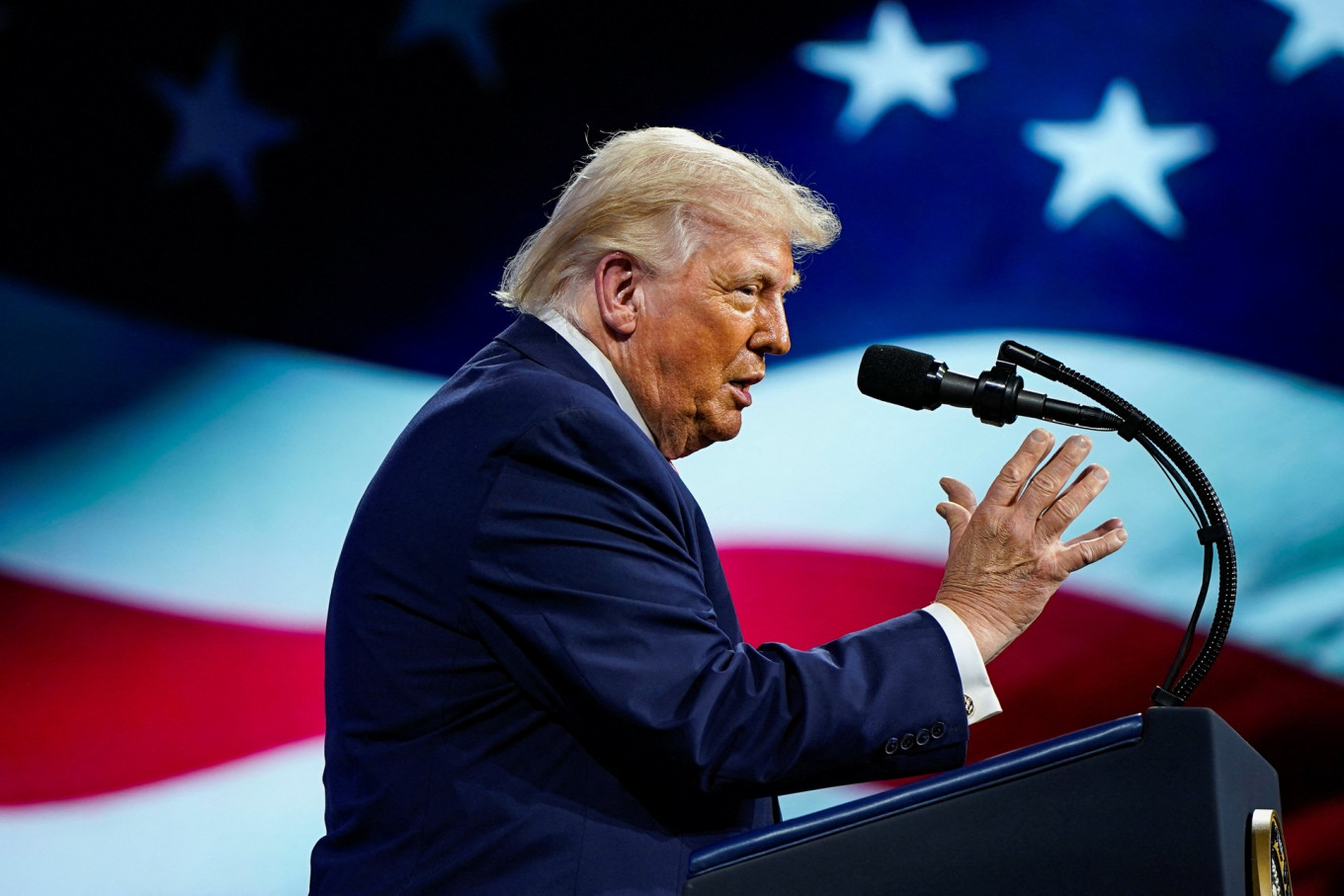 United States President Donald Trump delivers remarks on March 27, 2026, at a summit of the Future Investment Initiative (FII) Institute at the Faena Forum in Miami Beach, Florida. (Reuters /Elizabeth Frantz)
A
nyone old enough to have stayed up watching late-night American reality television in the early 2000s would have encountered Donald Trump before he became a politician. His NBC show, The Apprentice, projected him as the quintessential American CEO: imperious and blunt but decisive and wise. He reduced complex issues to simple decision points. And, unflinching, he alone made the hard calls: “You’re fired!” became the show’s signature line.
That carefully cultivated image was meant to represent the opposite of what his supporters call the “deep state”: the opaque, faceless machinery of government where decisions are made but responsibility is impossible to pin down. Trump, by contrast, was the transparent leader who listened to everyone and then decided without hesitation. He alone would own the consequences.
This is a powerful motif wherever government has become so routinized and distant that ordinary citizens feel it no longer speaks for them. Such conditions breed authoritarian populism, a thirst for bold, willful leadership that breaks all patterns. Trump is the American version of that yearning, much as Rodrigo Duterte was for the Philippines.
Nowhere was this style of decision-making more nakedly on display than on Feb. 26 when the United States president said simply, “I think we need to do it”; meaning the joint US-Israeli bombardment of Iran, which was launched two days later.
What follows here draws on the detailed account published by The New York Times on April 7, reported by Jonathan Swan and Maggie Haberman from interviews with those who were in the room.
The decision was the culmination of a series of meetings in the White House Situation Room. It began with an in-person briefing by Israeli Prime Minister Benjamin Netanyahu himself, followed by a video of Israel’s chief intelligence officer making the case for acting against Iran immediately.

The Israeli plan had four objectives, each presented as achievable through a quick, massive, surprise attack: assassinate Iran’s top leaders simultaneously, destroy its military capability, trigger a popular uprising and install a new secular government in place of the Islamic regime.
“Sounds good,” said Trump at the end. Netanyahu left the White House, confident that he had his man.
The following day, Trump convened his own team. Around the table were the vice president, the state and defense secretaries, the national security adviser, the Joint Chiefs of Staff chair, the Central Intelligence Agency (CIA) director, the chief of staff and Trump’s personal envoys to the Iran talks.
The CIA director called the Israeli briefing “farcical” and warned against the unrealistic goal of regime change. The top general cautioned that the Israelis were overselling their case, that securing the Strait of Hormuz would be difficult and that a major campaign would dangerously deplete America’s own weapons stockpile.
Every adviser at the table, except the defense secretary, had serious reservations. Yet in the end, all of them, including Vice President JD Vance, the most vocal opponent of the war, concluded that it was the president’s call to make, and that they would defer to his judgment.
What strikes me most is not that there was dissent, but that the dissent made no difference whatsoever.
More troubling still is what was entirely absent from these deliberations: any serious discussion of the legal, moral and human consequences of ordering the simultaneous killing of an entire sovereign government, with full awareness of the chaos that would follow for millions of people.
Here was the American president, surrounded by an ultimately submissive team, deciding to go to war on gut feeling and with no visible concern for what it would mean beyond US borders.
I once hosted a weekly public affairs TV program that tried to recreate the atmosphere of a town hall meeting. It wasn’t reality TV in the strict sense, but it was a show. Even going live, it was possible to steer the discussion toward a desired outcome. On reality TV, inconvenient moments can be edited out to keep the story clean.
War cannot be edited. Thousands of innocent lives are lost; entire communities are destroyed. And in today’s interconnected world, the consequences cross borders instantly, felt by people who had no seat in that Situation Room and no voice in that decision.
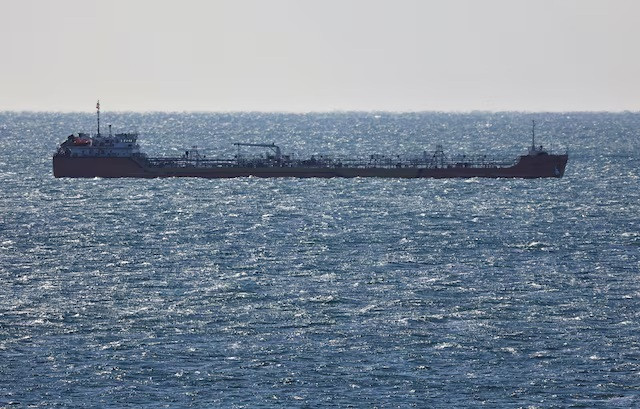
The Strait of Hormuz is not a US waterway. The international rules on the use of force belong to no single country. The fuel prices and fertilizer scarcity that have surged across Asia, the Middle East and the developing world since Feb. 28 are being paid for by ordinary people who were never consulted.
This is what it means when the most powerful nation on Earth hands its gravest decisions to one man’s instinct.
The US cannot ignore what its leaders do in its name; it must own the responsibility. And the rest of the world must find the courage to say so.
---
The writer is a columnist for the Philippine Daily Inquirer.