TheJakartaPost
Please Update your browser
Your browser is out of date, and may not be compatible with our website. A list of the most popular web browsers can be found below.
Just click on the icons to get to the download page.


Popular Reads
Top Results
No results found. Please check your search term and try again
Can't find what you're looking for?
View all search results
Popular Reads
Top Results
No results found. Please check your search term and try again
Can't find what you're looking for?
View all search resultsDeadly train crash: Vulnerability of the working class
Mobility is not just about transport. It is part of the structure of work itself.
Change text size
Gift Premium Articles
to Anyone
Share the best of The Jakarta Post with friends, family, or colleagues. As a subscriber, you can gift 3 to 5 articles each month that anyone can read—no subscription needed!
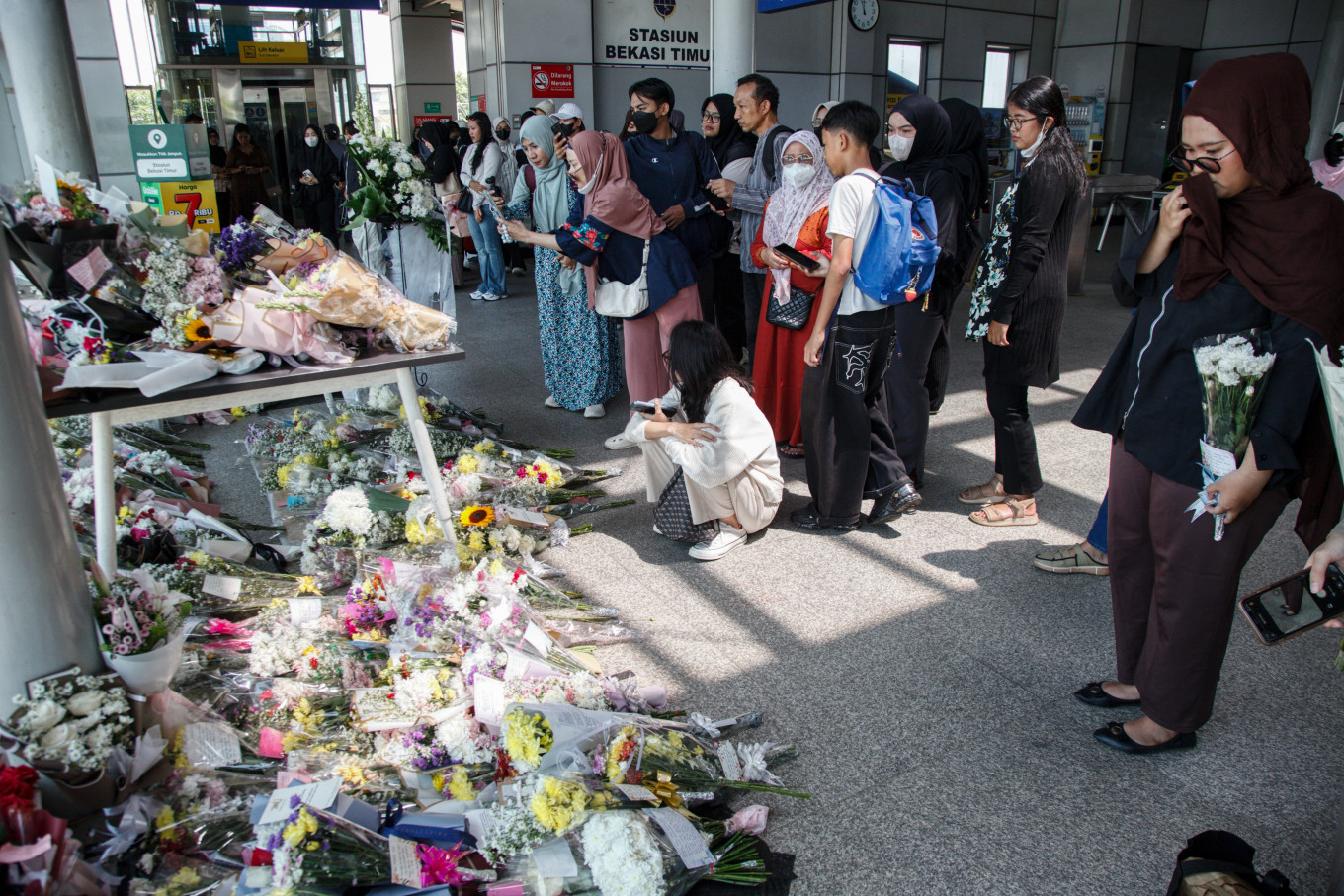 People offer flowers on May 1, 2026, and pray for the victims of a train collision that killed 16 people at Bekasi Timur Station in Bekasi, West Java. (AFP/Aditya Irawan)
M
y heart dropped when I heard the news. A train crash killed at least 16 people, all of them were women. It happened during rush hour, involving everyday tools of mobility, something so ordinary, yet suddenly so fragile.
We remember the lives lost in the tragedy: Tutik Anita Sari (31); Harum Anjasari (27), a private sector employee and her family breadwinner; Nur Alimantun (19), a student; Farida Utami (50), a medical emergency room staffer; Vica Acnia Fratiwi (23), a private employee; Ida Nuraida (48), a nursing student at Muhammadiyah University Jakarta (UMJ); Gita Septia Wardani (20), who had just told her father she would arrive home soon; Fatmawati Rahmayani (29); Arinjani Novita Sari (25), a private employee; Nur Ainia Eka Rahmadhyna (32), a Kompas TV journalist; Nuryati (63), who was on her way to visit her daughter; Nurlaela (37), an elementary school teacher; Enggar Retno Krisjayanti (35); Ristuti Kustirahayu (37); Adelia Rifani (26), a private sector employee; and Mia Citra (25). At least 90 others were reported injured in the incident in Bekasi, West Java, last week.
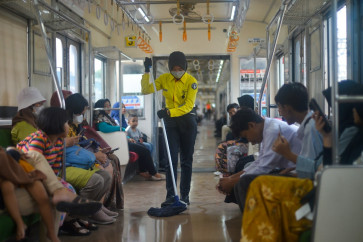
What makes this tragedy so heavy is how familiar it is. This is how most people live: always moving, always commuting, always navigating crowded trains and long distances. It is exhausting, but it is normal. And because it is normal, the risks involved are quietly accepted.
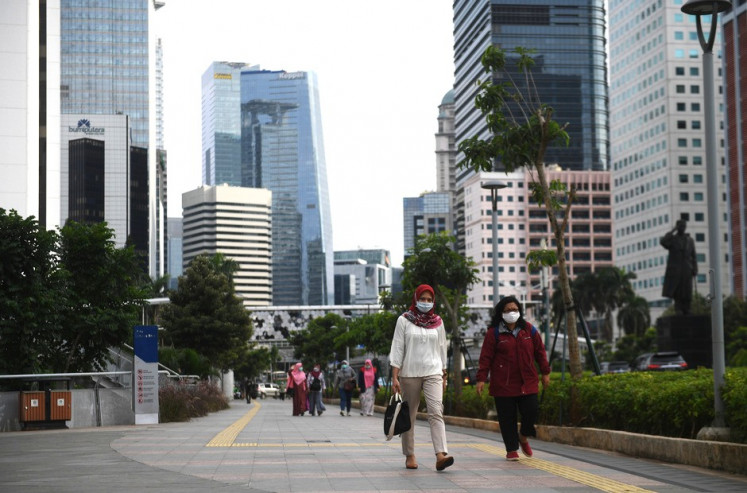
Mobility in this sense is not just about transport. It is part of the structure of work itself. Employment requires movement across space, often from peripheral areas to economic centers. For many, especially those with lower incomes, commuting is longer and more costly relative to their earnings, with transport expenses accounting for a significant share of their income.
The details of the crash further show that this was caused by several problems occurring simultaneously: an electric taxi stalled at a level crossing, indications of delayed or ineffective train signaling suggesting gaps in system coordination and response, informal or unauthorized level crossing controls reflecting weak and fragmented governance. These highlight that accidents emerge from overlapping failures, where technical issues, human errors and institutional weaknesses converge.
This then leads to a deeper question about infrastructure. Public transportation systems are often designed to maximize efficiency and capacity, but not always safety or resilience. It is often the working class who pays the “highest price”. Not because they are careless, but because they cannot opt out. Working-class and vulnerable populations often face disproportionate challenges regarding commuting compared to higher-income groups, including longer travel times and greater exposure to risk.

Scholars have emphasized the importance of understanding transportation as a key dimension of social inequality. Access to safe, affordable and reliable mobility is crucial for economic participation. Without it, workers face barriers not only in reaching employment but also in maintaining stable livelihoods.