The Jakarta Post
Please Update your browser
Your browser is out of date, and may not be compatible with our website. A list of the most popular web browsers can be found below.
Just click on the icons to get to the download page.


Popular Reads
Top Results
No results found. Please check your search term and try again
Can't find what you're looking for?
View all search results
Popular Reads
Top Results
No results found. Please check your search term and try again
Can't find what you're looking for?
View all search resultsPreventing genocide should be the interest of ASEAN
Directive No. 1/2020 orders government officials in Myanmar to refrain from committing any act of genocide, and Directive No. 2/2020 prohibits the officials from destroying or removing evidence of genocidal acts.
Change text size
Gift Premium Articles
to Anyone
Share the best of The Jakarta Post with friends, family, or colleagues. As a subscriber, you can gift 3 to 5 articles each month that anyone can read—no subscription needed!
 Set as preferred source
O
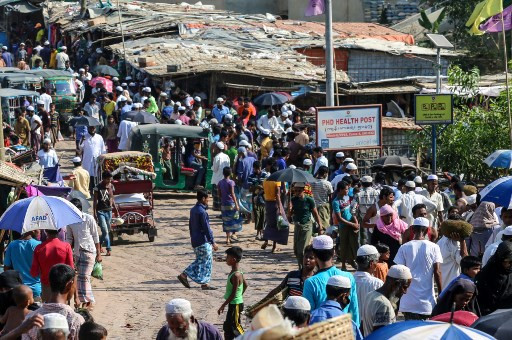
n Jan. 23, 2020, 17 judges at the International Court of Justice (ICJ) voted unanimously to order Myanmar to take all measures to prevent genocide against the Rohingya population residing in Rakhine state. The court also ordered Myanmar to submit a report on the implementation of the decision within four months and thereafter every six months.
On May 22, one day ahead of the deadline, Myanmar submitted the report to the ICJ. By submitting the report, Myanmar signaled its willingness to comply with the genocide convention and cooperate with the court. Myanmar also set a new standard on a similar case, as historically many states have failed to comply with the provisional measures ordered by the ICJ, for example, Serbia and Uganda.
Initially, doubts lingered as to whether Myanmar would comply with the system. One official from Myanmar had denounced the court decision and portrayed it as a "distorted picture of the situation" (BBC, Jan. 23). Furthermore, there is a crack in the system, as it has no enforcement mechanism, even though the measures imposed by the court are binding and not subject to appeal. In addition, there is a lack of incentive for the state to comply with the measures.
It is unclear if the public will have access to the report.
However, I notice that, on April 8, the Office of the President issued two directives related to the compliance with the Genocide Convention. Directive No. 1/2020 orders government officials in Myanmar to refrain from committing any act of genocide, and Directive No. 2/2020 prohibits the officials from destroying or removing evidence of genocidal acts.
Moreover, as reported by RFA on May 5, the Myanmar government also released a directive in April requesting all civil servants to stop using or engaging in hate speech or inciting violence on social media.
These measures signify a change in the country, but civil society groups in Yangon opine the government only pays lip-service so as to reduce international pressure. In a webinar on May 20, Wai Wai Nu, a Rohingya activist, said there had been no meaningful measures to prevent genocide in the last four months.