The Jakarta Post
Please Update your browser
Your browser is out of date, and may not be compatible with our website. A list of the most popular web browsers can be found below.
Just click on the icons to get to the download page.


Popular Reads
Top Results
No results found. Please check your search term and try again
Can't find what you're looking for?
View all search results
Popular Reads
Top Results
No results found. Please check your search term and try again
Can't find what you're looking for?
View all search resultsFree schools restore child education rights
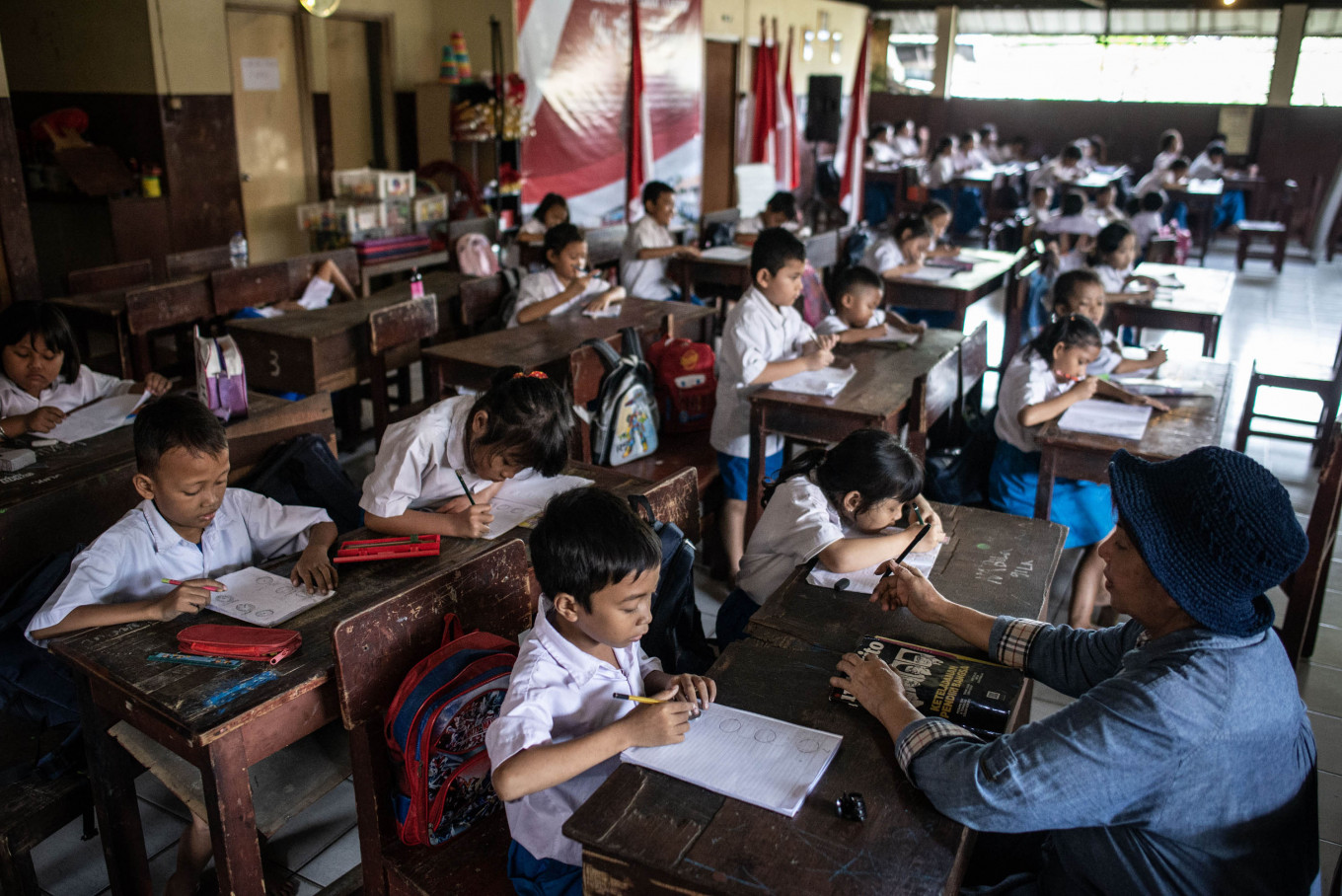
Free basic education is mandated in the Convention on the Rights of the Child and ratified by the government through Law No. 36/1990, which calls for the involvement of the community as individuals or in groups, such as social organizations and NGOs.
Change text size
Gift Premium Articles
to Anyone
Share the best of The Jakarta Post with friends, family, or colleagues. As a subscriber, you can gift 3 to 5 articles each month that anyone can read—no subscription needed!
 Set as preferred source
R
eared by a preoccupied single parent, Rahmat Hidayat might not have been able to develop his passion for computerizing had it not been for a free school near his neighborhood.
He now not only works at a healthcare start-up but has managed to accomplish his master’s program thanks to the SMK (vocational school) Informatika Utama, which freed his mother from educational expenses.
“My mother gathered together all the enrolment requirements, including the underprivileged verification document,” Rahmat, now 29, whose parents parted when he was an infant, recalled.
Upon finishing his vocational school, at which he studied software engineering, he went on to a university.
“My mother has quit her work since I got a job,” he said.
Efforts at children’s empowerment are also sought through non-formal education like those initiated by Jala Samudra Mandiri (JSM) in North Jakarta and Master School in Depok, West Java.
They tap into corporate social responsibility (CSR) funds to support the educational programs, which are designed to reduce the number of school dropouts.