The Jakarta Post
Please Update your browser
Your browser is out of date, and may not be compatible with our website. A list of the most popular web browsers can be found below.
Just click on the icons to get to the download page.


Popular Reads
Top Results
No results found. Please check your search term and try again
Can't find what you're looking for?
View all search results
Popular Reads
Top Results
No results found. Please check your search term and try again
Can't find what you're looking for?
View all search resultsClimate policy will not fix the fire problem
The much more critical role is how we manage lands and build many of our new houses where fire is frequent.
Change text size
Gift Premium Articles
to Anyone
Share the best of The Jakarta Post with friends, family, or colleagues. As a subscriber, you can gift 3 to 5 articles each month that anyone can read—no subscription needed!
 Set as preferred source
P
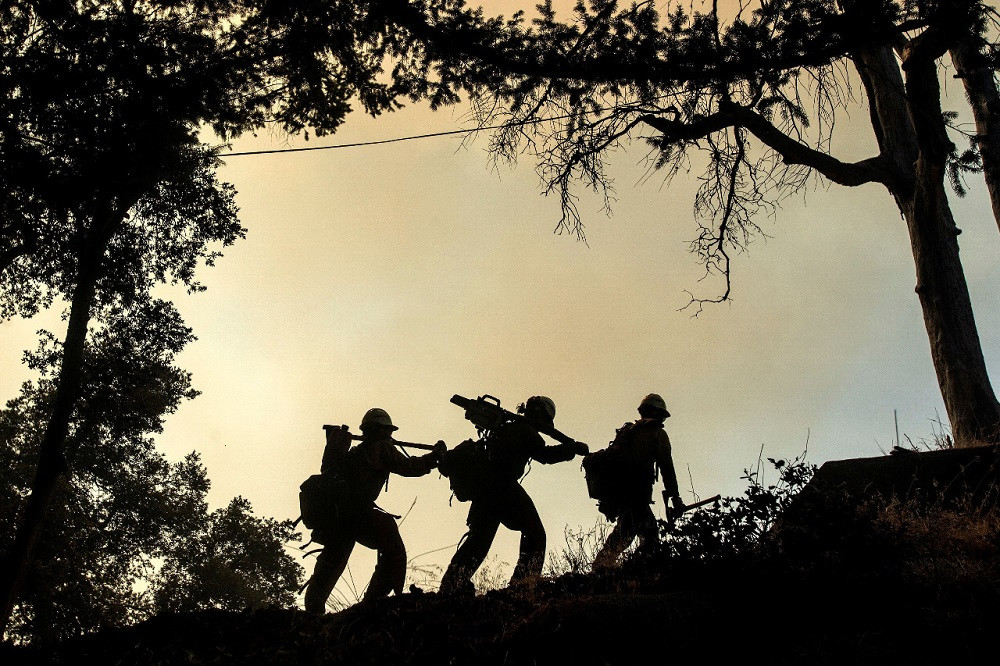
ictures of the big fires and orange skies on the US West Coast have been published worldwide as unmistakable evidence of climate change. The Los Angeles Times wrote on its full front page: “California’s climate apocalypse.” People from California Governor Gavin Newsom and Democratic US presidential candidate Joe Biden to most of the media tell us that the cause is climate change, and anyone who thinks differently is in denial.
Climate change is real, man-made and something we need to deal with smartly. But the claim that the fires are caused by climate change is dramatically misleading and steers us toward the worst way to help.
One way to realize this is that California wildfires used to be much bigger. This past decade, California has seen 0.7 percent of its area on average burned. Before 1800, California typically saw between 4 to 12 percent of its land area burn every year, up to 17 times more than the last decade. Unsurprisingly, the academics who did these studies conclude that back then, “skies were likely smoky much of the summer and fall in California.” Indeed, old newspapers across the US are filled with descriptions of terrible fires. In 1781, the New York Times tells us, “the smoke was so dense that many persons thought the day of judgment had come.”
This all changed after 1900 when fire suppression became the norm, and fire declined precipitously. In the last half of the 20th century, only about 0.2 percent burned annually. But because most fires were stopped early, this left more unburned fuel in the forests. One estimate is that there is now five times more wood fuel debris in California forests than before Europeans arrived.
Clearly, we used to have much more fire before global warming. Even this year’s record-breaking 2.2 percent burned area is about half the lower end of a typical year in earlier times. And the main reason we are now seeing more and bigger fires is that our century of fire suppression has left what researchers call a “fire deficit” — all the fuel that should have burned but didn’t. It is now waiting to burn even hotter and fiercer.
Climate does play a part. It does create a more favorable fire environment by increasing hot and dry conditions. But experts estimate this plays a minor role. The much more critical role is how we manage lands and build many of our new houses where fire is frequent.
When we keep suppressing fire, we ask for bigger and fiercer future fires. And we know how to fix this. We simply have to make many more prescribed burns that eliminate the built-up fuel. This is doable, smart and would help reduce fire risks in just a few years. Unfortunately, it is also unpopular because of increased smoke and risks from uncontrolled fires.