TheJakartaPost
Please Update your browser
Your browser is out of date, and may not be compatible with our website. A list of the most popular web browsers can be found below.
Just click on the icons to get to the download page.


Popular Reads
Top Results
No results found. Please check your search term and try again
Can't find what you're looking for?
View all search results
Popular Reads
Top Results
No results found. Please check your search term and try again
Can't find what you're looking for?
View all search resultsThe right submarine will protect our waters
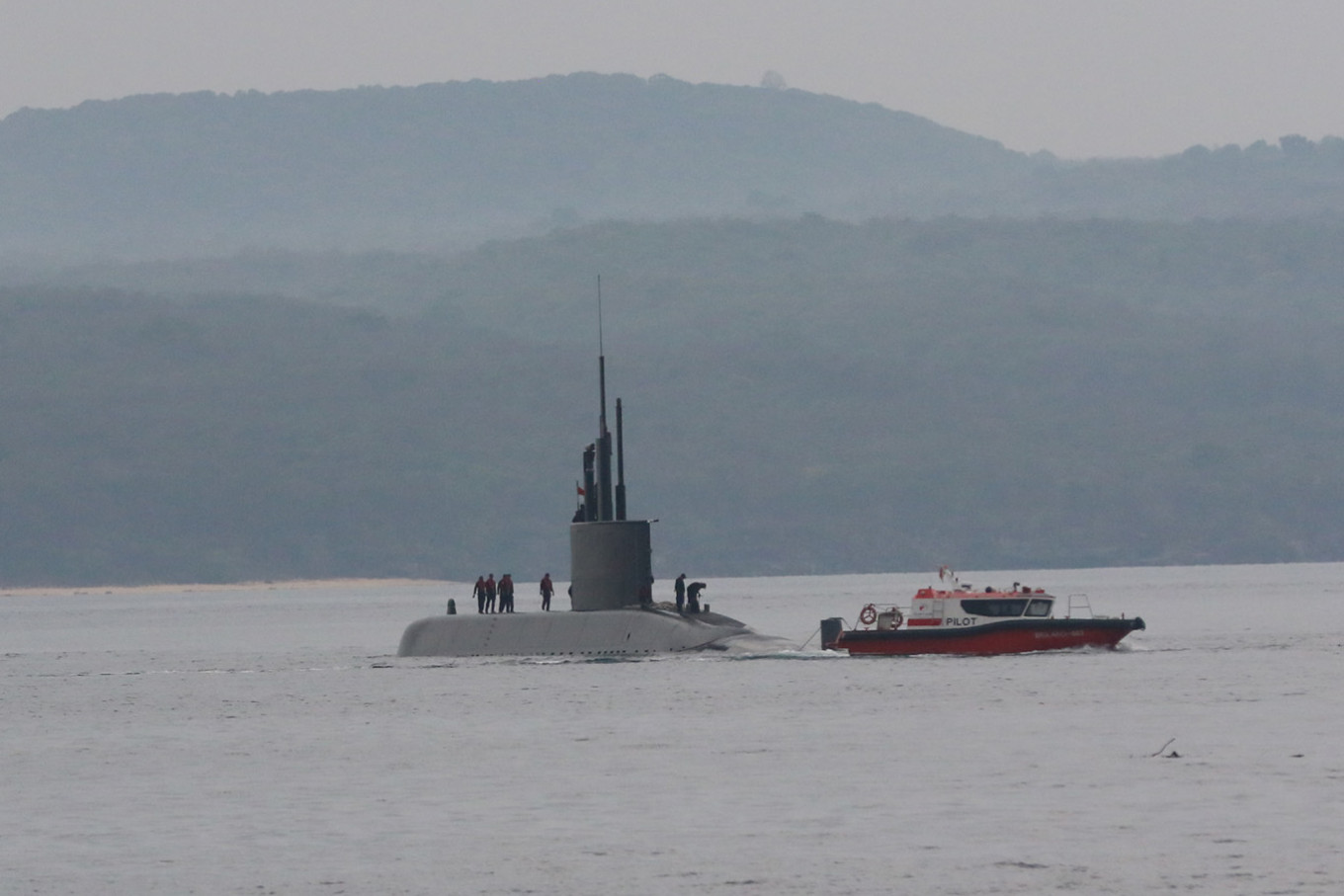
Submarines, with their ability to operate silently in an underwater environment, can be the ultimate defense equipment and a game-changer for a country threatened by open conflicts, like Indonesia.
Change text size
Gift Premium Articles
to Anyone
Share the best of The Jakarta Post with friends, family, or colleagues. As a subscriber, you can gift 3 to 5 articles each month that anyone can read—no subscription needed!
I
ndonesia is currently in the process of procuring four submarines to complete the third phase of its 2020-2024 Minimum Essential Force target. This procurement is critical, and Indonesia needs to carefully decide what technology to use.
Indonesia's capability in submarine operations suffered a setback in 1995 when several Southeast Asian countries decided to modernize their submarine fleets. Submarines, with their ability to operate silently in an underwater environment, can be the ultimate defense equipment and a game-changer for a country threatened by open conflicts, like Indonesia. One of the best examples of how submarines are a capacity multiplier was the 1982 Falklands War.
Before discussing industrial partnerships, Indonesia needs to consider the technical specifications required for an efficient submarine. Indonesia has to be specifically mindful before responding to submarine offers from Europe.
European-made submarines have adopted advanced technology such as the use of non-magnetic steel materials, different kinds of propulsion systems, combat management systems, torpedoes and missile armament.
A good example of the propulsion systems is Air Independent Propulsion (AIP). This system enables today's submarines to reduce the noise generated by their propulsion and increase their underwater endurance to lower the risk of being detected. Therefore, the choice of propulsion system should be taken into account, whether it is relying only on the battery or combining it with AIP. These days, various countries are in the middle of rivalries to develop an AIP system that would allow submarines to operate underwater without surfacing as often.
Despite the apparent attractive advantages of AIP, logistical constraints and complexity of the system itself are considered problematic. As a matter of fact, AIP relies on electromechanical conversion from oxygen and hydrogen, which can be a safety concern. AIP technology requires special treatment due to the oxygen storage within the submarine's pressure hull.
This kind of propulsion is also leading to modifications in the design of submarines, representing a considerable increase in costs. These concerns have led some countries to search for alternatives. This trend is seen in the Brazilian, Japanese and Australian submarine programs, which tend to look for oceanic-going submarines.
Amid the various technologies used to support submarine functions, the propulsion system is undeniably one of the main determinants. However, as explained above, AIP might not be the best solution for Indonesia because of its extra cost, safety and logistical constraints. Moreover, it is far from being the most critical capacity multiplier in the choice of a submarine.
The propulsion system is closely related to the propeller, a component that is usually kept secret during a submarine launch. Submarines often operate at a low speed to remain quiet. The range of stealth speed can be estimated by the number and shape of the propeller blades, as well as the power and revolutions per minute of the ship's engines. The selection and modification of this component can add value, thus design considerations and the addition of an Energy Efficiency Device (EED) on a submarine propeller may be recommended.
Developments in submarine detection systems could pose a threat to submarine safety. By choosing the proper weapon and combat management system, the risk that targeted enemy ships on surface will escape can be reduced, and the survivability of the submarine can be increase.
Nowadays, developing countries are starting to equip their submarines with anti-ship missiles instead of depending on torpedoes alone. The availability of such a weapon is definitely a capacity multiplier.
The communication system might also cause the submarine to be easily detected. Although the problem can be tackled by limiting the transmission time, the use of lower frequency communication could provide flexibility and security. Several countries are using very low frequency submarine communication. By using this solution, a submarine limits its time at the surface and is able to avoid detection by the enemy.
Indonesia requires a mandatory transfer of technology as stipulated by Law No.16/2012 on the Defense Industry. Regarding this matter, Indonesia should define first what kind of submarine technology it wants to master gradually. What is the country of origin’s policy on exporting submarine technology? What is the status of Indonesian readiness to absorb submarine technology?
Even the best proposal offered by submarine builders may be rendered useless if Indonesia has no capacity to absorb the offered technology. Foreign suppliers are concerned about that issue in their decisions to transfer technology.
Indonesia should also look at previous experiences in its efforts to master submarine technology through industrial cooperation with South Korea, which led to much criticism domestically among defense industry practitioners.
Indonesia embraced an active defense policy which emphasized the capabilities to destroy or paralyze an aggressor’s combat capabilities inside Indonesian territory instead of an aggressors’ home territory. Such a policy affected the deployment and employment of the Indonesian submarine fleet, as submarines’ assignments during a conflict would be to destroy and paralyze an aggressor’s sea lines of communication in Indonesian waters. As for peace time, submarines would conduct regular combat patrols in strategic waters around the nation, such as around the Sulawesi and Natuna seas.
Submarine operational concepts emphasize the role of bare bases located in some Indonesian regions. Those bases expected to be able to provide logistic support for submarine operations during deployment in the above mentioned waters, such as fuel, food, water, spare parts and ammunition. The location of current submarine bare bases is in the vicinity of waters prone to territorial disputes.
It is expected that the incoming decision on submarine procurement will technologically meet Indonesian operational requirements. Endurance, the capability to traverse shallow and deep waters, stealth and reliable weapons are the capacities that a new submarine must have.
Therefore, Indonesia should carefully assess both operational requirements and technological advantages during the procurement process. The choice of the right submarine technology will be able to enhance the Indonesian defense posture in order to cope with current and future threats.
***
Kinanthi Inten Pertiwi is a marine engineer and Alman Helvas Ali is an aerospace engineer with extensive experience in defense consulting. The views expressed are personal.