TheJakartaPost
Please Update your browser
Your browser is out of date, and may not be compatible with our website. A list of the most popular web browsers can be found below.
Just click on the icons to get to the download page.


Popular Reads
Top Results
No results found. Please check your search term and try again
Can't find what you're looking for?
View all search results
Popular Reads
Top Results
No results found. Please check your search term and try again
Can't find what you're looking for?
View all search resultsUnmasking the hidden threat of single-use surgical masks
The massive production of surgical masks during this pandemic will eventually contribute to a significant impact on our earth.
Change text size
Gift Premium Articles
to Anyone
Share the best of The Jakarta Post with friends, family, or colleagues. As a subscriber, you can gift 3 to 5 articles each month that anyone can read—no subscription needed!
T
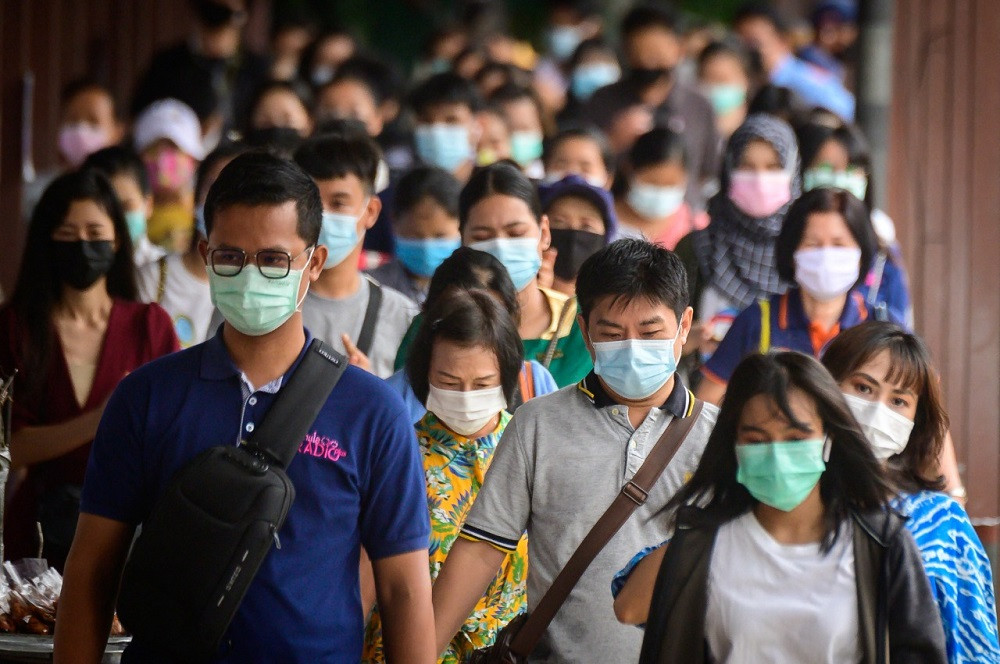
he COVID-19 pandemic obliges us to wear an appropriate mask to protect us from the virus. And the filtration efficiency of single-use surgical masks is still above cloth masks. With the ideal application of four hours long, it is expected that we wear two masks a day, at minimum.
With the Indonesian population reaching 270 million, assuming that only half of those wear single-use surgical masks, we expect 300 million waste surgical masks a day, which end up in landfills or the ocean. Imagine how many masks 7.9 billion people in the world throw out in one day.
Panda et al. (2020) and OcenAsia 2020 revealed that since the global production of single-use surgical masks for 2020 is estimated at between 2.4 and 52 billion pieces, corresponding to approximately 7200–312,000 tons, and it can be estimated that 1 to 10 percent are released into the environment (as other single-use plastic materials), this means that potentially between 720 and 31,200 tons of microplastic waste was added to our oceans in 2020.
Single-use surgical masks are produced from various polymeric materials, such as polypropylene, polyurethane, polyacrylonitrile, polystyrene, polycarbonate, polyethylene or polyester, depending on the function and manufacturer. They consist of three layers: an inner layer, a middle layer and an outer layer. These materials, however, have been identified as the primary source of microplastic pollution in the environment.
As we just commemorated Earth Day last week, we are reminded that microplastic is becoming a real threat to our planet.
The integrity of plastics decreases after disposal through chemical, physical and biological processes, such as high temperature, ultraviolet (UV) exposure, hydrophobicity and change in pH, generating resultant particles of various sizes from meters to nanometers.
Plastic that is less than 5 millimeters in size is categorized as a microplastic. There are two types of microplastics: primary and secondary. Primary microplastics are small plastic debris from manufactured plastic, while secondary microplastics are the debris particles generated from the fragmentation of larger plastic pieces (Li et al. 2016).
The specific mechanism of why microplastic is toxic to organisms is still not yet fully understood. However, according to Zhang et al. (2020) and Abbasi et al. (2021), there are at least four ways in which it can significantly affect an organism.
First, microplastic ingestion can provoke stresses such as energy expenditure from excretion, physical blockage and false satiety. Ingested microplastic can also interfere with impaired reproduction, growth and development of young.
Second, the degradation of toxic additives from microplastic can harm organisms, weaken them and render them more vulnerable to other threats. Third, the absorption of persistent organic pollutants (POPs) or heavy metals by microplastics can endanger the surrounding environment.
And last, microplastics can act as a potential carrier of pathogenic microorganisms, including bacteria, fungi and viruses, which further create biofilms on the surface of the microplastic and cause diseases in other aquatic organisms and humans.
Saliu et al. (2021) simulated weather conditions and mechanical solicitation mimicking the waves breaking in the surf zone to find the effect on single-use surgical masks and found that a single surgical mask submitted to 180 hours of UV-light irradiation and vigorous stirring in artificial seawater may release up to 173,000 fibers/day.
Klemeš et al. (2020) studied the effect of current mass mask production and found that 1,030 Watt/hour of energy was consumed for the production and 59 grams of CO2 equivalent greenhouse gas per single mask released into the environment. Therefore, the massive production of surgical masks during this pandemic will eventually contribute to a significant impact on our earth.
However, placing a ban on plastic material use is currently the least viable option since we are still fighting the pandemic and need all the equipment to protect us from the virus. Selvaranjan et al. (2021) stated that mask waste in the world had soared because people had disposed of their masks incorrectly. Currently, there is no specific waste stream for single-use surgical masks. They are mostly dumped onto the streets or collected as mixed waste.
The waste is sent to incinerators and landfill, whereas most plastic is chemically stable, resistant to corrosion and, difficult to be degraded by microorganisms (Webb et al., 2013). So, they remain in the soil or ocean for quite some time and threaten the surrounding environment.
Improving the existing operational protocols for solid waste management for COVID-19 while accelerating the research focus on finding a substitute for single-use surgical masks can be the answer. Sangkam et al. (2020) suggested adding specific and necessary precautions and arrangements into the phases of waste management (namely, pretreatment, segregation and storage, collection and transportation, and disposal).
Pretreatment includes categorizing containers or packaging and pretreatment of single-use surgical masks clearly labeled as “COVID-19 infectious waste” placed in public areas. Segregation and storage are conducted by separating single-use surgical masks from general waste and placing them in an exclusive temporary storage area. Collection and transportation are performed using additional vehicles equipped with necessary adjustments for COVID-19 to ensure proper waste collection.
Finally, when it comes to disposal. The WHO has suggested incinerating the medical waste at a temperature between 900 degrees and 1200 degrees Celsius. In some areas without an incineration facility, single-use surgical masks can also be treated with high-temperature sterilization (autoclave) and boiling before going to sanitary landfills.
However, regarding the incineration method for medical waste, there are concerns regarding the resultant toxic emissions such as dioxin and furan (Klemeš et al. 2020). Therefore, research to find more eco-friendly raw materials to substitute PPE is urgently needed to reduce the amount of toxic material from secondary waste.
A number of potential biomass containing starches, lignocellulose, protein and microorganisms has been investigated and showed promising progress, which meets the quality standard required as substitution (Selvaranjan et al. 2021).
Nevertheless, we should not wait for the government or experts to save the world. We can start from home by following the proper protocols for disposal of our masks. It amounts to one small action to protect our earth.
***
A researcher at the Research Center for Biomaterials, Indonesian Institute of Sciences.