The Jakarta Post
Please Update your browser
Your browser is out of date, and may not be compatible with our website. A list of the most popular web browsers can be found below.
Just click on the icons to get to the download page.


Popular Reads
Top Results
No results found. Please check your search term and try again
Can't find what you're looking for?
View all search results
Popular Reads
Top Results
No results found. Please check your search term and try again
Can't find what you're looking for?
View all search resultsGood news for Indonesian studies
The emphasis on cultural identity was sometimes tinged with worry, especially regarding extremism in religion. But the panelists were generally neither distraught nor complacent in that regard.
Change text size
Gift Premium Articles
to Anyone
Share the best of The Jakarta Post with friends, family, or colleagues. As a subscriber, you can gift 3 to 5 articles each month that anyone can read—no subscription needed!
 Set as preferred source

C
ongratulations, Indonesia! What a thrill it was to open my daily copy of The New York Times on Aug. 3 and see a nearly half-page color photo of the jubilant faces and raised fists of Greysia Polii and Apriyani Rahayu as they celebrated their and their country’s Olympic gold medal in women’s-doubles badminton.
Their first-place finish could not have more timely. Indonesia needs good news. Bloomberg has combined 12 variables to determine where the COVID-19 pandemic is being most-to-least effectively managed.
From April to July, by that measure, Indonesia fell steadily to last place among the 53 countries covered. Such a bad review cannot be explained by domestic underperformance alone. The ferocity of the now ubiquitous Delta variant has played a role. So has vaccine nationalism—the limited and late availability of effective jabs from abroad. Not to mention less well established variables such as the relative potency of Chinese vaccines. Whatever the reasons, there is little to celebrate regarding the risk to the health of Indonesians.
In this downbeat context, however, and far less well known than Indonesia’s “goodminton” victory in Tokyo, is an upbeat development on Indonesia’s academic front that also deserves Indonesian pride: the five-day inaugural Conference on Indonesian Studies (CIS) held online on June 24-27 Jakarta time. The American Institute for Indonesian Studies and Michigan State University sponsored the meeting with the participation and cooperation of hundreds of students, academics, and educational institutions in Indonesia and the United States. As a long-time would-be Indonesianist, I was happy to attend.
Researchers have more questions than answers. Nationalists reverse the ratio. The scholarly ideal—gathering evidence, testing assertions, birthing, sharing, and comparing ideas—transcends borders. But nationality has long shaped Indonesian studies.
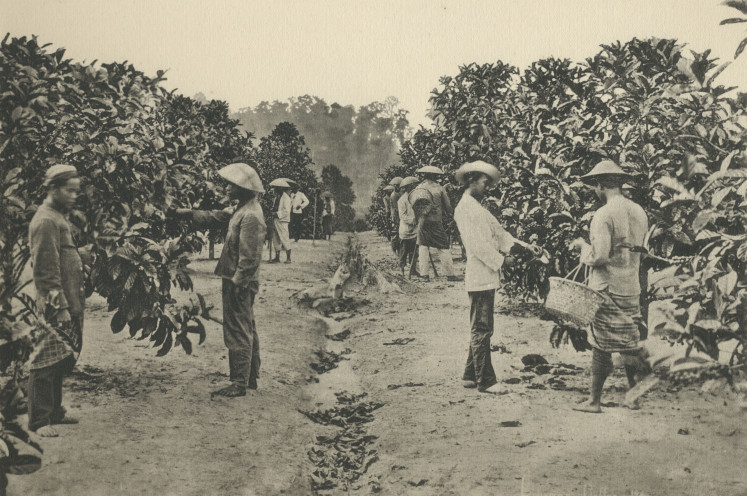
During Dutch rule over the East Indies from 1816 to 1941, with rare exceptions, the archipelago’s past was largely interpreted by Europeans with colonial access. Indonesian studies were dramatically expanded and diversified following World War II. But the birth and growth of “area studies” in Western universities continued to incubate mainly Western scholarly careers.
The recent CIS was doubly important, as an affirmation and a stimulus. Its 326 presentations in 65 different sessions served to remind the roughly 500 attendees from Indonesia and 22 other countries of the breadth and vitality of Indonesian studies and thereby motivate further research.